
Semlang Udon@SemlangU
Jul 14, 2022
15 tweets
1/15 Final and 5th thread on the use of Egyptology in the video tinyurl.com/ye23tk9j
Is Hāmān an Arabized form of an Egyptian title? A corrected linguistic view:
Links to previous threads:
tinyurl.com/t5e3w5ah
tinyurl.com/5n7tdcep
tinyurl.com/2p9fvay7
2/15 The final claim made in the video, from about 24:33, is that Hāmān, Arabic هامان (Cairo ed. هَٰمَٰن, old Quran mss contain all orthographic permutations همن, هامن, همان, هامان) known from the Quran in connection with Pharaoh (e.g., Q 40:36), is known from ancient Egypt.
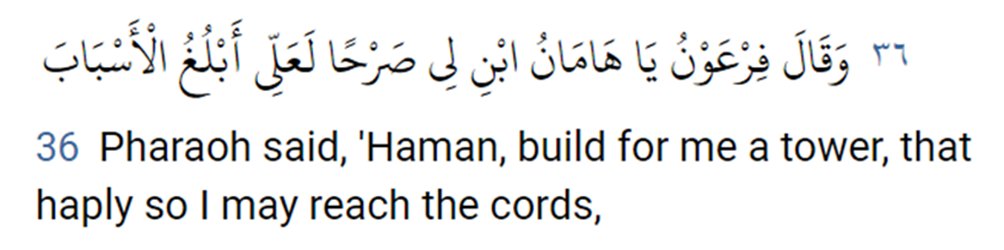
3/15 Specifically, Hāmān is identified with the figure of ancient Egyptian priest Bakenkhonsu, who held the Egyptian title, it’s claimed, “ham nata tapiy amana” and it’s suggested (28:00) that:
4/15 “The Qur’an’s mention of Hāmān may simply be an Arabized version of the Egyptian ‘ham amana’ ”, i.e., “servant of Amun”.

5/15 Linguistically, however, there are a few obvious problems. First, the title is correctly transliterated as ḥm nṯr tpj n jmn.“Chief (or first) servant of Amun”. Thus, it’s clear that /ḥ/ should have entered Arabic as ح and not as /h/ as in هامان (Hāmān).
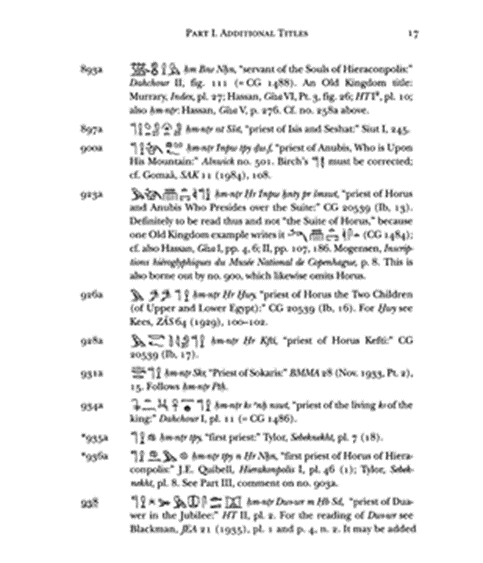

6/15 Second, the /m/ of ḥm is, for no reason in particular, dropped in this Arabized version. At least, no explanation is provided.
7/15 Third, there is the problem of the structure of the word, as the name of the deity Amun is reconstructed by Egyptologists as /jaˈmaːnuw/ and /ʔaˈmaːnəʔ/. Thus, Egyptian Amun is a three-syllable word with one long vowel and ending with /w/ or a glottal stop.
8/15 It’s not obvious at all why an “Arabized version” should result in Quranic Hāmān with two long vowels. A further point is that Hāmān, can’t, to my knowledge, be derived phonotactically from Arabic itself, as one proposal goes. In other words, Hāmān, is foreign to Arabic.
9/15 Fourth, it’s also not very clear, not to say mystifying, why only one morphological component of a nominal phrase, that is, ḥm for ḥm nṯr tpj n jmn would be used as the nomen regens of a new construct state…
10/15 and no explanation is offered of why this should have happened or why this should be considered a particularly Arabized form of the title.
11/15 Finally, to my knowledge, neither the specific proposed title ḥm Jmn, “servant of Amun”, nor ḥm + deity name, is found in ancient Egypt nor is documentation for any such title provided. Thus, Imho this is a completely absurd argument & methodology: If the Quran wished to
12/15 demonstrate awareness of “secrets” of ancient Egypt, why did the author render /ḥ/ with /h/, drop the /m/ of "ḥm" for no reason in particular and choose a non-existent Egyptian title and syntax?
13/15 Imho the most reasonable phonological explanation of the “un-Arabic”, Hāmān, is that it’s indeed a foreign name. The name’s origin, however, isn’t, as shown, likely from an Egyptian title, but rather from the “usual suspect”, Hāmān, of the book of Esther.
14/15 Not only do the consonants match exactly 1:1, even the two long vowels written by two Qametzes (הָמָן) in the Masoretic diacritics are phonologically perfectly represented in the Quran by the two long alifs and has an identical syllable structure.
15/15 Thus, there can, imho, be little doubt as to the origin of Quranic Hāmān. To be clear I’ve previously stated, my personal opinion about Quranic Hāmān is x.com/SemlangU/statu
Semlang Udon@SemlangU
Nov 01 21
View on Twitter
I agree it’s a nice option, a homiletical midrash, if you wish. Not literally true, but conveys the message beautifully.

Missing some tweets in this thread? Or failed to load images or videos? You can try to .