


 Dave Burton@ncdave4life
Dave BurtonMar 19, 2024
5 tweets
1/5》I agree. Without those ice sheets, there's no source for vast influxes of freshwater into the northern North Atlantic, to slow the AMOC.
There are a few key lessons to be learned from Dansgaard-Oeschger events (and D-O #0, a/k/a the Younger Dryas).
sealevel.info/learnmore.html

2/5》Because D-O terminations had warming trends an order of magnitude faster than current warming, and because nearly all extant species survived those large, sharp warming events, we needn't worry that the current slight warming could cause extinctions.
archive.is/aUi9R#selectio

3/5》Because D-O events only occur during glaciations, and never during interglacials, we can say with confidence that warmer climates are more stable than colder climates.
twitter.com/ncdave4life/st
That might be largely because without the great northern ice sheets, there's nothing which could pour vast quantities of freshwater into the northern North Atlantic, slowing the AMOC.
It's surely also because Planck Feedback is ∝ T⁴, so the warmer the climate gets, the stronger that negative (stabilizing) feedback is.
sealevel.info/feedbacks.html
Dave Burton@ncdave4life
Dave BurtonFeb 03 24
View on Twitter
That is correct. In general, warmer climates are more stable than cooler climates.
You can see that in the sharp Dansgaard-Oeschger climate fluctuations which punctuated the last glaciation, compared to the relative stability of the Holocene interglacial.
Here's a paper (one of many) about Dansgaard‐Oeschger events:
nature.com/scitable/knowl
I link to that paper, and to other related resources, on my website, here:
sealevel.info/learnmore.html
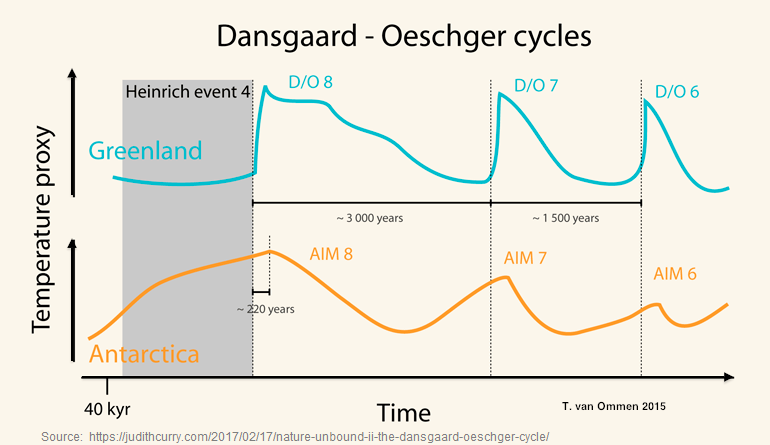
As you can see, D-O events are globally synchronous, but much sharper in the northern hemisphere than the southern:
sealevel.info/curryja_2017-0
You can also see that in the relative stability of temperatures in the tropics, compared to the large "Arctic amplification" seen at high northern latitudes, as well as the large seasonal & diurnal temperature variations there.
One of the reasons that warmer climates are more stable is that is that Planck Feedback is ∝ T⁴, so the warmer the climate gets, the stronger that negative (stabilizing) feedback is.
sealevel.info/feedbacks.html
Another reason is that warmer climates tend to have higher absolute humidity, because warm air holds more moisture than cold air. That increases latent heat transport, which cools the surface in daytime and warms it in evenings when the dew point is reached, both of which moderate temperature swings.
Additionally, there are apparently negative (stabilizing) feedbacks involving clouds, which limit temperature rise in the tropics:
sealevel.info/feedbacks.html

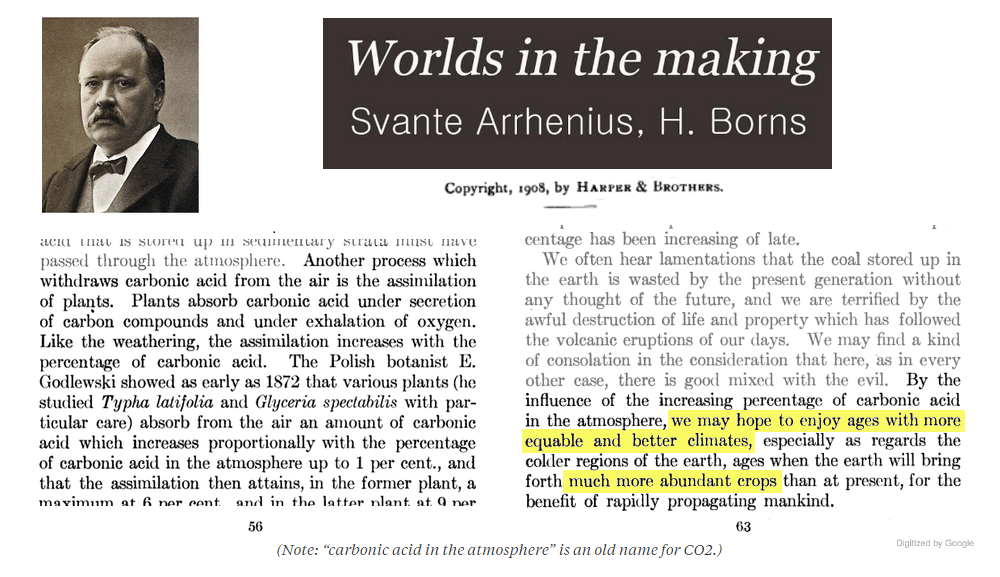
4/5》The relative stability of warmer climates is also evident in "Arctic Amplification," which is the fact that climate change disproportionately warms chilly high northern latitudes.
twitter.com/ncdave4life/st
sealevel.info/Svante_Arrheni

Dave Burton@ncdave4life
Dave BurtonFeb 03 24
View on Twitter
9/18》 What's more, a fortuitous thing about global warming is that it isn't very global. It disproportionately warms frigid winter nights at high latitudes ("Arctic amplification"). The tropics warm less, which is nice, because they're warm enough already.
sealevel.info/learnmore.html

Joel Gombiner@joelgombiner
Feb 26 24
View on Twitter
I'm not sure I agree that DO events have relevance to a post-Pleistocene climate without North American and Eurasian ice sheets...
5/5》Another takeaway is that, because the evidence for D-O events is conclusive, revisionist paleoclimate reconstructions by the Pages2K "hockey team," which erase D-O events to "straighten the hockey stick handle," are debunked.
twitter.com/ncdave4life/st
Dave Burton@ncdave4life
Dave BurtonSep 03 23
View on Twitter
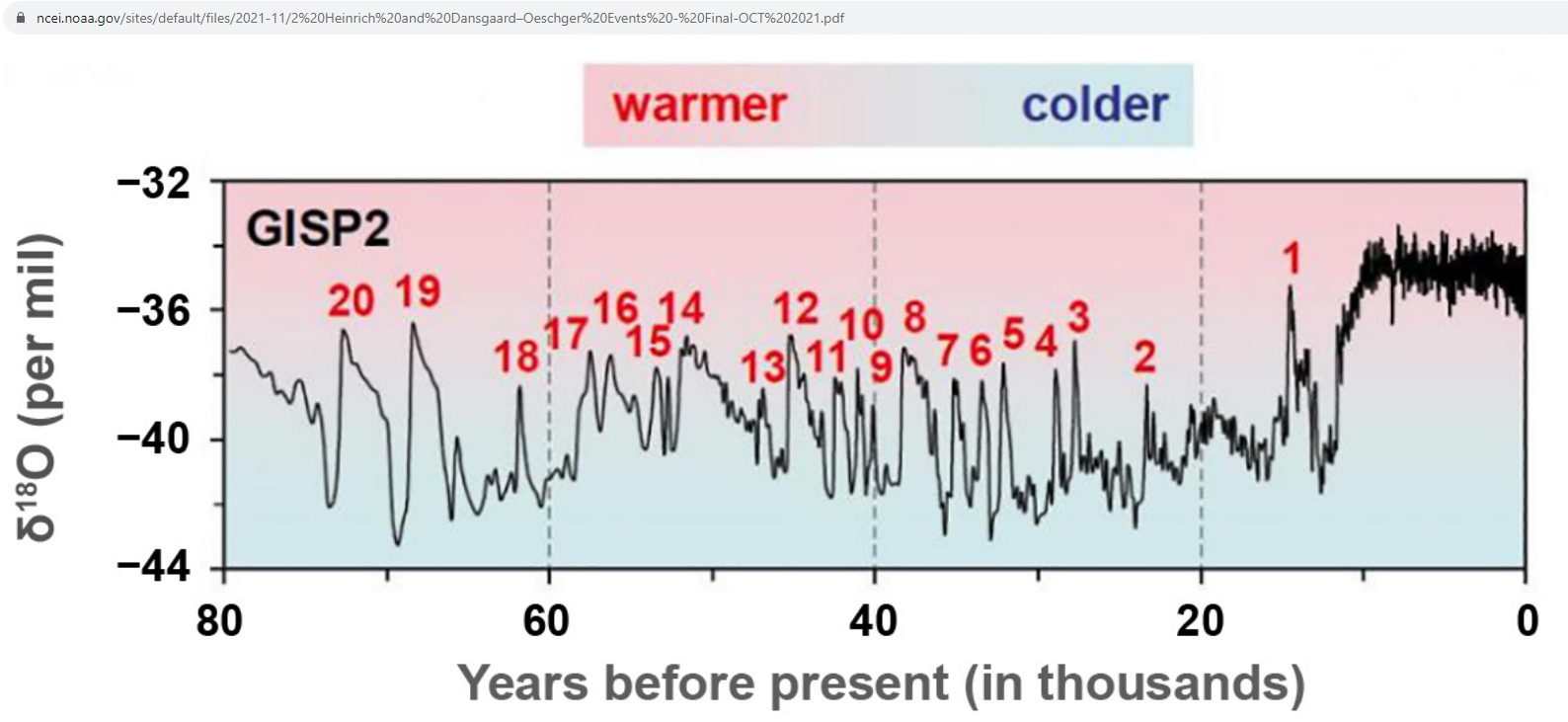
5/7. They also completely erased Dansgaard-Oeschger event #1, which was the HUGE warming event, recorded in ice cores, that you can see in this NOAA plot:
sealevel.info/Dansgaard-Oesc


Dave Burton
Dave Burton@ncdave4life
My preferred pronoun is "harmless data drudge." https://t.co/YTkK6vaHGs Tel: +1 919-481-0098.
Missing some tweets in this thread? Or failed to load images or videos? You can try to .