
Ibna Mattuta@swahiligal
Jul 18, 2025
21 tweets
Long story short, the Omani govt renovated the Lamu Museum, took out indigenous African artefacts and replaced them Omani manenos
On the surface, it seems like a simple case he who paid the piper selecting the song... But the story is much deeper. Now for short story long…
Back in 2023, the Omani govt in partnership with UNESCO went on to 'support’ different UNESCO World Heritage sites. In Kenya, they partnered with the Ministry of Tourism, Wildlife and Heritage and NMK to renovate part of Fort Jesus, the Nairobi Museum and the Lamu Museum
Skip to post post-renovated Lamu Museum
When you enter the museum, the first thing you will see is a picture of the Omani Sultan and Ruto. For us to have the picture of a foreign leader inside OUR museum.. That tells you almost all you need to know.

Next thing you'll notice is the sign listing exhibition halls, but you realise it only lists the Omani exhibits. and leaves out all the African indigenous exhibits.

Now the museum has two floors. The bottom floor that gets minimum natural light and relatively poor ventilation, and the top floor that has fantastic natural light and a nice sea breeze… where we place our best
Now guess which floor is now filled with 7 new foreign exhibits?
When the renovation started, Lamu expected the plan was to improve local exhibits, but instead it seemed like it was just a way to get the Omani exhibits in.
Allegedly, the condition for the renovation was that experts would be brought in from the Omani side to handle it all
The new exhibits have new panels and posters, and they are translated in three languages, but the local exhibits are still on their old laminated, A4 paper
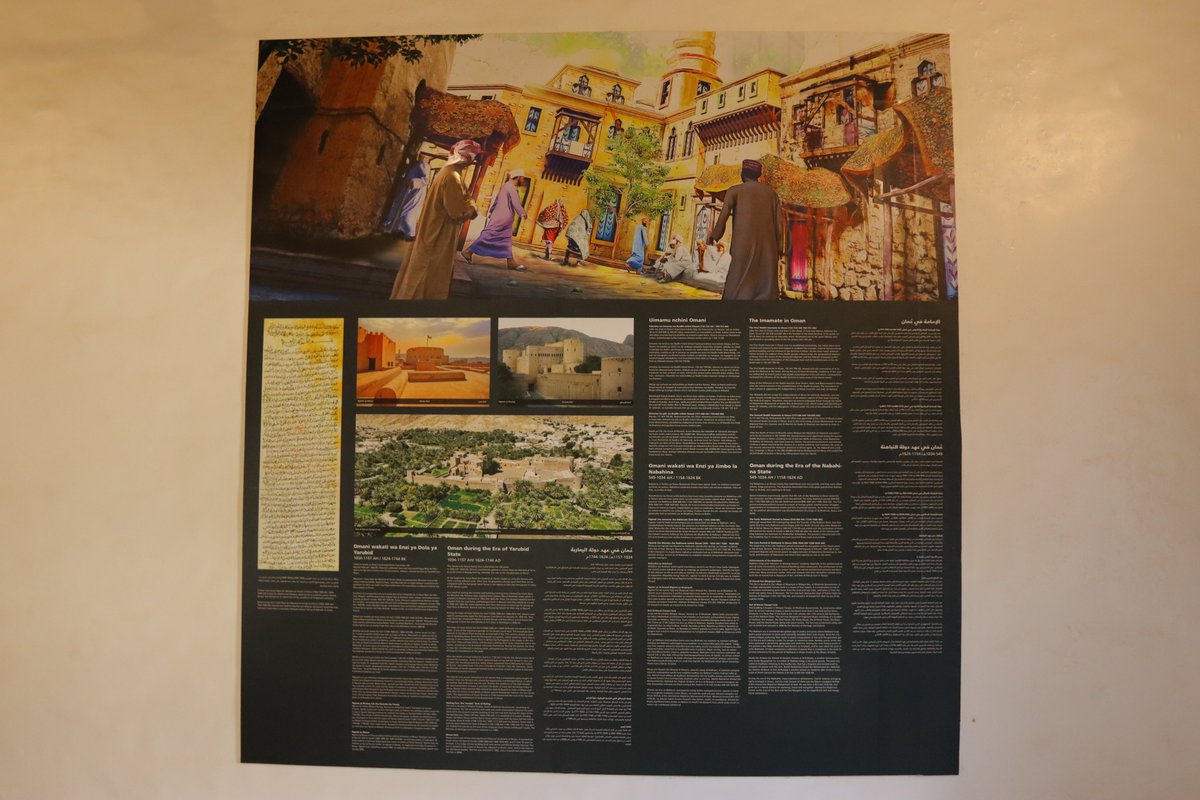
The thing about the Omani exhibits is that they don’t even focus on the shared culture or heritage. They are literally exhibits of Oman and life in Oman. There are 3D models of buildings that are in Oman, some of which were built as recently as 2007
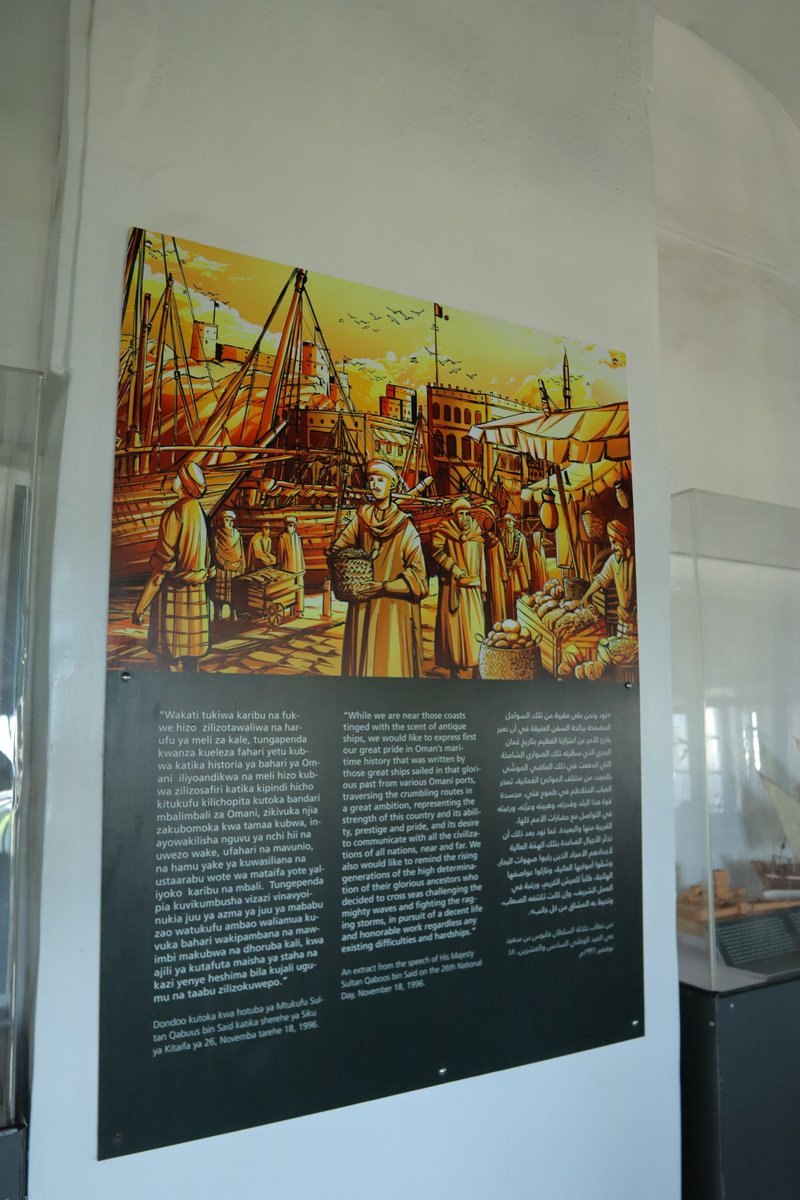


But the full extent of the injustice is understood by those who know what the museum was like before the renovations. And what was moved or removed to make way for the Omani stuff, and what was left unsaid

First we start with what was moved. The Siwas are arguably the most important artefacts in the museum. They used to be in the central hall on the first floor. Now they have been moved to a corner downstairs.
You can read more on the Siwa here hiistoriya.com/mwana-darinis-

In place of the Siwa we now have a display of Omani male clothing.
Someone thought that aspirational clothing should be the highlight of this museum
Another prized object that was moved was the replica of the mtepe dhow. It's now on the floor, in a corner, while in its place is a large Omani dhow dominating the room.
The Mtepe dhow was a rare Swahili dhow that was built without nails, and the sail was made of coconut fibre


Now, for the objects that were removed.
There used to be a detailed exhibition of other communities in Lamu, like the Boni, Orma and Pokomo. Their displays have been COMPLETELY removed. And in the spaces that used to display them, we now have pictures of Omani Sultans


Another thing that is obviously missing is the history of the slave trade.
If we really want to talk about the East African coasts shared history with Oman, then let's actually talk about the places where the cultures converged and collided.
We haven’t even gotten into the contracting side of all this. The renovations also included structural renovations. The contractor who got the job had very little experience in historical buildings. He would go round asking for clarifications and explanations on how to do things
Everyone who knew the museum before appreciates the basic renovation works because it was super dilapidated before. But also, less than two years later, there is a termite infestation, and some parts of the building have begun deteriorating again
Notice the pictures here as well

Looked for info on the erasure that is the Lamu museum renovations, but all I could find was one article and a few comments here and there with people’s disappointments.
Local cultural experts were too scared to talk out publicly coz it could cost them funding and access.
The Lamu museum was established on the foundation of both locals and foreigners, doing everything they can to preserve the LOCAL culture. Look at this story of a man who donated a kofia he'd got at a bargain coz he knew the true value of preservation x.com/PwaniTribune/s

Pwani Tribune @PwaniTribune
Jan 16 24
View on Twitter
Over 2 decades ago in Lamu, a tourist from Austria exchanged his cheap watch for this kofia from a local. He later appreciated the kofia's true worth (culturally, cost) & returned it to the Lamu Museum. PS: Purely financially speaking a hand-woven kofia costs upwards of Ksh. 20k.

One highly commendable effort is that of the museum collections manager. After he saw what had happened, he put in a formal complaint, and he has been slowly placing back significant objects that were removed. eg the Mtepe dhow
Two years later, we, the people of Lamu are haven't the righting of the wrongs.
I have reached out to leaders, people at @UNESCO 🏛️ #Education #Sciences #Culture 🇺🇳, @سفارة سلطنة عُمان - نيروبيOMAN EMBASSY-NAIROBI, @National Museums of Kenya, the State Department for Culture, the Arts & Heritage etc, to get to the bottom of this, but they are yet to respond
The Lamu Museum is said to have the most comprehensive collection of Swahili ethnographic material. Is it fair that after a sponsored renovation, half the museum is dedicated to telling the story of Oman?
Read the article trt.global/afrika-english


Ibna Mattuta
@swahiligal
Culture and History Enthusiast • Raconteur • Afrohijabi • Islander • An Enigma • aFreakcan
Missing some tweets in this thread? Or failed to load images or videos? You can try to .