Science Banana@literalbanana
Oct 5, 2025
21 tweets
I GOT A THIRD NICKEL but unfortunately it's driving the most influential meta-analysis of antidepressants in children and adolescents (thread)

Science Banana@literalbanana
May 10 25
View on Twitter
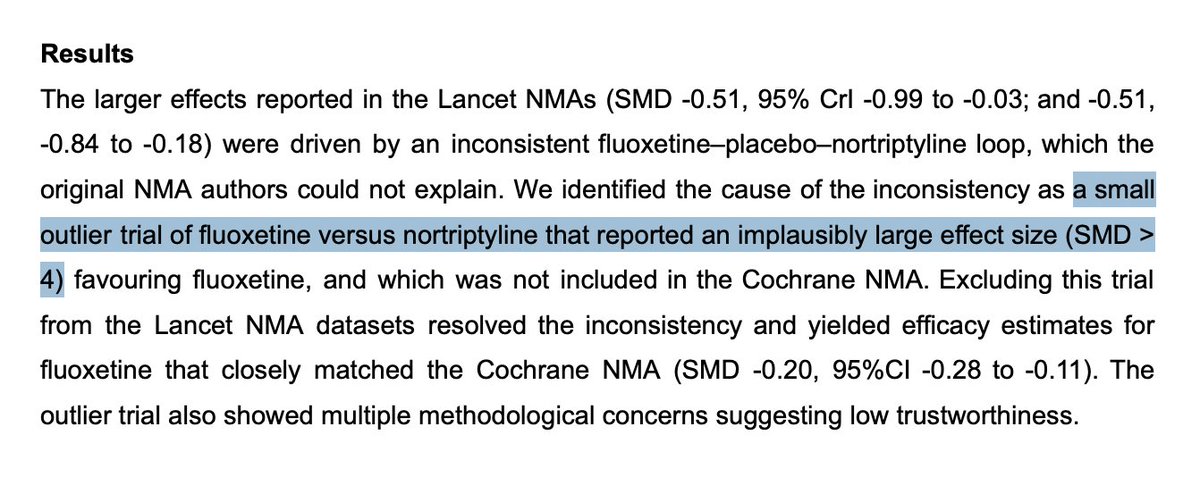
if I had a nickel for every time a huge effect size for a sketchy depression treatment was going around and turned out to be based on a small study from Iran with implausibly small SD's I'd have two nickels but it's weird that it happened twice

I learned about this from @PloederlM's informative post responding to the recent debate about antidepressants and suicide risk in young people ploederlm.github.io/blogs/MAHA-res
This is largely responsive to an editorial claiming that SSRIs in children and adolescents are safe and effective, and that any claims to the contrary are just MAGA fear mongering
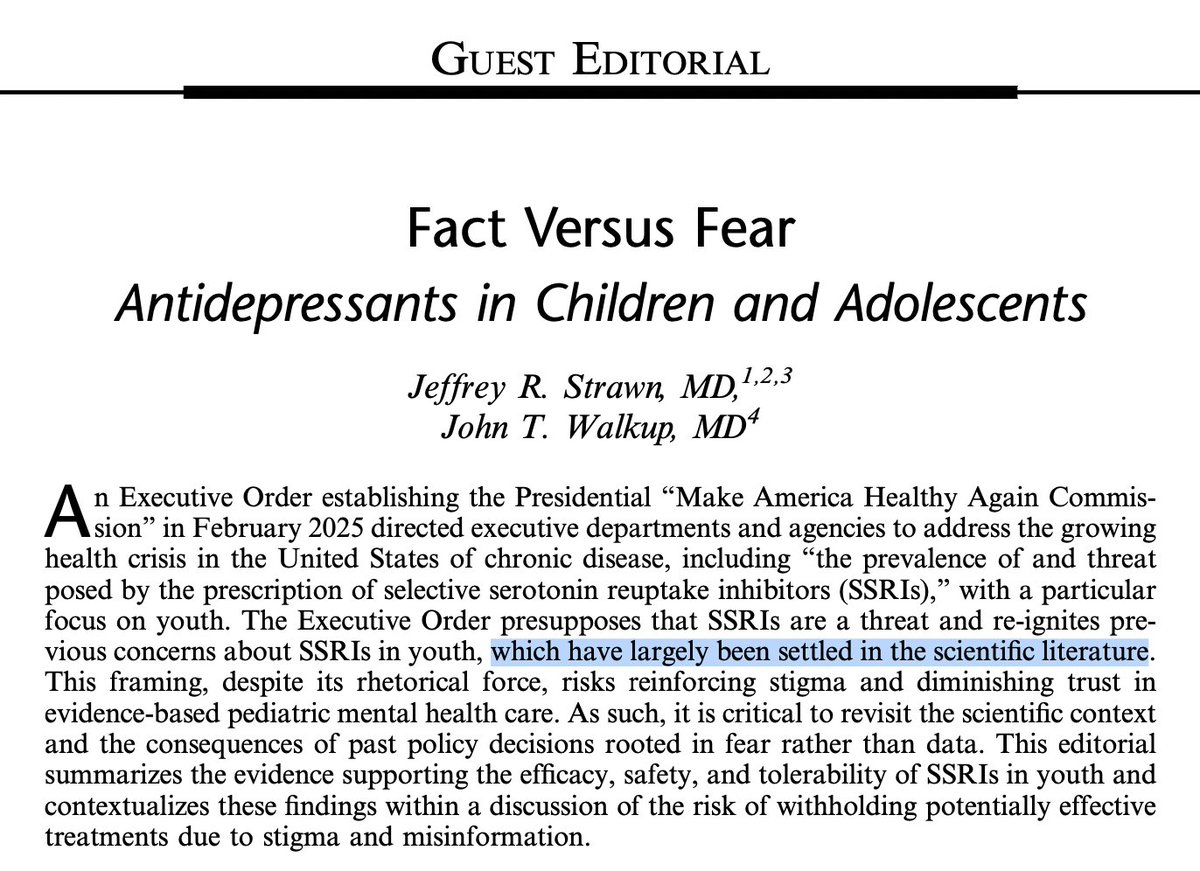
As Dr. Plöderl notes, these authors cite a 2016 meta-analysis for their claims, but not a more recent 2021 Cochrane meta-analysis.
The 2016 meta-analysis finds a large effect size for fluoxetine, although the authors are careful to say that "these drugs do not seem to offer a clear advantage for children and adolescents." psychiatry.aok.pte.hu/tavoktatas/FS_

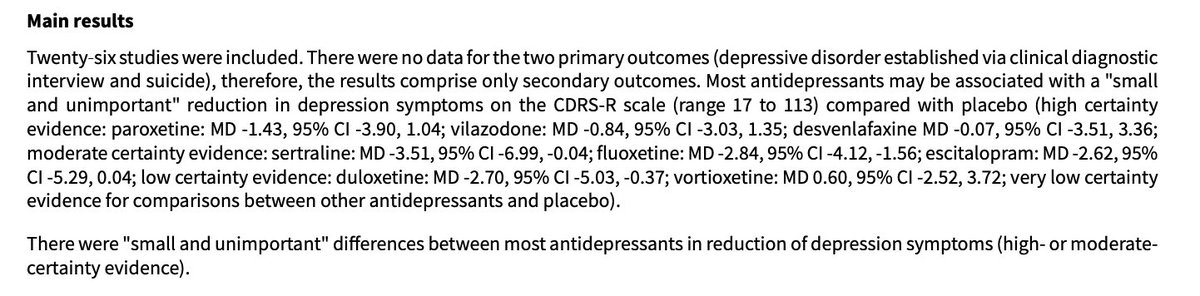
The 2021 Cochrane meta-analysis finds a much smaller effect for fluoxetine, and goes so far as to say that any benefits of the drugs are "small and unimportant." cochranelibrary.com/cdsr/doi/10.10
Why the discrepancy? In a preprint, Lyus et al. (with @PloederlM as an author) found the answer - the 2016 meta-analysis included a sketchy small study from Iran with a huge effect size, and the Cochrane meta-analysis didn't include it. medrxiv.org/content/10.110
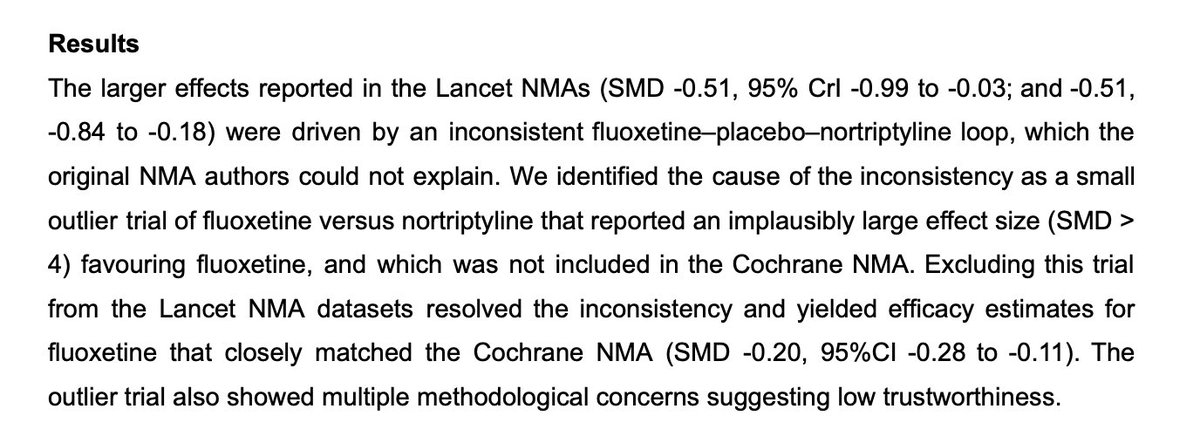


Lyus et al. complained to everyone and got told to kick rocks lmao

The drugs barely show any detectable benefit, but are the harms exaggerated? The authors of the editorial repeat an old canard about black box warnings causing a suicide spike because of reduced prescriptions:

Around the turn of the century, you saw a lot of studies claiming that decreasing suicide rates were caused by increasing antidepressant use:
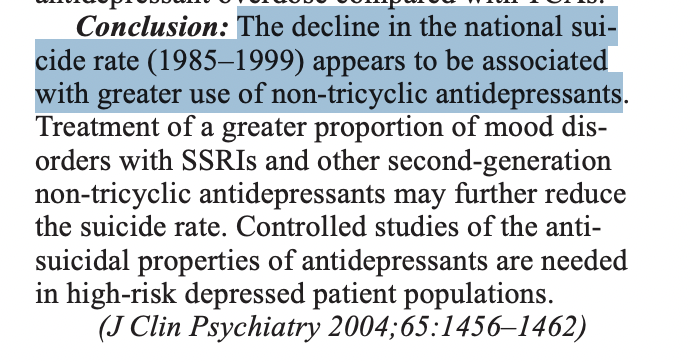
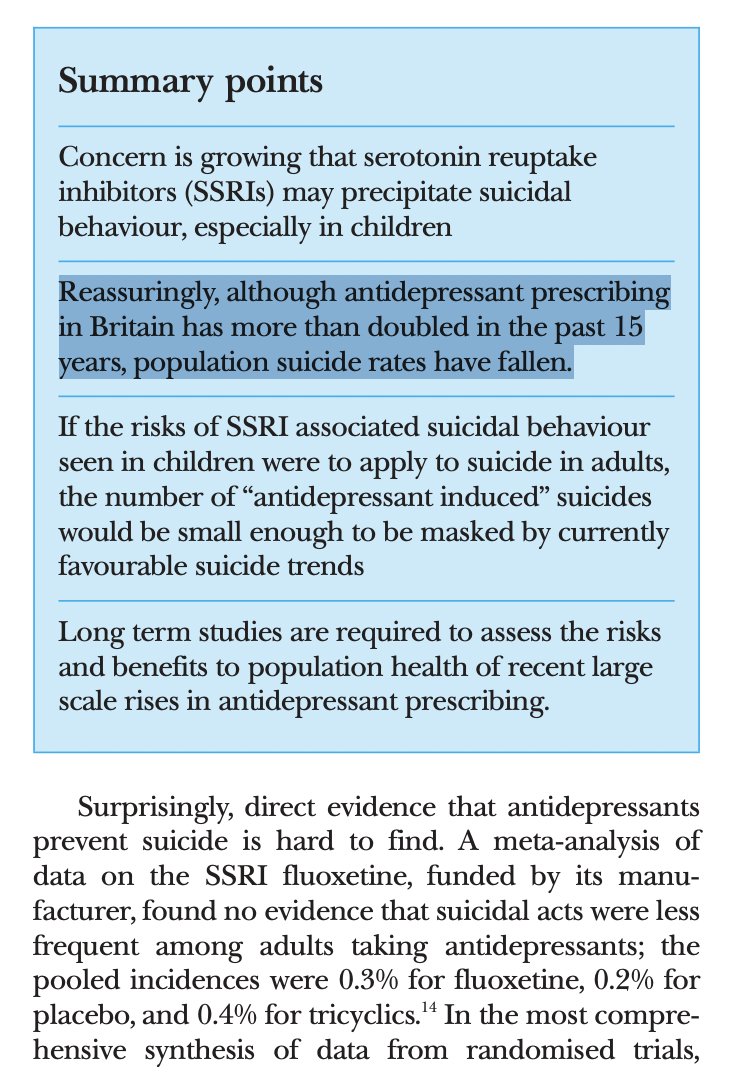
But when suicides in the US started climbing again around the year 2000, despite increasing prescriptions for antidepressants, they got real quiet lol


That's to be expected if the drugs in fact have little effect on depression, as indicated by the randomized controlled trials. But do they actually cause suicides?
@PloederlM's post critically examines Strawn and Walkup's dismissal of the risk - which, although apparently small, appears to be real, and may outweigh any "small and unimportant" benefits the drugs may provide

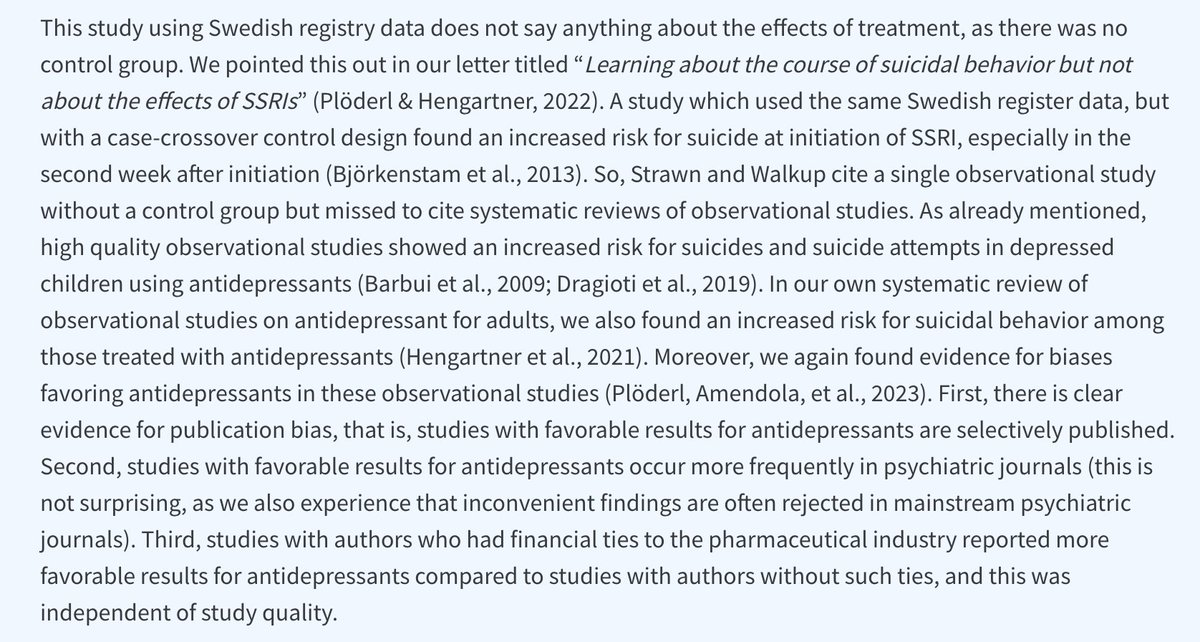
This is an interesting point - when looking at various meta-analyses that include both binary and continuous outcomes, it does seem much more likely to get a significant result for the continuous ones.

Assessing benefits with continuous variables and harms with dichotomous variables systematically exaggerates benefits and downplays harms.
This is on top of the issue that harms are often assessed by waiting for spontaneous reports, rather than systematically asking people

the 2021 Cochrane meta-analysis certainly did not dismiss the suicide risk, and pointed out that the elevated risk appears despite most trials excluding subjects with risk of self-harm

Overall a very interesting post - yes the Tylenol autism thing is very stupid, but in my opinion concerns about the harms of antidepressants outweighing the benefits shouldn't be dismissed just because RFK said it.
It's a huge problem and a legitimate scandal that we don't have good treatments for depression. Pretending existing treatments are fine is not helping anyone.
one thing I found interesting/surprising is that even the American Psychological Association says there isn't enough evidence to recommend antidepressant medication to children, in contrast to Strawn & Walkup's assertions that the science is settled apa.org/depression-gui


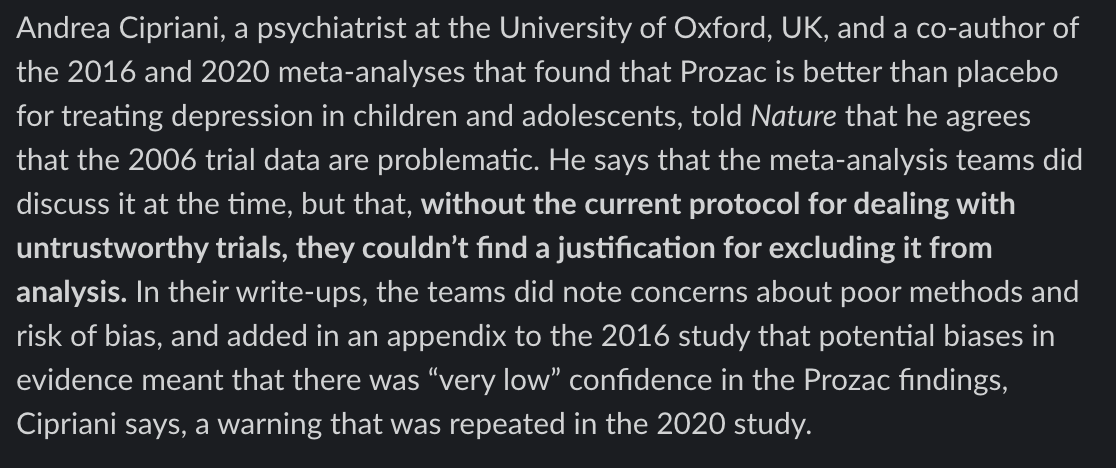
interesting application of ethnomethodology to science - the authors apparently lacked an interactional resource to make their exclusion of the problematic trial scientifically valid, even though its flaws were obvious (emphasis mine) x.com/Nature/status/

nature@Nature
Oct 02
View on Twitter
A single clinical trial of 40 children might have wrongly swayed medical evidence in favour of using Prozac to treat depression in children and adolescents, a group of researchers say.
go.nature.com/3U4nY27


Science Banana
@literalbanana
director of science programming for the Abstract Noun Abuse Prevention Task Force, a project of the Union of Concerned Anthropomorphic Fruit. Help Peer
Missing some tweets in this thread? Or failed to load images or videos? You can try to .