
Visegrád 24@visegrad24
Dec 4, 2025
25 tweets
The new U.S. sanctions are hitting Russia harder than expected, draining billions from Putin’s war budget, crippling Rosneft and Lukoil, and even forcing Serbia and Bulgaria to push Moscow out of their energy sectors.
Eastern Europe is slipping from Putin’s grip, and the Kremlin is scrambling to contain the fallout.
 1/25
1/25
1/25
This thread is about how Putin is rapidly losing influence in Eastern Europe, and why these sanctions may be the biggest blow yet.
Even as Donald Trump floats the idea of a peace deal, Washington's new sanctions package just delivered a major financial blow to Russia's war machine.
2/25
2/25
By targeting Rosneft and Lukoil, the U.S. drained billions from the Kremlin's coffers and triggered a new financial crisis for Moscow.
3/25
3/25 
But the shock isn't limited to Russia itself. The sanctions are forcing the Kremlin out of its remaining strongholds in Eastern Europe.
4/25
4/25 
Serbia and Bulgaria - two countries with long-standing ties to Moscow - are now being pushed to remove Russian energy giants from their economies.
5/25
5/25 
The turning point came on Oct 22, when U.S. Treasury Secretary Scott Bessent joined the EU and UK in sanctioning Rosneft and Lukoil, blaming Putin for refusing to end the war.
6/25
6/25 
In Bulgaria, Lukoil controls the country's largest refinery and over 200 fuel stations - meaning the sanctions could disrupt the entire economy.
7/25
7/25 
To prevent that, Sofia took control of the company and appointed Rumen Spetsov, a former tax chief and bodybuilding champion, as administrator.
8/25
8/25 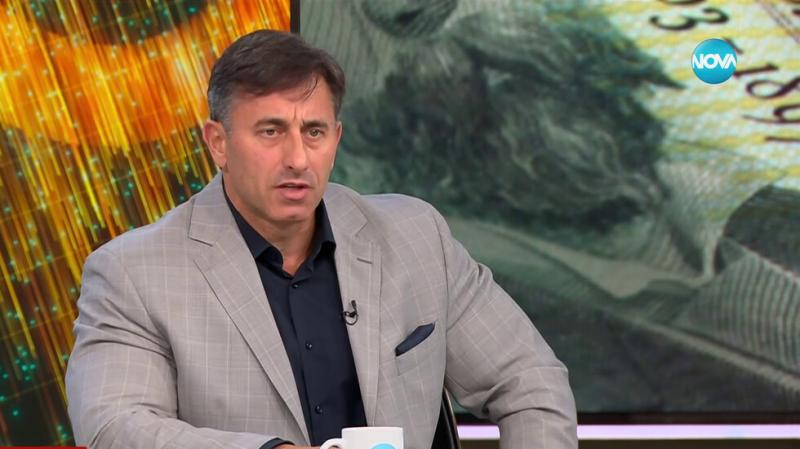
Washington then gave Lukoil and the administrator six months to find a new, non-Russian buyer.
9/25
9/25 
This is a dramatic step for an EU and NATO country that once asked to join the Soviet Union and remains deeply split between pro- and anti-Moscow factions.
10/25
10/25 
President Rumen Radev, seen as pro-Russian, tried to block the takeover, but parliament overruled him. A political shift may be underway.
11/25
11/25 
Serbia is now facing the same dilemma. Long dependent on Kremlin-linked energy, Belgrade may finally be forced to choose between Moscow and the West.
12/25
12/25 
President Aleksandar Vučić is preparing to take control of Naftna Industrija Srbije (NIS), owned by Gazprom Neft and Gazprom.
13/25
13/25 
Sanctions have pushed the refinery into "idle mode" - nobody wants to sell oil to a sanctioned company.
14/25
14/25 
Vučić is hoping for a temporary waiver from the U.S. so he can restart operations while searching for a non-Russian buyer.
15/25
15/25 
Yet he's still walking a tightrope - promising to pay "the highest possible price" if Serbia nationalizes NIS, calling the Russians "friends."
16/25
16/25 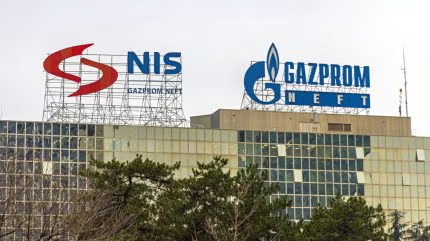
For the Kremlin, this is a painful humiliation. Putin's foreign policy rests on the idea that Russia has a natural sphere of influence across Eastern and Central Europe.
17/25
17/25 
At home, the sanctions are causing even greater damage. Russian oil exports to China have fallen by 500,000 barrels per day - the lowest since the invasion began.
18/25
18/25 
Exports to India and Turkey have also collapsed. Lukoil's shipments have almost vanished: from 569,000 barrels per day in September to just 64,000 in November.
19/25
19/25 
Rosneft's seaborne exports are down 28% in two months. And Russian oil is suddenly selling at deep discounts.
20/25
20/25 
The losses are massive: new U.S. sanctions are costing Russia $2.5-5 billion every month - roughly one-third of its monthly export revenue.
21/25

But Moscow is trying to adapt by repackaging its oil under "unknown" sellers. Sales from these unnamed companies tripled in a month, surpassing 1 million barrels per day.
22/25
22/25 
Russia is rerouting ships mid-voyage, conducting offshore transfers in unusual locations, and using smaller firms like Tatneft, RusExport, and MorExport to mask origin.
23/25
23/25 
Experts say Russia will likely restore export volumes within 2-3 months, but it probably won't recover the higher prices it once enjoyed.
24/25
24/25 
The real question now: will the financial pressure finally push Putin toward a peace deal - or will Moscow fight on despite a shrinking economy?
Analysts say the sanctions may be the strongest incentive yet to bring Russia to the table.
25/25
25/25 

Missing some tweets in this thread? Or failed to load images or videos? You can try to .