
Michael Martens@Andric1961
Jan 1
6 tweets
Once mocked as the “16th Soviet Republic,” Bulgaria used to be desperately poor. But that changed. After joining the EU in 2007 and the Schengen Area 2025, as of today Bulgaria is also a member of the Eurozone. This has made & will make a difference, as figures clearly show. 
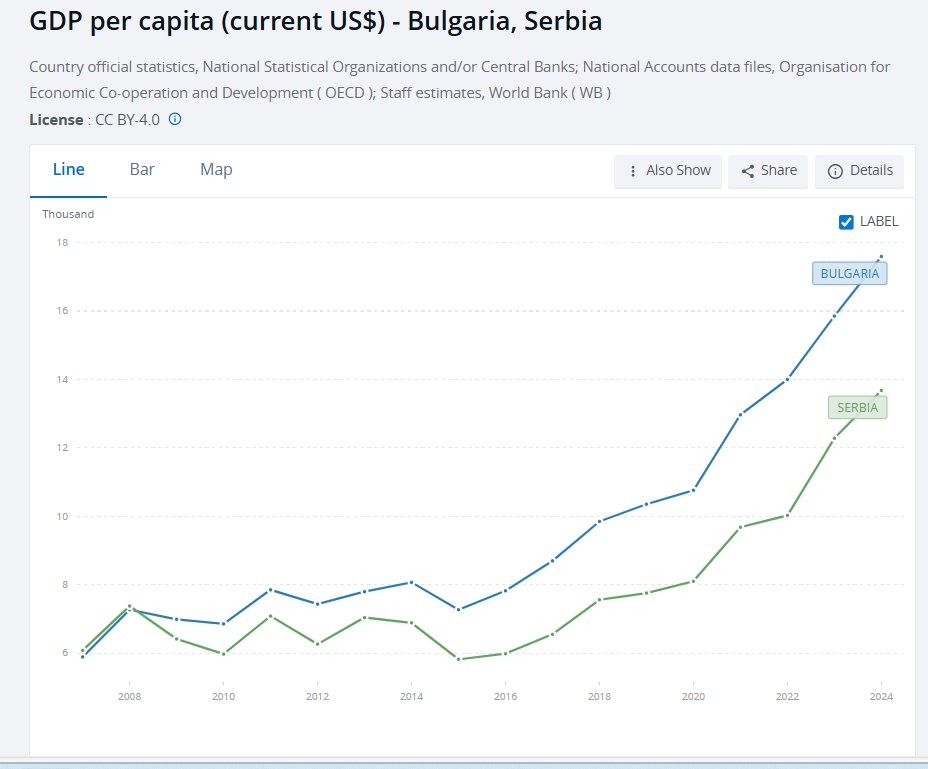
What Bulgaria’s EU membership means economically becomes clear when compared with its neighbor Serbia, a country of roughly the same size. When Bulgaria joined the EU in 2007, its GDP per capita was below Serbia’s. Today, it stands well above it.
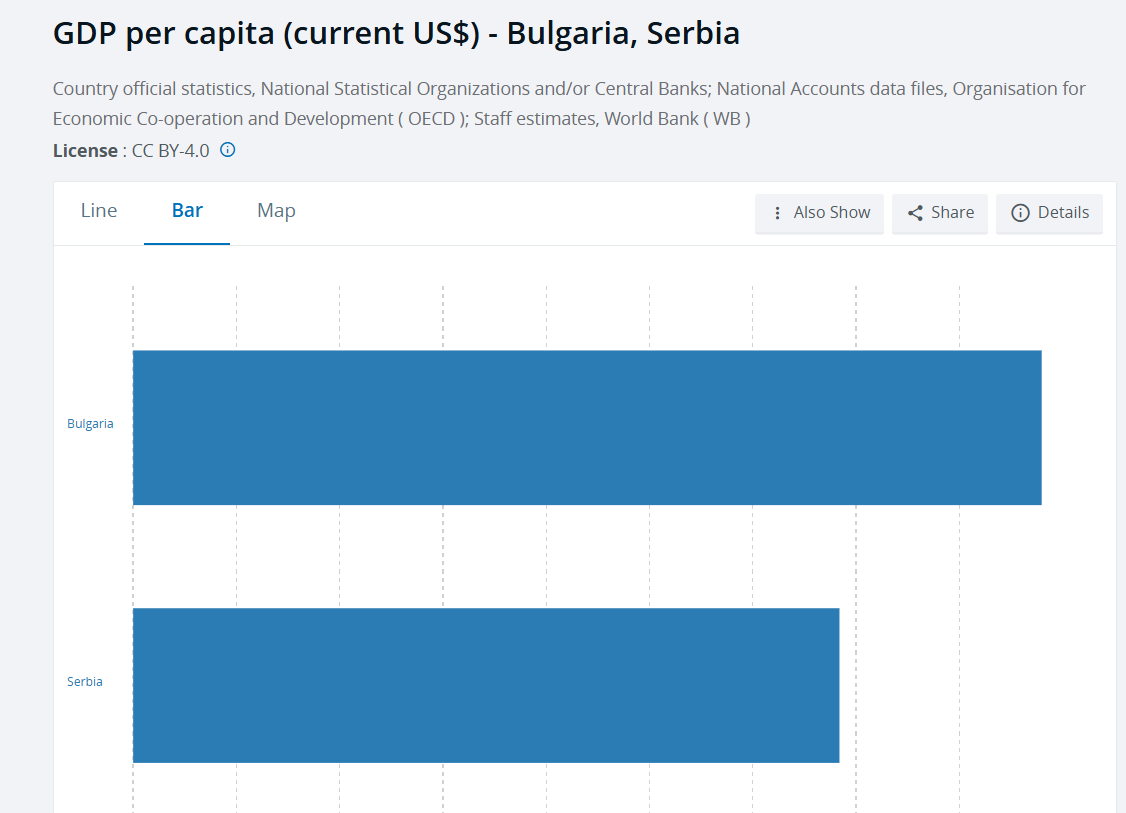
Worldbank-Data:
GDP per capita of Serbia in 2007: 6081 $.
GDP per capita of Bulgaria in 2007: 5888 $.
GDP per capita of Serbia in 2024: 13679 $.
GDP per capita of Bulgaria in 2024: 17.596 $.
That’s hardly surprising. Bulgaria has access to the vast structural funds and multi‑billion‑euro special programs such as the  Recovery and Resilience Facility. Serbia does not.
ec.europa.eu/commission/pre
Recovery and Resilience Facility. Serbia does not.
ec.europa.eu/commission/pre
Recovery and Resilience Facility. Serbia does not.
ec.europa.eu/commission/pre
As an EU member, Bulgaria also has access to special funds such as the €150 billion SAFE (Security Action for Europe) program, which, for example, helps co‑finance a €1 billion investment by Rheinmetall. Serbia has no such access. reuters.com/business/aeros
SAFE (Security Action for Europe) program, which, for example, helps co‑finance a €1 billion investment by Rheinmetall. Serbia has no such access. reuters.com/business/aeros
Bulgaria also enjoys free access to a vast market of more than 450 million people. Serbia does not. No wonder there is no political majority in Bulgaria for leaving the EU, no matter how hard  &
& propaganda tries to advocate for it. For more:
faz.net/aktuell/politi
propaganda tries to advocate for it. For more:
faz.net/aktuell/politi
& propaganda tries to advocate for it. For more:
faz.net/aktuell/politi
Michael Martens
@Andric1961
Journalist. Tweets mostly in English or auf Deutsch, Иногда по-русски, понекад на српском.
Missing some tweets in this thread? Or failed to load images or videos? You can try to .