ChrisO_wiki@ChrisO_wiki
Jan 4
40 tweets
1/ Russian warbloggers are furious and chagrined that the US has done to Maduro and Venezuela what their country has failed to do over four years to Zelenskyy and Ukraine. They say it shows Russia's weakness and condemn the Venezuelans for failing to fight. 
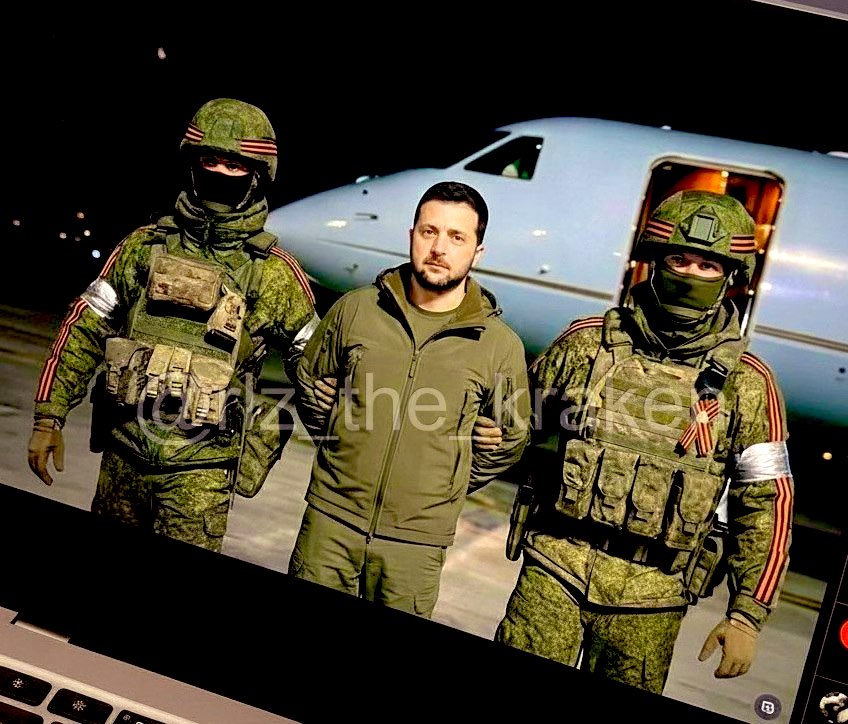
2/ 'Donetsk Infantry' is frankly envious: "Shoigu and Gerasimov, along with generals from the FSB, SVR, and GRU, are watching and asking, 'Was that even possible?' Some can do it, while others are left with sclerosis, constipation, and comic-book reports. Who studied what?"
3/ 'Shakespeare' laments that "they simply exterminated the political leadership of an independent and sovereign country. And this is against the backdrop of "our harsh response to Ukraine," which we're all expecting in the fourth year of the war,…
4/ …and it's not a given that we'll get it. I have only one emotion now: shame. I'm ashamed, guys. Not for Venezuela. And certainly not for the USA. That's all. It's the holidays now. I went to see an old Soviet movie. I wish the same for you."
5/ Many warbloggers express grudging admiration for the skill and professionalism of the American operation, perhaps none more grudgingly than 'Southern Front': "Even though the Yankees are faggots, I take my hat off to them, they carried out a brilliant operation. Faggots!"
6/ 'DSHRG Rusych' asks sarcastically: "Maybe it's time we started hiring American generals and planners to serve Russia?"
7/ Oleg Tsarev says that it's unfair to compare the Venezuela operation with the 2022 invasion of Ukraine. He notes that by then, Ukraine had fought Russia for eight years, had a substantial amount of Western military equipment, and was strongly ideologically motivated.
8/ "Comparing such an operation to a war where Russia is effectively fighting against the entire Western military-industrial complex is, to put it mildly, strange.
9/ "Here, the playing field is uneven, the enemy's motivations are comparable, and the depth of preparation is nonexistent."
Rybar cites specific tactical and operational differences between Venezuela in 2026 and Ukraine in 2022:
10/ " The landing on Hostomel [airport] was carried out without any paratrooper losses, even under far worse conditions, when Mi-8s over the "Kyiv Sea" were attacked with MANPADS like MLRS. The airfield was occupied, and the enemy fled after the firefight.
The landing on Hostomel [airport] was carried out without any paratrooper losses, even under far worse conditions, when Mi-8s over the "Kyiv Sea" were attacked with MANPADS like MLRS. The airfield was occupied, and the enemy fled after the firefight.11/ " A similar situation occurred in Kherson, where paratroopers were deployed 100 kilometers into enemy territory to secure the Antonivskyi Bridge. Counterattacks by larger Ukrainian Armed Forces units were repelled, allowing the group to cross the Dnipro.
A similar situation occurred in Kherson, where paratroopers were deployed 100 kilometers into enemy territory to secure the Antonivskyi Bridge. Counterattacks by larger Ukrainian Armed Forces units were repelled, allowing the group to cross the Dnipro.12/ " There was also a largely unknown episode involving the Russian Armed Forces landing at Voznesensk airfield deep behind enemy lines in the Mykolaiv region. Once again, the paratroopers accomplished their mission, waiting several days for armoured groups to arrive.
There was also a largely unknown episode involving the Russian Armed Forces landing at Voznesensk airfield deep behind enemy lines in the Mykolaiv region. Once again, the paratroopers accomplished their mission, waiting several days for armoured groups to arrive.13/ "However, these tactical successes failed to translate into strategic gains. How could they have been otherwise, given that fewer aircraft were allocated for a full-scale ground operation than the US allocated for precision strikes and cover for…
14/ …a special forces sortie into Venezuela?
 And "if we want to be like the Americans," then we first need to understand what exactly we want and what we can actually do with it.
And "if we want to be like the Americans," then we first need to understand what exactly we want and what we can actually do with it.15/ "Without sober analysis, there will be no sound conclusions, and without those, we'll end up with the same mistakes."
16/ Andrey Medvedev points the finger at the Venezuelans, saying that nobody in Caracas was willing to fight for Maduro:
"During the landing operation, no one fired at the American helicopters. No one wanted to defend Maduro or, ultimately, the country. Why?"
17/ "Everyone was simply tired of the situation inside Venezuela. The beautiful slogans about an unyielding Bolivarian republic that would never break under American pressure didn't work in the face of economic crisis, rampant inflation, sanctions, and rampant corruption.
18/ "In fact, corruption was the reason everything went so smoothly for the American military. They gave money to Maduro's entourage and the military. And not much, by American standards. And that's it...
19/ "There's a quote. It was either by Mannerheim or Väinö Tanner:
'Before spending huge amounts of money on defence, you need to create a standard of living for the people that they will be willing to defend.'
20/ "In Venezuela, there was no standard of living, no defence, and no money. And it's unlikely that the CIA agents were solely to blame for this."
'Vault 8', a serving Russian soldier in Ukraine, comes to a similar conclusion:
21/ "In short, the main lesson from what happened is that any political group will be quickly crushed if it exhausts its supporters with its domestic policies and fails to outmaneuver the opposition and external enemies in ensuring its citizens' basic needs, rights, and freedoms.
22/ "That's the short version.
Digging deeper, I once delved into the details of the Venezuelan crisis, when Juan Guaidó was rocking the boat. The country had three strategic problems:
23/ "1) A constant shortage of domestic food and problems selling it.
For years, the US had been constantly withholding food supplies to Venezuela through sanctions. And they constantly used this leverage.
24/ "Maduro's socialists sold food through the state-run chain of stores, but were unable to do anything about the black market and the opposition's alternative retail outlets.
25/ 2) A constant struggle for control over the state oil corporation.
26/ "Maduro's Socialists channeled oil revenues into social projects, but failed to rid themselves of the opposition from the corporate elites that had been pushed out of power and retained their positions in company management.
27/ "3) The lack of control over Venezuela's security forces.
The military and police in Venezuela sided with Maduro by turning a blind eye to corruption involving Venezuelan security forces in the oil and drug trade.
Bottom line:
28/ "When your security apparatus is on its own and voluntarily subordinate to the ruling political group, when the population is struggling to meet basic needs, and political opponents are in charge of the country's main economic component, you have problems.
29/ "You'll be ousted very quickly."
Roman Saponkov says that Maduro's ouster was the result of sustained US pressure and consistent Venezuelan failures:
"It's quite clear that we're witnessing a long and consistent implementation of American "leverage" in Venezuela..."
30/ "While sanctions were being steadily tightened on one side, and the Bolivarian Republic was quietly consuming its last bit of slack, a decision quickly matured behind the scenes in the army to surrender Maduro in exchange for some kind of conditional permission to rat.
31/ "The ancients were truly right when they said that the walls of a fortress cannot be considered impregnable as long as a donkey laden with gold can pass through them.
32/ "What can current events teach us as an example? Under economic pressure, it's vital to maintain a healthy standard of living in the rear...
33/ "We're not waging a war like Hearts of Iron or Battlefield, where everything hinges on who fulfills the military requirements of a special operation or gets their tanks to the English Channel. We're essentially playing one big game of Europa Universalis, with hundreds of…
34/ …critical variables. And if we allow a setback, for example, in the economy (or social security, or interethnic policy—there are plenty of options), we could lose the war, even if we win in the Special Military Operation."
35/ Russian political scientist Gleb Kuznetsov says that the US operation was essentially a show for the TV cameras after Maduro was sold out by his own side:
36/ "A brilliant operation. Meticulous planning. Excellent troops. Excellent people.
But this wasn't a military capture operation. It was a coordinated prisoner transfer with theatrical special effects.
37/ "This isn't about [former Panamanian leader] Noriega, who—again, theatricality—was captured as a result of a real military operation (losing several helicopters in the process) on 4 January 1990. This is about today's media world."
38/ 'Hard Blog' describes the operation in similar terms as "merely a smokescreen to cover the real operation, which included the recruitment of the president's inner circle and the arrival of a special forces team in the country in advance, which, of course, didn't conduct any…
39/ …assaults or captures. Their job is logistics—simply getting Maduro from point A to point B.
Essentially, it's nothing more than a smokescreen to cover treason and rebellion." /end

ChrisO_wiki
@ChrisO_wiki
Independent military history author and researcher. Coffee tips are appreciated! https://t.co/t1EjNrIZ2c Now also at https://t.co/4qGQ2ffHJJ
Missing some tweets in this thread? Or failed to load images or videos? You can try to .