On Thomas Frank and adaptations:

Nathan@NathanAClark
Jan 18
View on Twitter
This here is an extremely popular sentiment going around at the moment which I disagree with.
I think he adapts every game. Out of possession behaviours, in possession shape and personnel/role usage.
And I also think it's largely irrelevant...
x.com/Allifornicatio
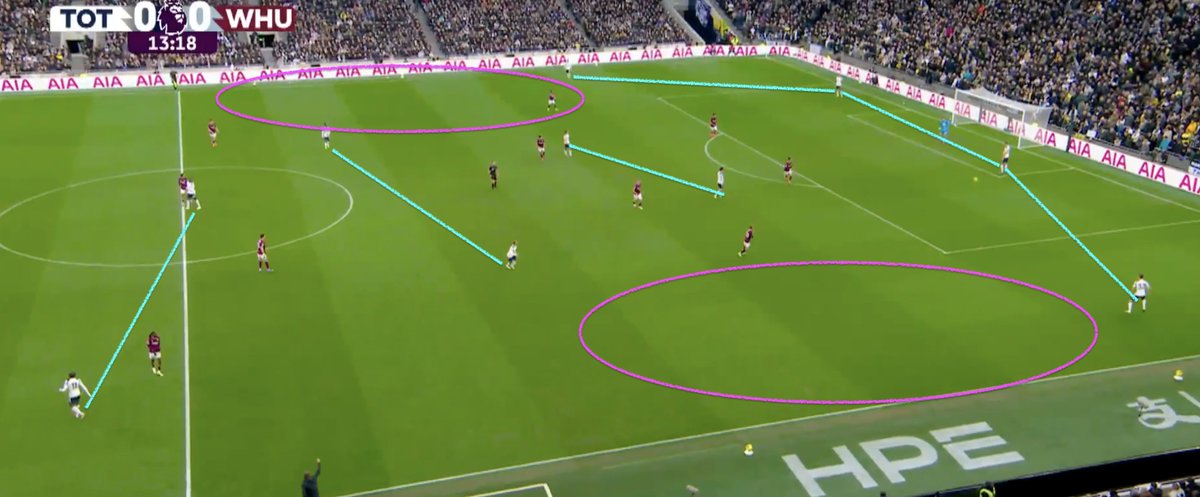
Phase 1 Build Up: 4-2-2-2. Intention: Force WH narrow in order to create space for FBs to carry into/pass from.
Phase 2 Build Up: 3-2-4-1 - LB becomes CB. Intention: Occupy space between WH's vertical lines. Create diagonal angles between lines of Spurs possession.

Injury to Ben Davies.
Now Spence plays advanced inverted.
2-2-5-1. Gallagher moves wide to leave opposition block and receive from CBs.
But Rest Defence structure fails, and direct attack is conceded.


So, back to 3-2-4-1 to protect against counters.
2H, Bissouma on. Change to 2-3-2-3(433) - CG pushed up. Improved build-up.
Finally, 4-4-2 at end game for box presence.


Out Of Possession.
1H: 4-4-2 Mid-block. Intention: Invite WH to play their bad possession game and open up space to exploit on break.

We chase back passes + loose touches to jump man-to-man in wide areas.
Opposite winger is 1v2.
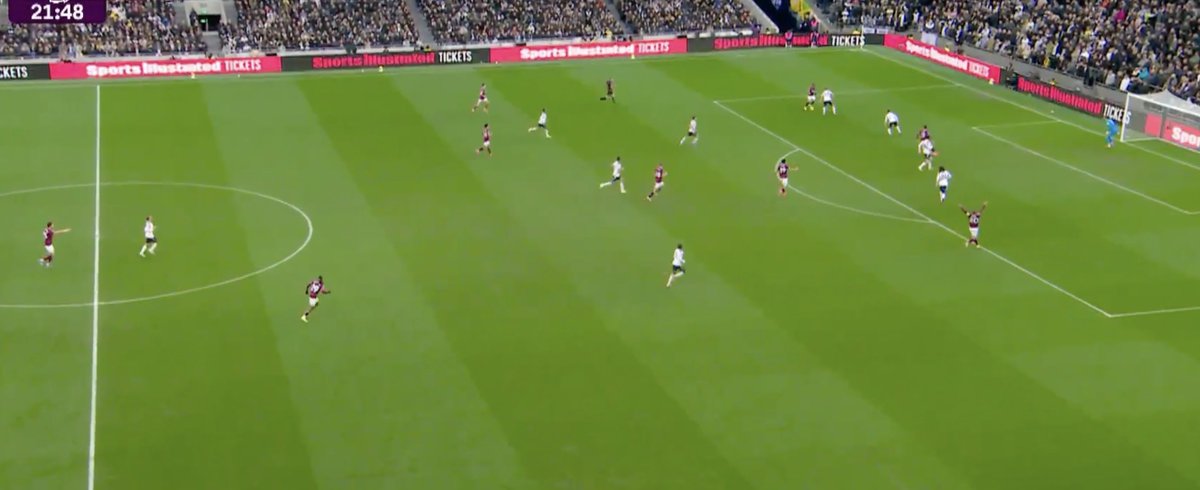
But WH put four forward, so our spare man is in midfield, not backline (Issue!).

Similar situation v Oppo GK.
4-4-2 high press forces/invites keeper to go long.
Repeated loss of second balls.


2H
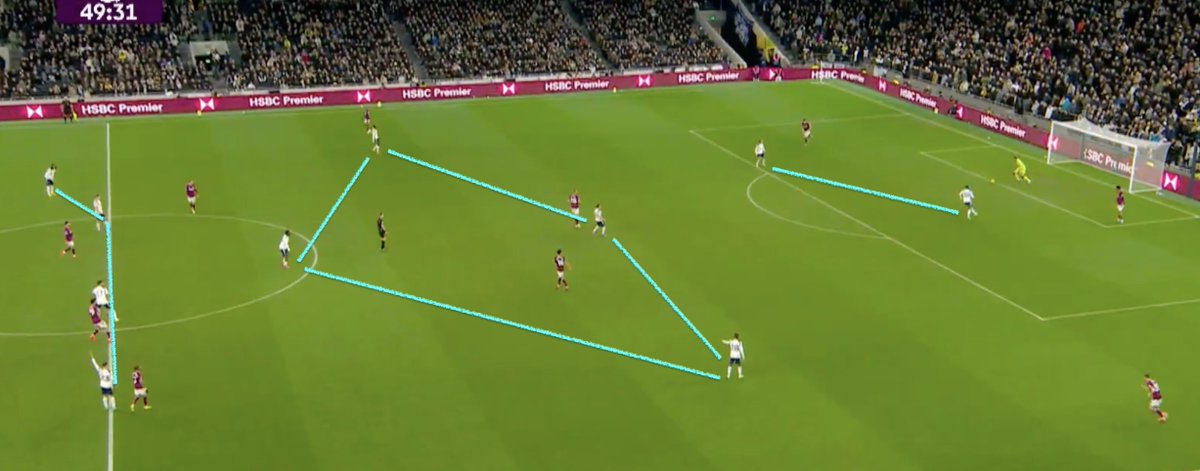
Change to 4-Diamond-2 press.
Now Bissouma is close to help backline for second balls.
WH threat minimised.

So, yes, Thomas Frank adapts. Constantly. Possibly even too much.
Frank and his team are astute to issues of spacing, shaping and timing.
However, all of this is completely irrelevant...
... given that regardless of shape or intention his team never progress the ball centrally, never demonstrate patience in possession, have no nuance to their final third game (instead resorting solely to crosses) and show a strong tendency towards passivity, defensively.

Nathan
@NathanAClark
Tactics Guy/Podcast Editor/Recruitment Dork/Green Screener @TheExtraInch. Fully Coys. ⚭ @MaryamClark98. Chronic Insomniac. ☭
Missing some tweets in this thread? Or failed to load images or videos? You can try to .