


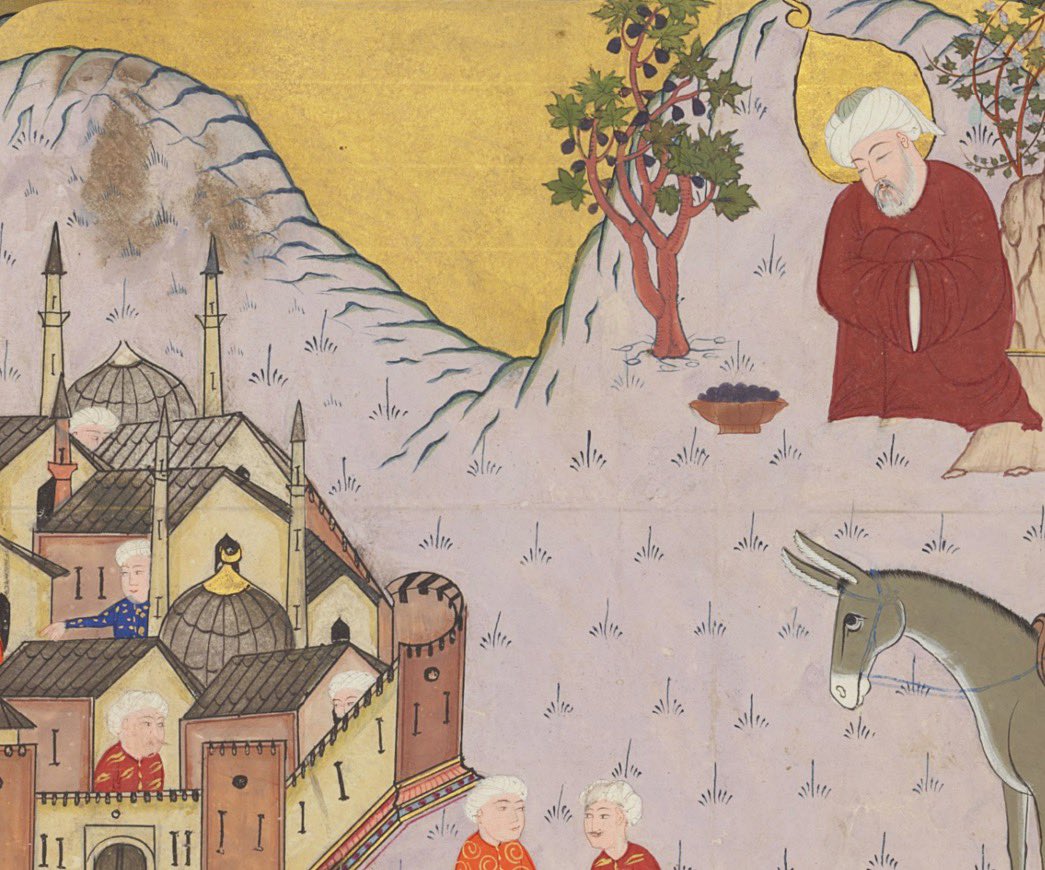
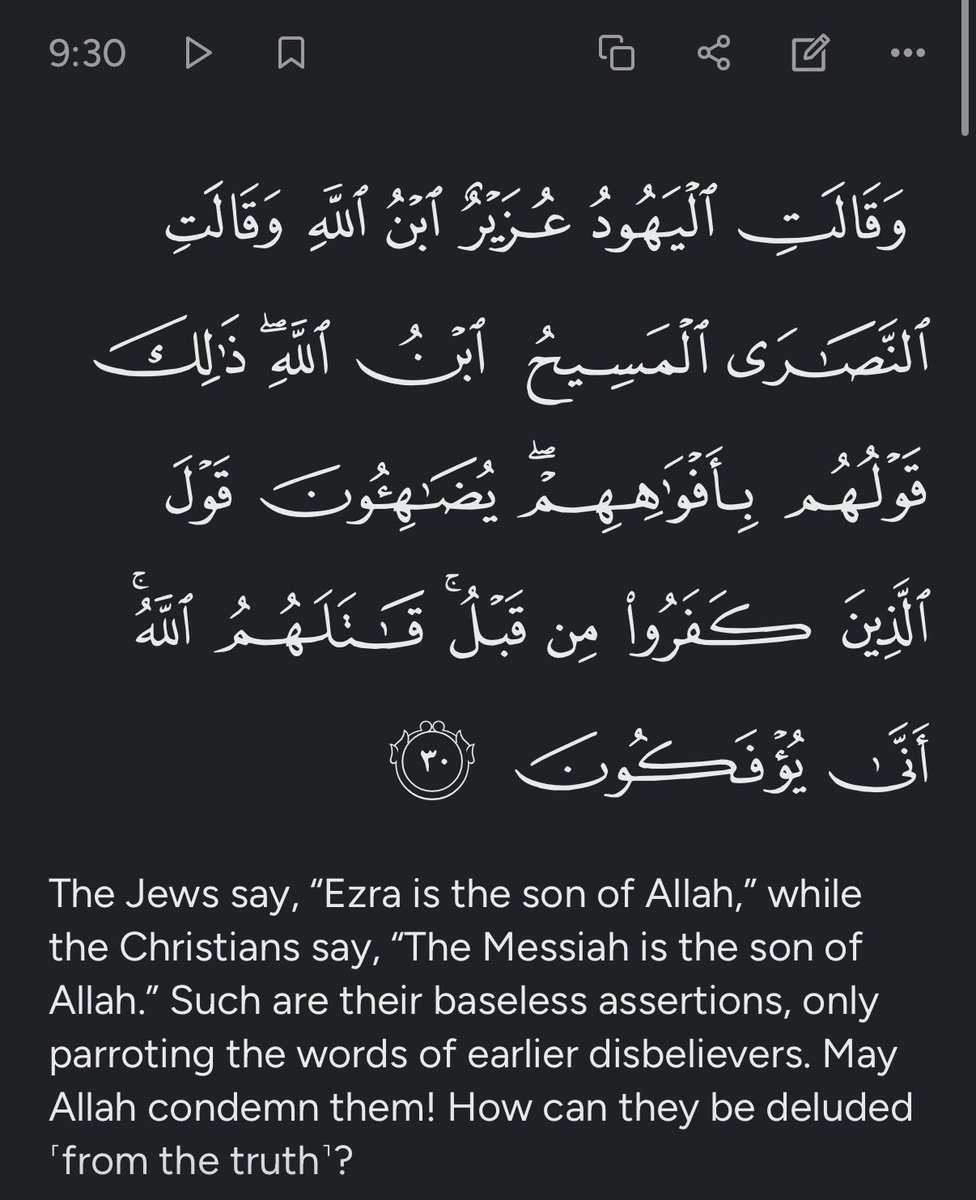
The Qur’an presents ʿUzayr as a figure called “Son of God” by Jews. Holger Zellentin and Hythem Sidky argue the Qur’an reframes Rabbi Eliʿezer ha-Gadol as ʿUzayr, meaning “little helper,” transforming him from “The Great” to a servant who received God’s Torah. (1/23)
The Qur’an primarily addresses Jews from Medina, Khaybar, and the Hijaz. Evidence about them is sparse (just inscriptions, archaeology, and early Islamic literature) but the Qur’an itself provides crucial insight into their beliefs and practices. (2/23)
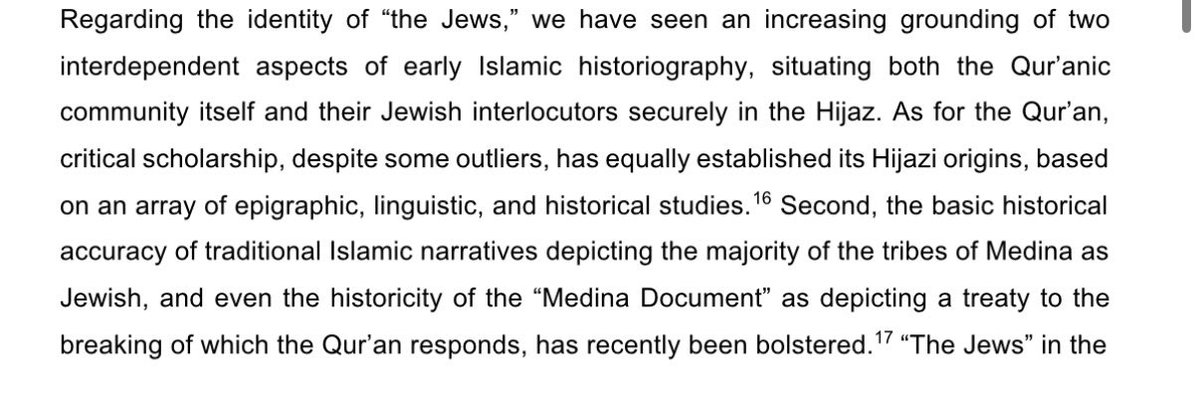
Though written centuries later, early Islamic texts reveal that Hijazi Jews had a distinctly Roman-Palestinian character. They were dispersed or eliminated, yet their influence is visible through Qur’anic engagement. (3/23)

The Qur’an contains extended polemics against Jews and Christians. Recent scholarship shows that Jewish and Christian traditions contain claims echoed in these passages. Qur’anic rephrasing would have been recognizable to audiences familiar with those teachings. (4/23)


The Qur’an does not cite traditions according to modern HCM standards. It references them with enough specificity for informed audiences to recognize the claims and reject them if necessary. Most parallels trace back to Palestinian rabbinic traditions, often the Mishna. (5/23)

Hijazi Jews knew Palestinian religious poetry (payyetanim), parts of the Mishna, and collections of Midrash like Bereshit Rabbah, Shir ha-Shirim Rabba, and Tanḥuma. They also told stories of Jesus similar to the Toledot Yeshu tradition. (6/23)
The Qur’an’s references to divine sonship (Q 5:18) and the divinization of leaders (Q 9:31) are precise. We can treat it as a historically informative source, similar to rabbinic literature, for locating claims about figures like ʿUzayr. (7/23)

To identify the historical ʿUzayr, the person must have a Hebrew name that could plausibly become ʿUzayr through established patterns of Arabicization. Just as ‘Isa represents Jesus, ʿUzayr reflects a careful linguistic adaptation in the Hijazi context. (8/23)

The Semitic root ʿ-z-r, meaning “help,” forms the base. ʿUzayr follows the fuʿayl diminutive pattern, common in Arabic names, including adapted foreign names like Jurayj (Grēgorios) and Surayj (Sergios). Adaptation combines phonetic similarity with semantic nuance. (9/23)

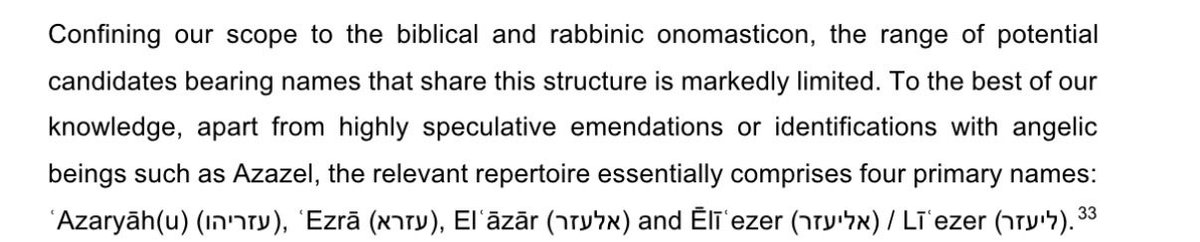
To satisfy Arabicization, the historical figure must bear a Hebrew name compatible with the fuʿayl diminutive. Likely candidates include: ʿAzaryah(u), ‘Ezra, Elʿazar, and Eliʿezer / Liʿezer. Angelic or speculative names like Azazel are excluded. (10/23)
Jews called ʿUzayr ibnu Allah (“Son of God”) requires a literal referent. It cannot be dismissed as a vague honorific. Q 9:30 isolates a single figure, paralleling the claim about Jesus, demanding that the Jewish assertion be understood as individual divine sonship. (11/23)

Whether it’s the Meccans’ “daughters of God” or Jesus as the Son. By denying God any divisible or gendered parts, it frames the claim about ʿUzayr as a concrete rabbinic assertion of sonship, not really a metaphor for closeness. (12/23)


Jews are said to take their ahbar as lords, Christians their ruhban , and the Messiah, son of Mary. The Qur’an recognizes both groups’ legitimate leadership but denies them any form of divinity. (13/23)

ʿUzayr is subsumed under ahbar, representing the foundational rabbinic authority. He is not a prophet, angel, or semi-divine hypostasis. The historical ʿUzayr must of been a rabbinic figure whose “lordship” operates through the institutional leadership of the scribes. (14/23)


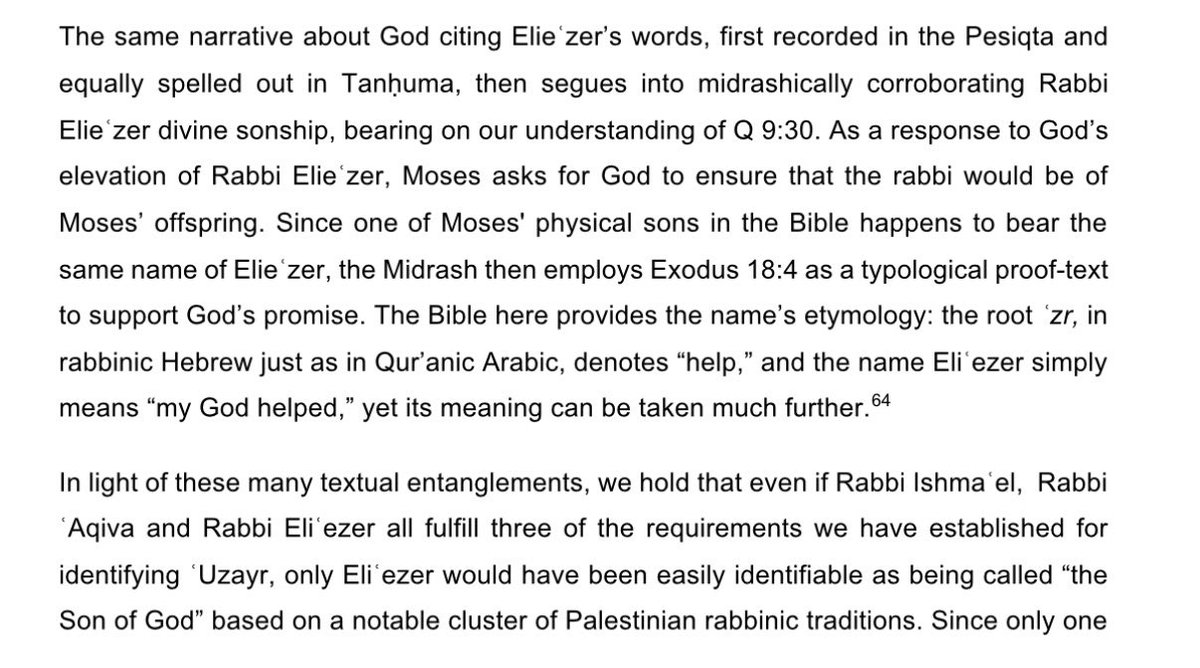
There are 5 criteria Sidky and Zellentin set. While Ishmaʿel & ʿAqiva meet 3/5, only Rabbi Eliʿezer ben Hyrcanus fulfills all, including a phonosemantic match to ʿUzayr. Q 5:44‑47 mirrors Mishna Avot 1:1: (15/23)

Eliʿezer emerges as the quintessential rabbinic figure whose role parallels Jesus’ in Christian tradition, bridging the Qur’anic polemic with historical Palestinian Judaism. (16/23)
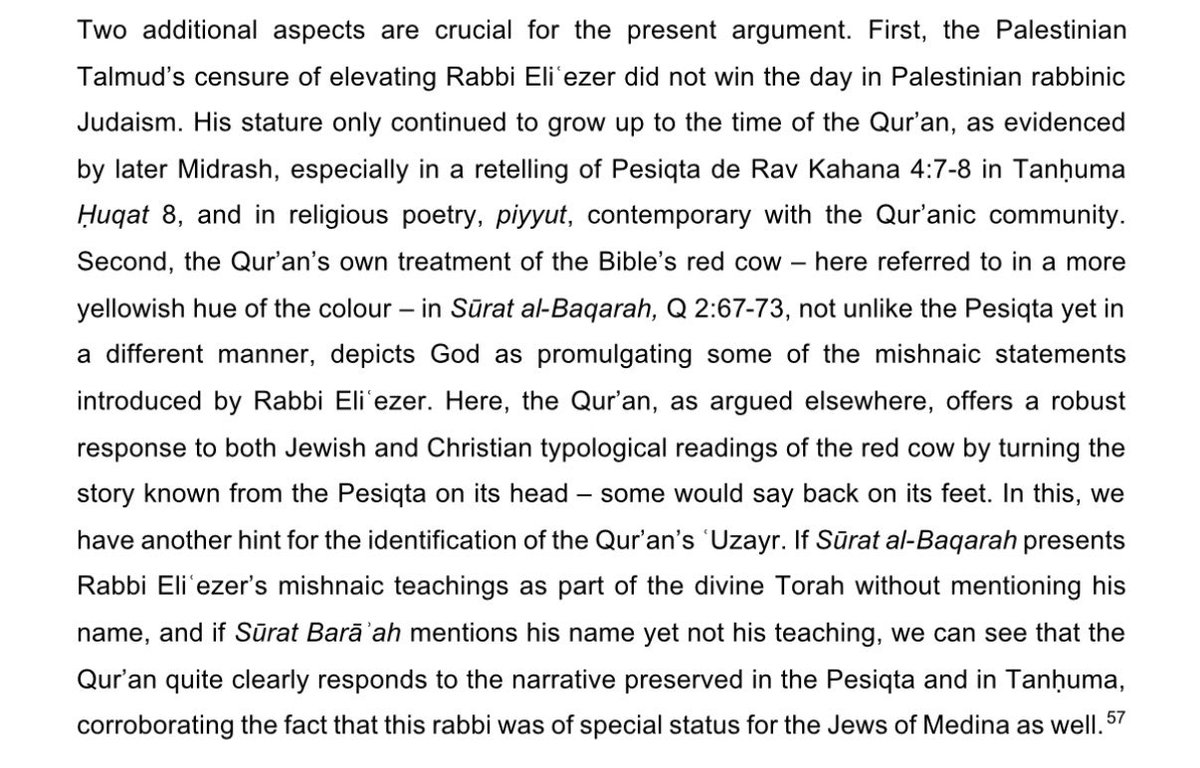
Babylonian Talmud & para-rabbinic texts repeatedly depict God addressing certain rabbis as “My son”: Hanina ben Dosa, Ishmaʿel, and ʿAqiva. The three-part formula is consistent: God speaks, names the rabbi, calls him “My son.” (17/23)

Only Eliʿezer matches the fourth criteria: a phonosemantic connection to Arabic ʿUzayr. Palestinian sources present him as the archetypal habr with Christ-like typology, justifying the Qur’an’s depiction the claim. (18/23)

One might object that the initial theophoric El‑/Eli‑ is lost in ʿUzayr from Eliʿezer. Qur’anic onomastics show this prefix is unstable: Elijah (Ilyas) and Elisha (Al‑Yasaʿ) illustrate reanalysis, turning El‑ into either the article al‑ or the construct noun al. (19/23)
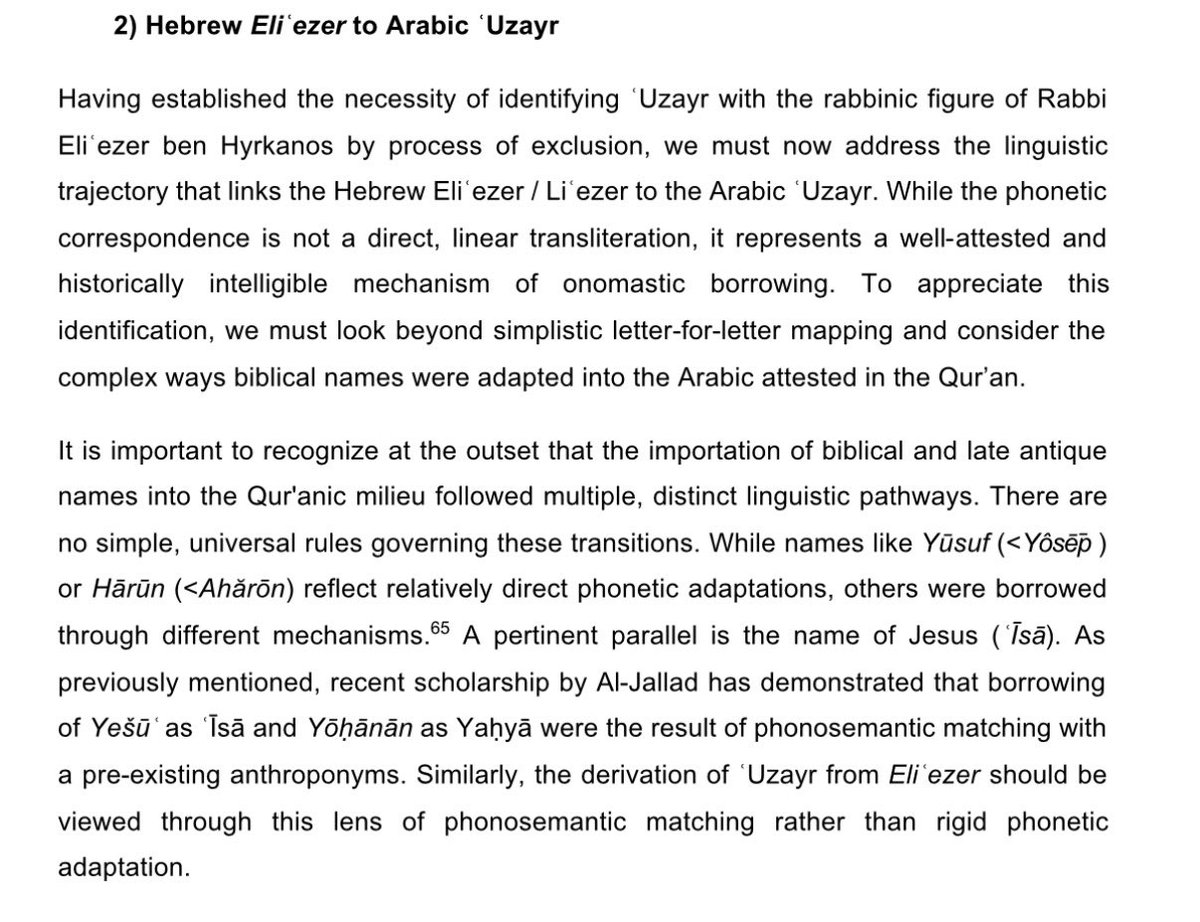
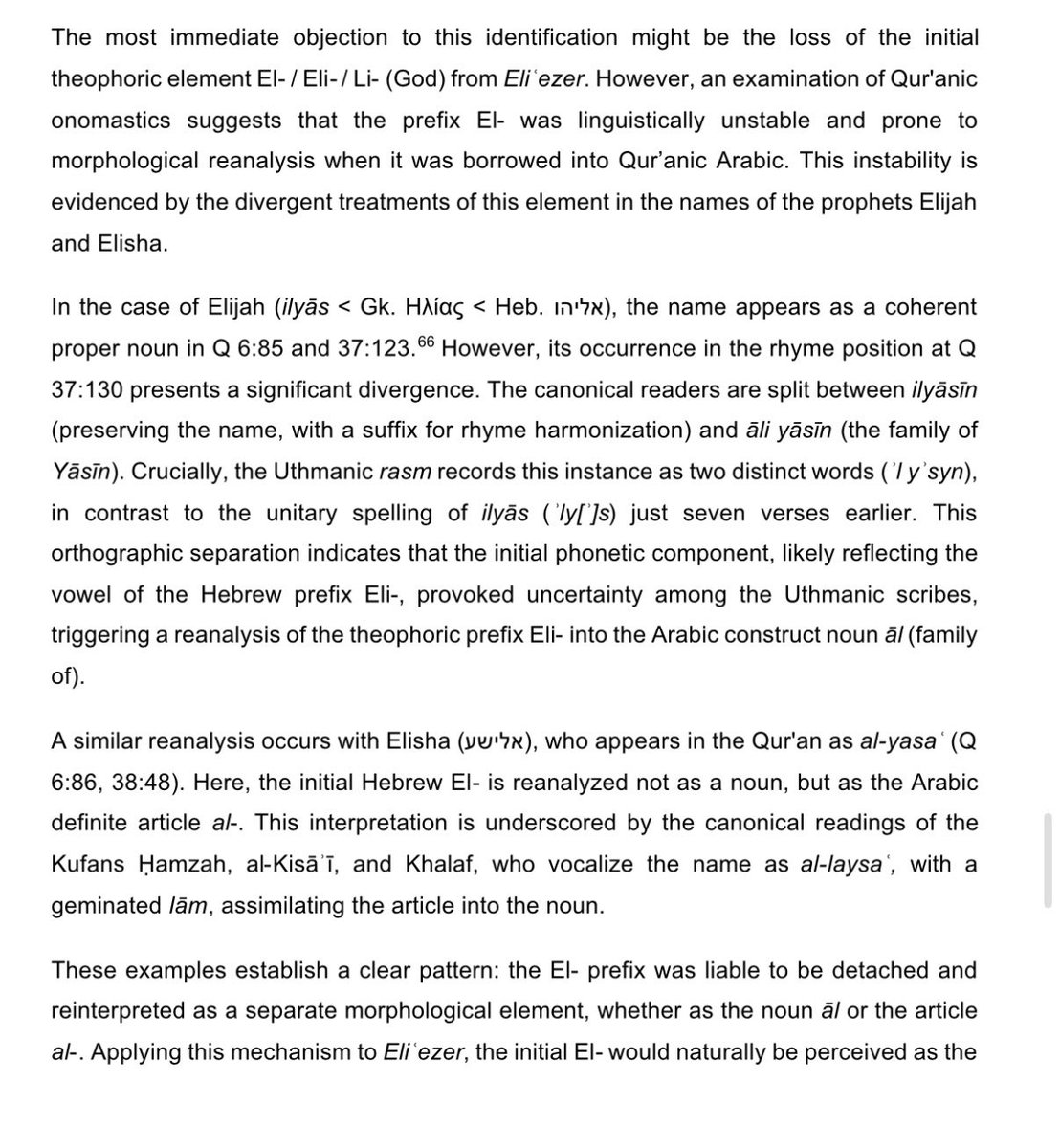

Applying this to Eliʿezer: El‑ is reanalyzed or dropped, leaving the root ʿ‑z‑r (“help”), yielding ʿUzayr, a diminutive Arabic form. Just as Arabic allows al‑Ḥusayn, this adaptation is linguistically natural. Early Arabian Jews may have used it affectionately. (20/23)

Rabbi Eliʿezer ha‑Gadol (“The Great”) becomes “Little Helper,” echoing early Islamic polemical diminutives (e.g., Musaylimah/Maslamah). The Qur’an thus reclaims the figure, turning God’s “Son” into God’s humble servant. (21/23)

Even the earliest Qur’anic exegetes were cut off from Palestinian Judaism. Recovering the original message required historical and philological study of rabbinic texts, a project that only flourished from the time of Abraham Geiger (d. 1874) onward. (22/23)

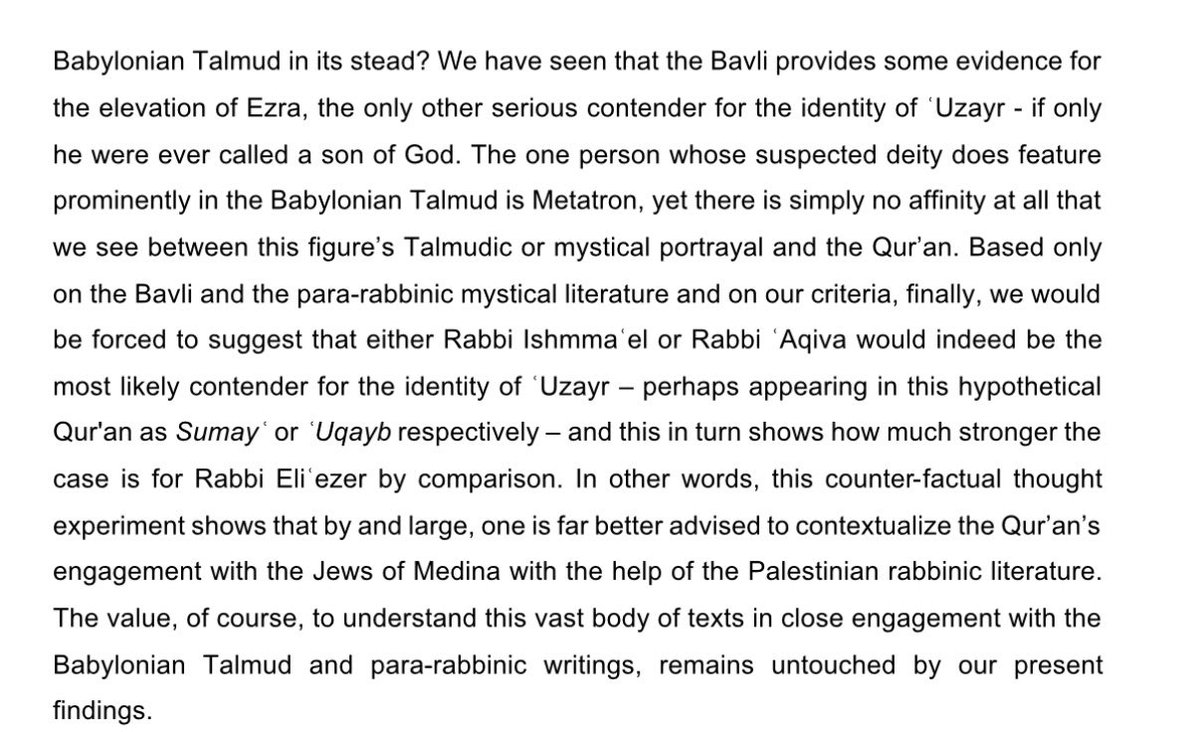
if we only had the Babylonian Talmud, 3 Enoch, or mystical texts, Ezra or Metatron might seem like candidates. But neither matches the Qur’an’s depiction. Palestinian rabbinic sources best contextualize ʿUzayr, highlighting Rabbi Eliʿezer as the most plausible figure. (23/23)
My personal view: This paper supports the idea I already was reaching that Palestinian influenced Judaism of the Hijaz acted as the key mechanism through which the Qur’an engaged with both Jewish and Syriac thought.
Syriac typologies and motifs likely reached the Qur’an filtered through ongoing Jewish-Christian debates, which the Qur’an then adopted and expanded. This complicates simplistic claims of direct Syriac influence.

Missing some tweets in this thread? Or failed to load images or videos? You can try to .