
Anchit Gupta@AnchitGupta9
Mar 3
25 tweets
I have been following the GTRE/ Kaveri Engine discussions intently. Before we go further, remember the Indian Air Force officer who started this journey: Air Vice Marshal Sailendra Nath Roy Chaudhury.
Because he built the starting line. (1/25)
#IAFHistory
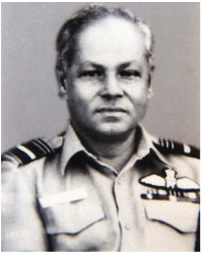
Commissioned on 16 Sep 1947, he was part of what later generations called the “Zero Course”. Ten direct entry engineers, put through the 49th and 50th Pilots Initial Course, then ITW Coimbatore, then Tambaram to train as Technical Engineering officers + Pilots. 2/
They did not complete flying training to earn wings in the conventional sense, though Roy Chaudhury later did earn them. This was the Indian Air Force’s first attempt at direct entry technical officers. The branch’s origin story is here. 3/
iafhistory.in/2023/10/03/fro

He then trained at Cranfield Institute of Technology and at Bristol Siddeley in the UK, part of a six year Indian propulsion effort. He returned in 1958, unsure what lay ahead, and was called in by Dr D S Kothari, first Scientific Adviser to the Defence Minister. 4/
The Defence Minister looked up from his dossier and said he would believe all the qualifications the file contained only after an indigenous engine was made. Roy Chaudhury replied: “It cannot be done, Sir. No material, no infrastructure, no trained technician. Nothing.” 5/
Defence Ministers voice rose: “Yes it can, and has to be done. If you felt so conclusively, why did you with your family spend nearly five years at taxpayer’s money in England? Go round and search, and make that engine.” He walked out of South Block dazed. 6/
In 1959, with personal backing of PM Nehru and Defence Minister V K Krishna Menon, the Gas Turbine Research Centre was stood up at 4 BRD Kanpur. Fewer than ten engineers and twenty technicians. Roy Chaudhury posted there as a Squadron Leader. 7/
Even those Kanpur years produced firsts. For the first time in India, they manufactured a circular blank of Rex 448 heat resisting material to produce the turbine disc. Done at an ordnance factory in Cassipur, West Bengal, under DGOF. Small, unglamorous, necessary. 8/
On 4 Apr 1961, his team ran India’s first indigenous centrifugal type gas turbine engine. 1,000 kg of thrust. Later he moved the est to BLR to co-locate with the HAL engine factory coming up. GTRE (new name!) in Nov 1961. 14 people carrying hand tools. No buildings. No labs. 9/
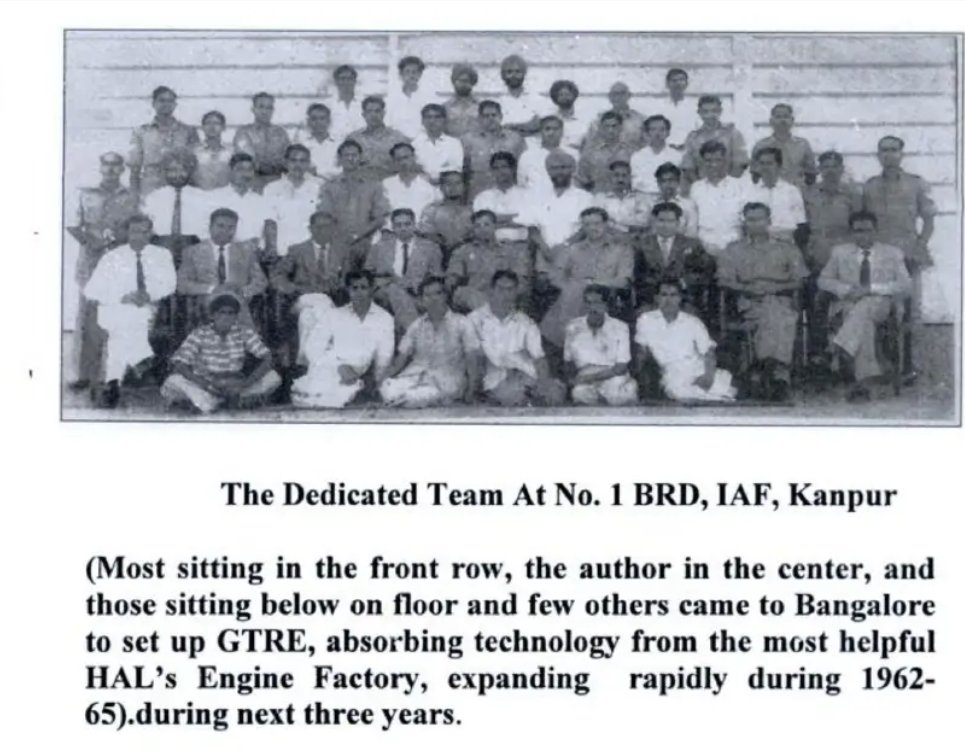
Gas turbine tech was not taught anywhere in India. Recruits came through the employment exchange, most with only matriculation. They had never heard of gas turbines. He trained every one in-house, because there was no other way. GTRE’s first structure was a 50×80 ft shed. 10/
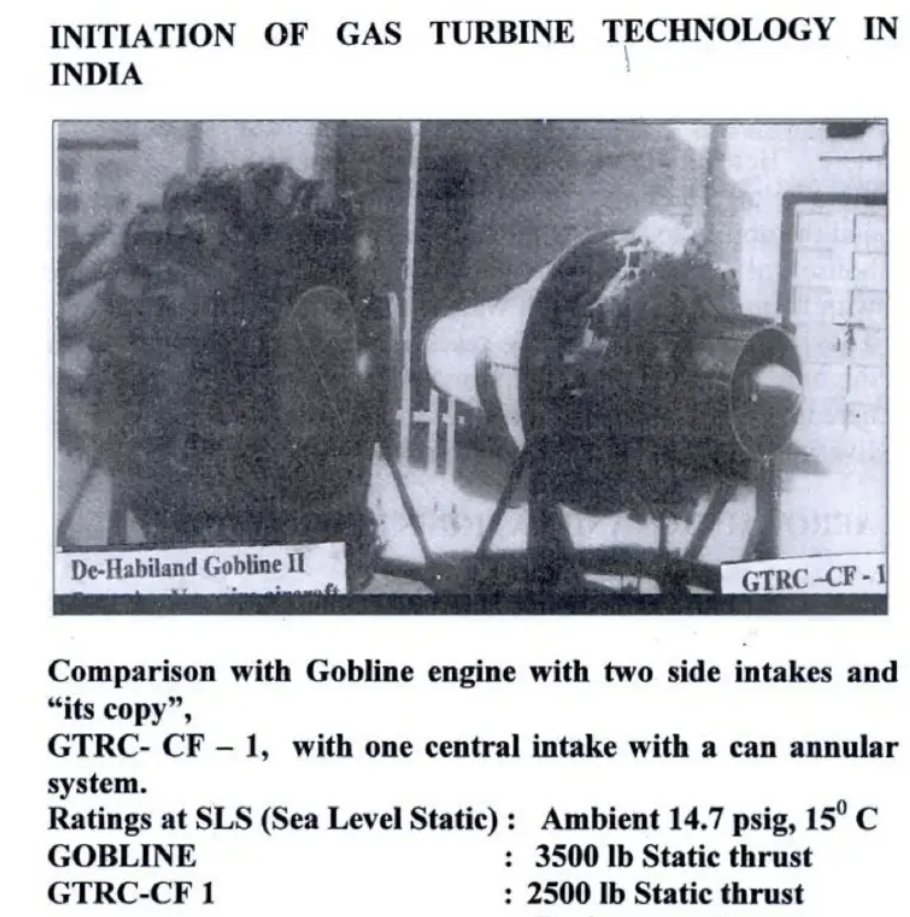
They named it No. 1 Workshop and were immensely proud. A two-floor office block followed, then sheet metal and foundry sheds. They cooked their own food for the celebration, supervised by one of their most talented scientists. This is how institutions begin. 11/
Scientific disagreements were not settled by experiment. Advancement was competence alone, no religion, caste, background. He was final authority on any suspected deviation from a designed part after manufacture, with QC as last consultant. The culture mattered. 12/
That culture was tested early. HF-24 Marut was taking shape, HAL was wrestling with engines, and GTRE was still seen as a novice outfit. Then came the first big collision between paper decisions and engineering reality: the RD-9F episode. 13/
Roy Chaudhury had assessed RD-9F in the USSR as a potential HF-24 engine and raised two concerns: accessories were on top (HF-24 designed around Orpheus with them at bottom), and the reheat pipe diameter exceeded the tail end area. Told not to harp on the non-issue! 14/
The MOU for six engines was signed. Engines arrived. They could not be fitted, for precisely the reasons he raised. HAL called GTRE for help. He agreed, to repay HAL support and coz it was pride to help India’s first indigenous fighter. 15/

GTRE was called again for the Orpheus reheat system. He developed it for B.Or 703, optimised reheat temperature to 1700 K, solved every eng problem without importing a single component. Leak-proof hydraulic nozzle jacks later used in Kaveri prototypes. 16/

In parallel he drove the GTX engine. After visit to the USSR to assess the MiG-21, his thinking sharpened. The GTX straight-flow engine with its flat rating concept was compared against Rolls Royce RB-199 over a protracted period. On reheat msns, GTX performed as well. 17/
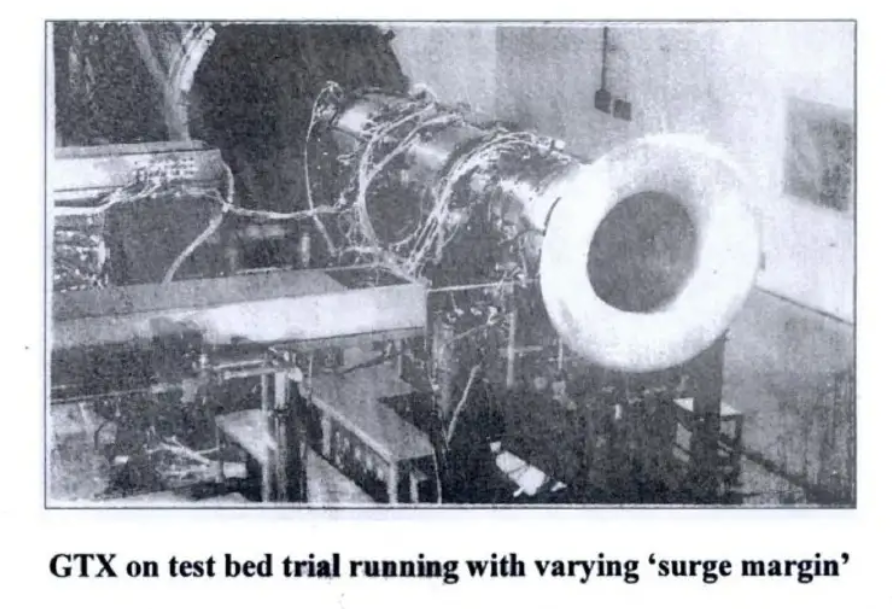
The flat rating concept was demo in the final years of his directorship. The USSR, after detailed discussions on GTX design, expressed willingness to participate. Delhi did not permit it. Roy Chaudhury wrote thirty five years later the reasons were still not clear to him. 18/
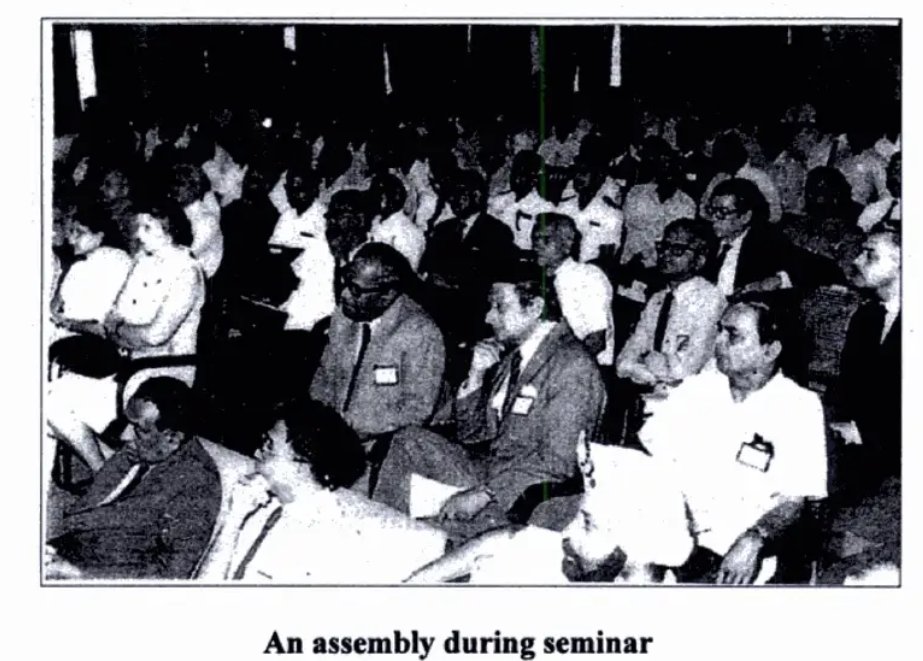
He instituted the annual GTRE gas turbine seminar. It grew into an intl event attended by Rolls Royce, SNECMA and others. Its most significant feature, he noted with pride: complete absence of bureaucratic reserved seating. No special lunch. No VIP tags. Every chair equal. 19/
Roy Chaudhury retired from IAF on 30 Sep 1977, having been seconded to DRDO in 1965. He did not retire from GTRE. He continued as Founder Director until Mar 1981, to see through what he had started. By then, the institution had 1,600 engineers and technicians. 20/
Foreign gas turbine enterprises were actively seeking collaboration. Three prg were in development: a supersonic HF-24 variant with 46% improved performance over 703, a Jaguar with improved Adour with Rolls Royce, and a MiG-21 with GTX with USSR and SNECMA. 21/
Roy Chaudhury believed these three would have met the Indian Air Force’s full requirements across tactical air superiority, deep penetration strike, and air superiority. The day after he left, all three were scrapped. Kaveri was taken up instead. 22/
In 1974 he was elected Fellow of the Royal Aeronautical Society in London, the first IAF officer. Hony Fellow of the Energy Institute (UK). Fellow of the Indian National Academy of Sciences, Bengaluru. Recipient of the J Omprakash Bhasin Award in 1984. 23/
After retirement he turned to bio-energy for rural India. Demo co-generation systems with thermal efficiencies. Won Ministry of Science and Tech approval for a demonstrator proj. Set up a small lab at home. He never stopped. He passed away on 18 May 2016. Today would have turned 104. 24/
Sources: Restoration of Split Milk, 1 January 2010,
by S N R Chaudhury, Newsletter of the Indian Academy of Sciences (Sep 2016), 25/25

Anchit Gupta
@AnchitGupta9
Airforce brat| Kellogg @ Northwestern Alumnus| Investor by Profession| Data is power| Here to share Indian Aviation History| #IAFHistory
Missing some tweets in this thread? Or failed to load images or videos? You can try to .