


The “Syriac dominance” thesis presupposes that the Qur’an’s theological lexicon is primarily derivative of Syriac Christian usage. Suleyman Dost argues that premise is unstable when South Arabian epigraphy is treated as primary comparative evidence (1/25)
Its key religious terms were already circulating in Greek, Aramaic, and Ethiopic before Islam. Words like heaven, hell, sabbath, apostle, resurrection, and divine judgement appear as loanwords embedded in Qur’anic Arabic. (2/25)

Western scholarship has long debated whether the Prophet Muhammad’s exposure to Judaism, Christianity, or both shaped the Qur’an. Syriac Christianity and language dominate recent decades of discussions, showing striking lexical parallels with Qur’anic terms. (3/25)


Some scholars argue for direct Syriac influence: bilingual contexts in the Hijaz allowed Syriac loanwords, calques, and Aramaicisms to enter Arabic naturally. The Qur’an’s style and homiletic storytelling reflect this intimate linguistic exchange.
(4/25)
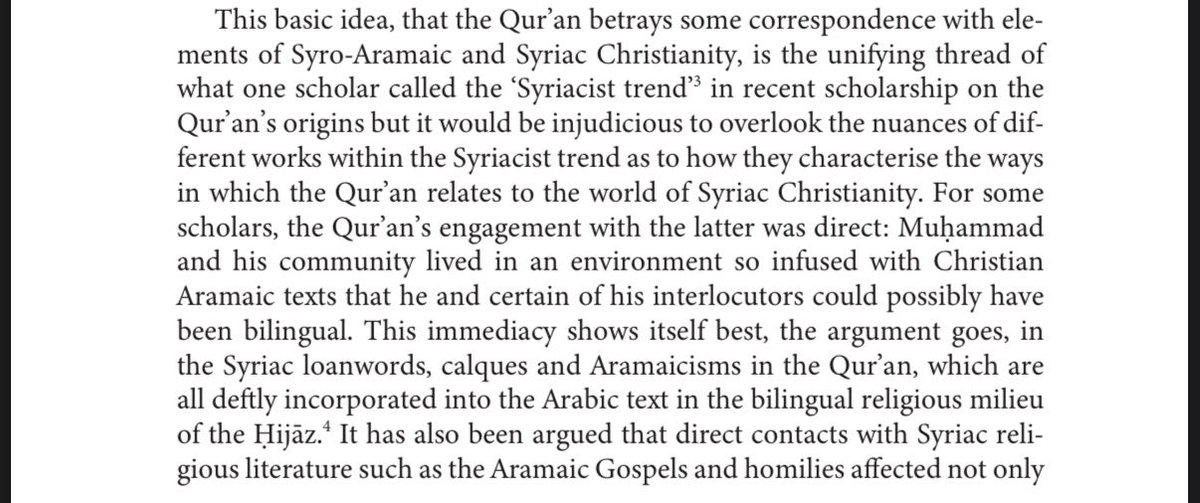

Another theory is oral transmission. Stories like DQ or the Sleepers of the Cave circulated orally from Syriac sources. The Qur’an adopts these traditions from the public domain, preserving Syriac linguistic markers without requiring direct textual borrowing. (5/25)

The third approach views the Qur’an and Syriac texts as part of the same Late Antique conversation. Shared motifs and mystical thought reveal overlapping concerns, with Syriac texts serving as contextual witnesses rather than direct sources. (6/25)

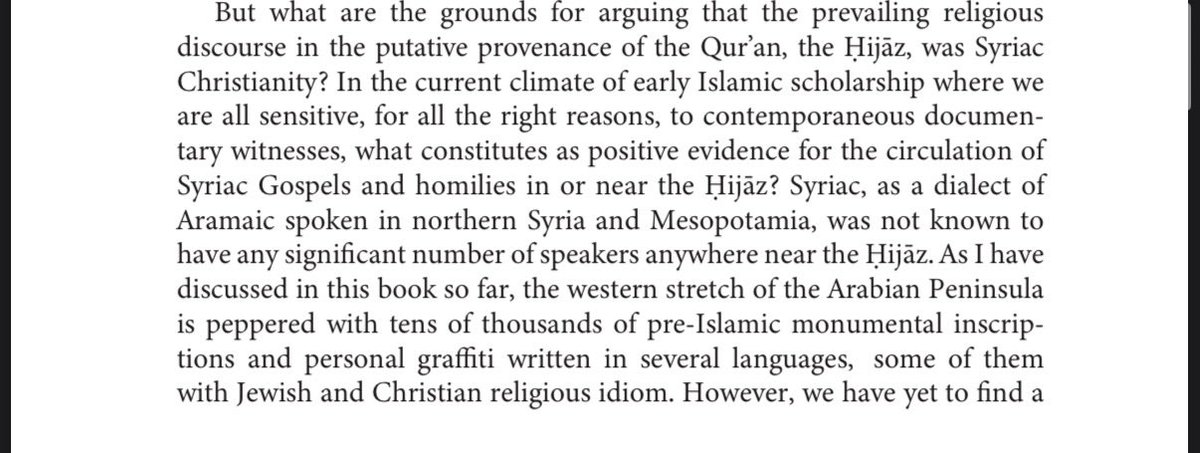
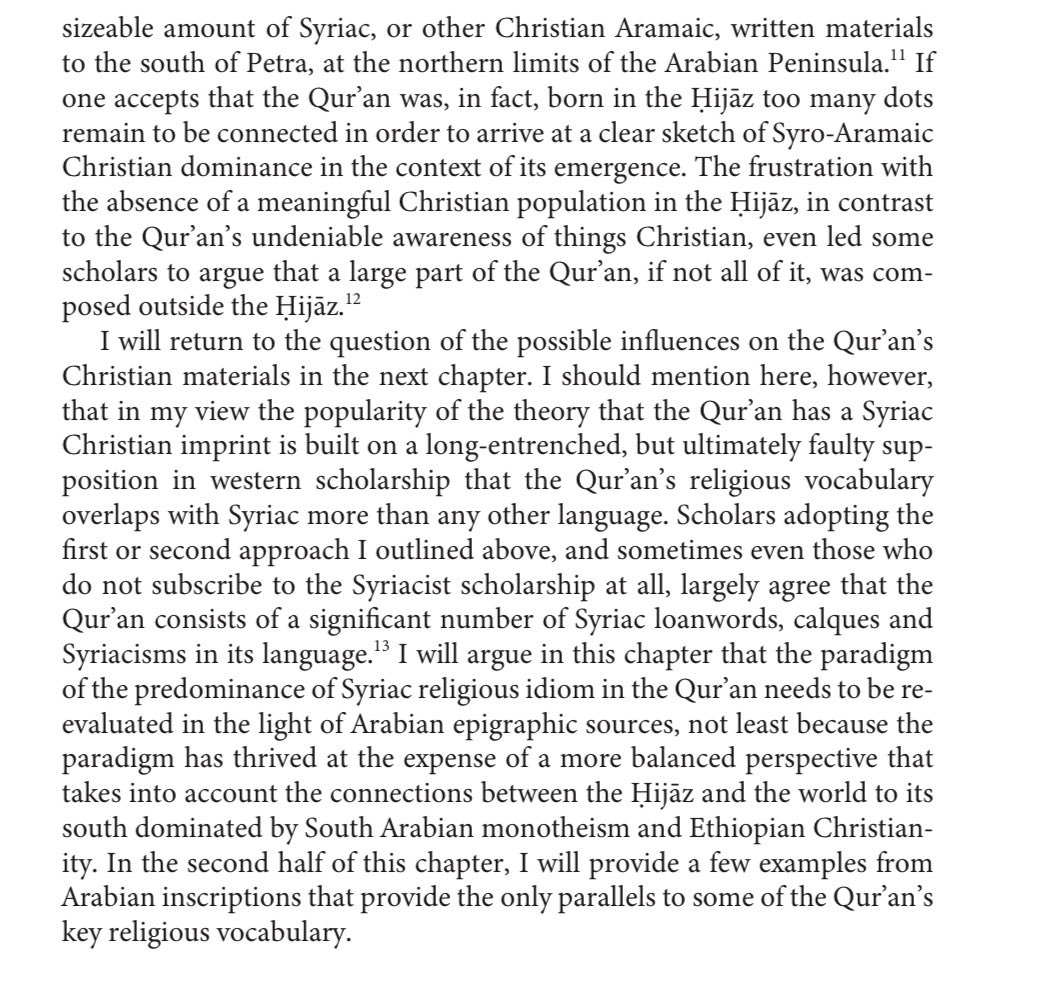
Epigraphic evidence complicates Syriac primacy. Few Syriac texts appear south of Petra, while South Arabian and Ethiopian inscriptions show monotheistic vocabulary that parallels Qur’anic usage. Syriacisms exist but do not alone explain the Qur’an’s religious lexicon. (7/25)
Jeffery’s 1938 Foreign Vocabulary of the Qur’an analyzed a little over 300 words he considered borrowings. He stated, “Syriac…is undoubtedly the most copious source of Qur’anic borrowings” and argued that most religious vocabulary in the Qur’an originates from Syriac. (8/25)
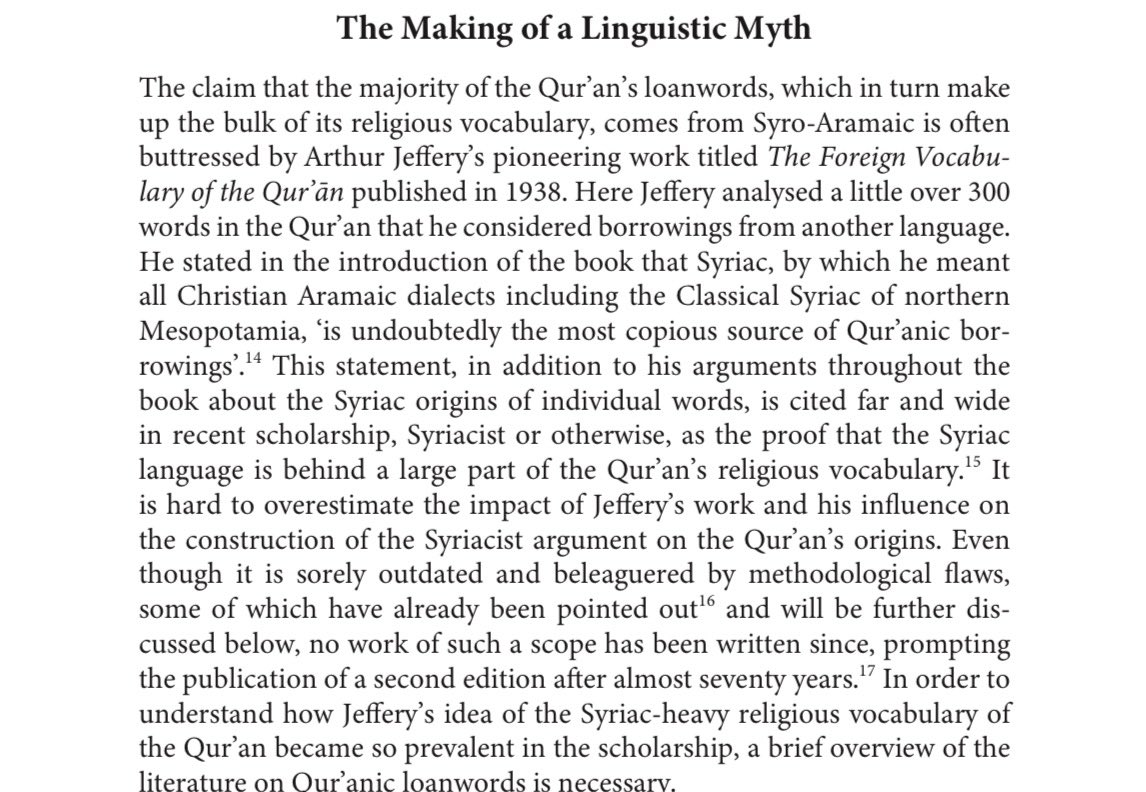
In the 19th and early 20th centuries, scholars like Geiger, Fraenkel, Dvorak, and Nöldeke traced Qur’anic vocabulary to Jewish, Christian, Aramaic, and Ethiopic sources. They noted Arabic interacted with multiple languages and that Syriac influence was not singular. (9/25)


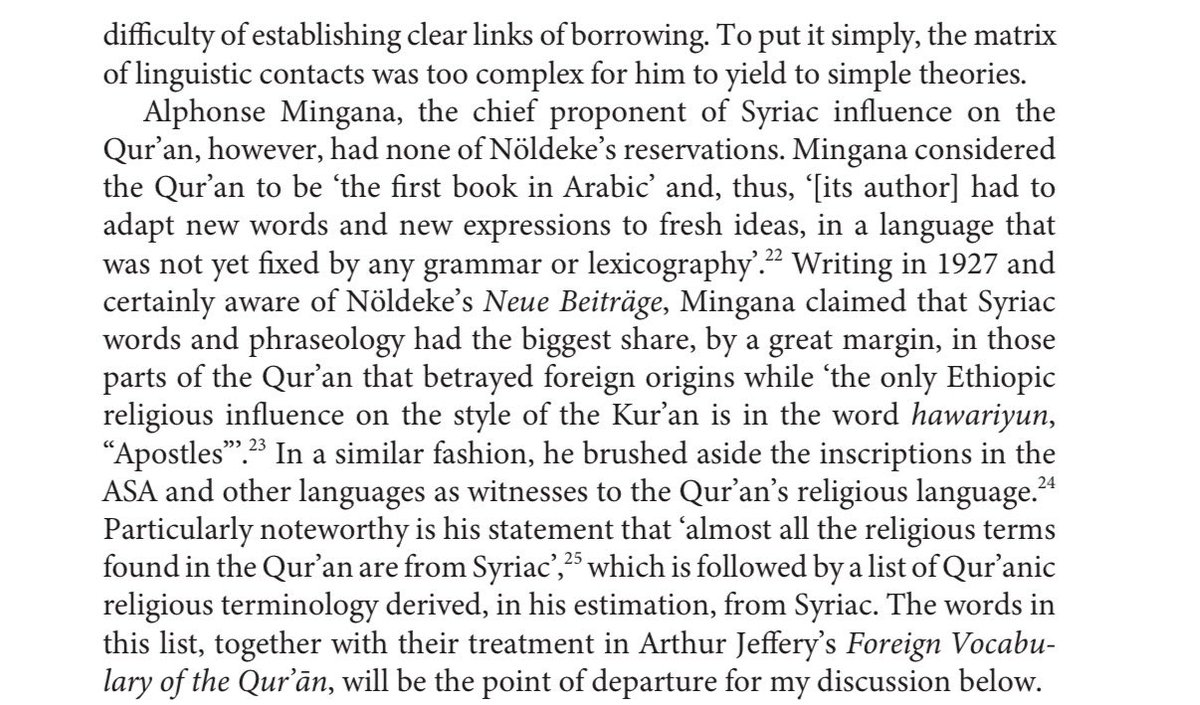
Mingana argued that almost all Qur’anic religious terms come from Syriac. He wrote that the Qur’an “had to adapt new words and new expressions to fresh ideas” and listed similar Syriac words as evidence. (10/25)
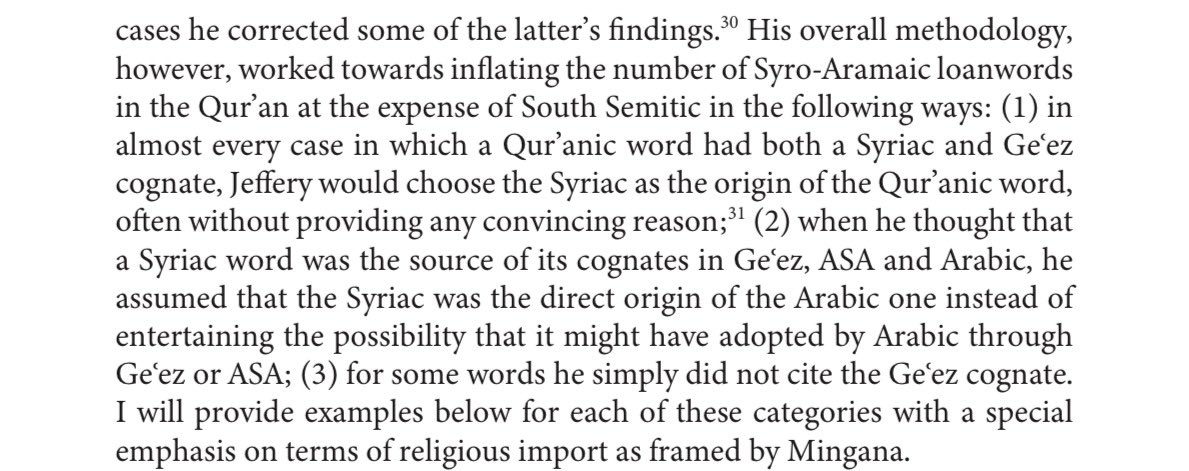
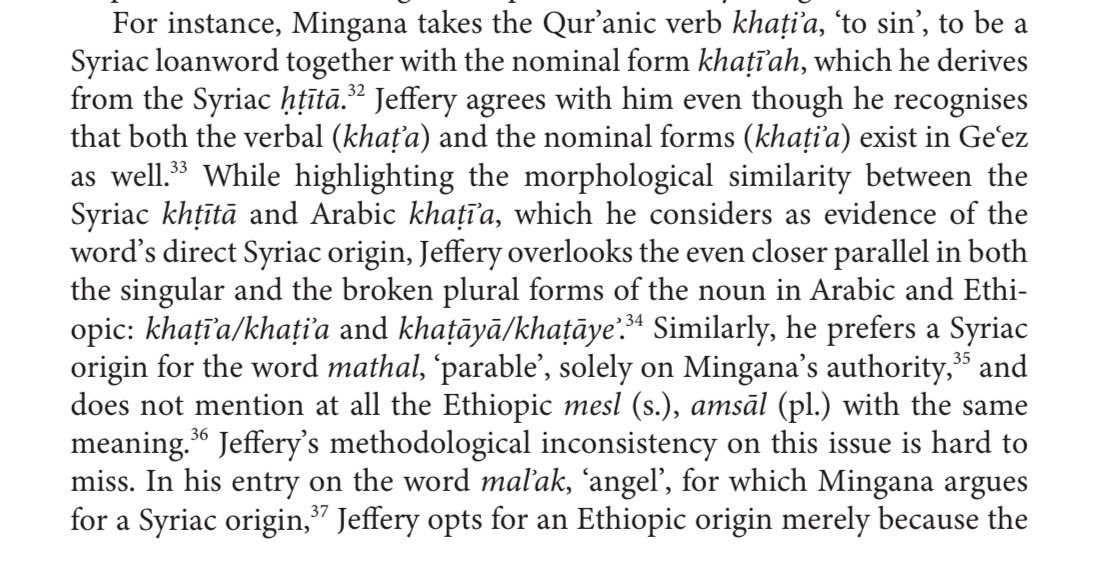
Jeffery largely followed Mingana’s judgments, attributing mathal (parable) to Syriac. In many cases, he overlooked similar Geʿez and Ancient South Arabian parallels, for example, khaṭīʾa/khaṭāyā and mesl/amsāl, which mirrored Qur’anic usage. (11/25)

Words like malʾak (angel) appear in Qur’an and Geʿez (malāʾekt), yet Jeffery only rarely accepted these Ethiopic influences. Terms such as janna and baraka show identical forms in Geʿez, suggesting southern Semitic sources contributed to Qur’anic lexicon. (12/25)
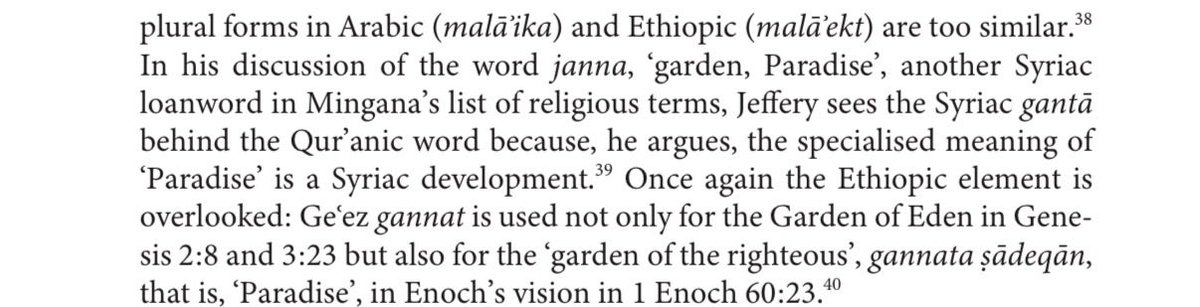
Phonology indicates Classical Syriac could not have supplied Qur’anic Aramaic words. For example, malakūt in Arabic corresponds to malakot in Geʿez, whereas Classical Syriac would produce malkūth. Aramaic influence comes from older dialects or via Geʿez and ASA. (13/25)

Words like ʿalam (world), suht (unlawful), muhaymin, manna, and khatam appear in Geʿez and ASA. Jeffery often relegates these connections to footnotes or ignores them. (14/25)
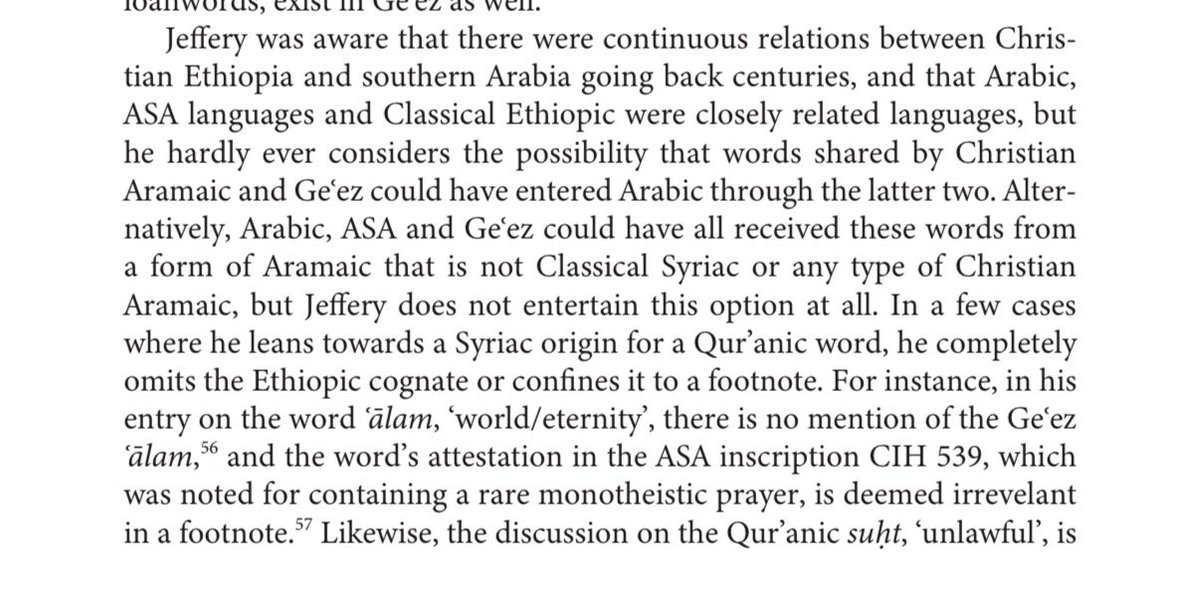

Mingana lists qiyama (resurrection), aya (sign/verse), kafara (to disbelieve). Jeffery adds baraka (to bless), saʿa (hour/end times), rabb (lord), but these are attested in Geʿez or ASA, mirroring Qur’anic usage perfectly. (15/25)

Tabāraka smu rabbika (‘may your Lord’s name be blessed’) aligns with ASA tbrk s1m rḥmnn. Rabb in Qur’an finds a parallel in rb yhd (‘Lord of the Jews’). Phonology shows Aramaic loans predate Classical Syriac. Qur’anic Arabic likely borrowed from Geʿez or an older Aramaic (16/25)
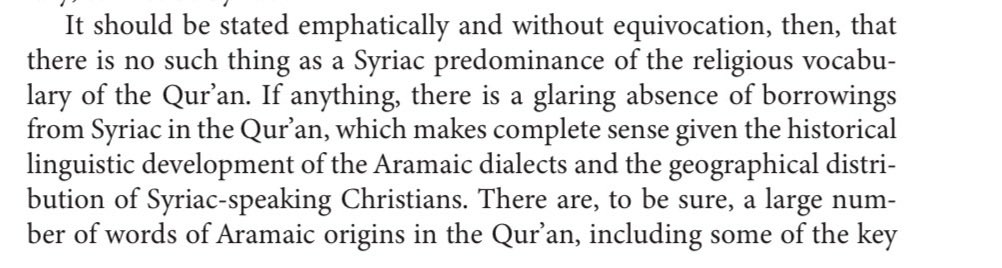
There is no Syriac predominance. Syriac-speaking Christians were geographically distant, and historical Aramaic dialects make borrowings from Classical Syriac highly unlikely. Aramaic-origin words in the Qur’an mostly exist in Geʿez and some ASA inscriptions. (17/25)
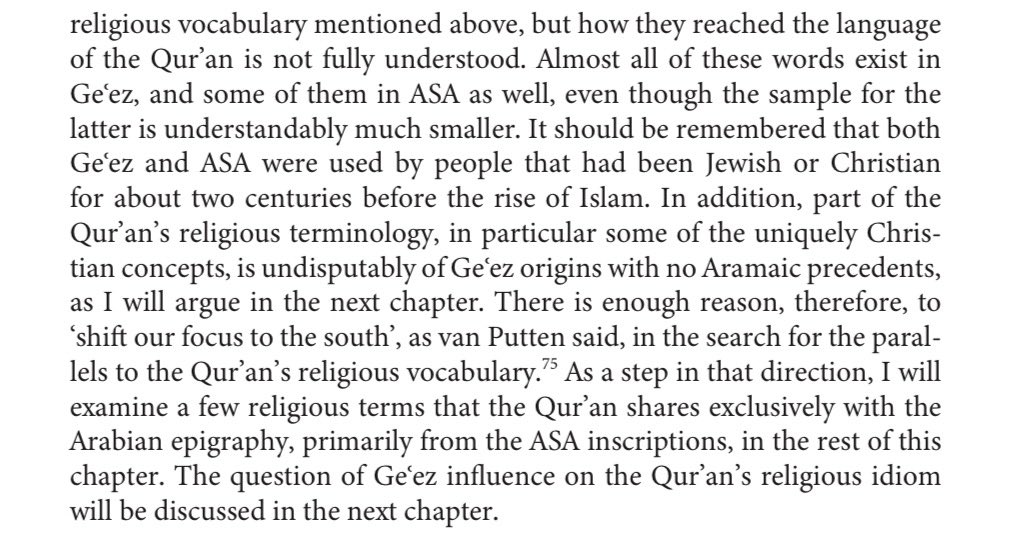
Geʿez and ASA were used by Jewish and Christian communities centuries before Islam. Some uniquely Christian Qur’anic terms are of undisputed Geʿez origin with no Aramaic precedent. Marjin Van Putten urges shifting focus south. (18/25)
Early scholars like Hubert Grimme saw potential in comparing Qur’an and ASA inscriptions, linking the prophet’s ideas of God, prayer, and zakat to South Arabian monotheism. Margoliouth also highlighted this influence. (19/25)
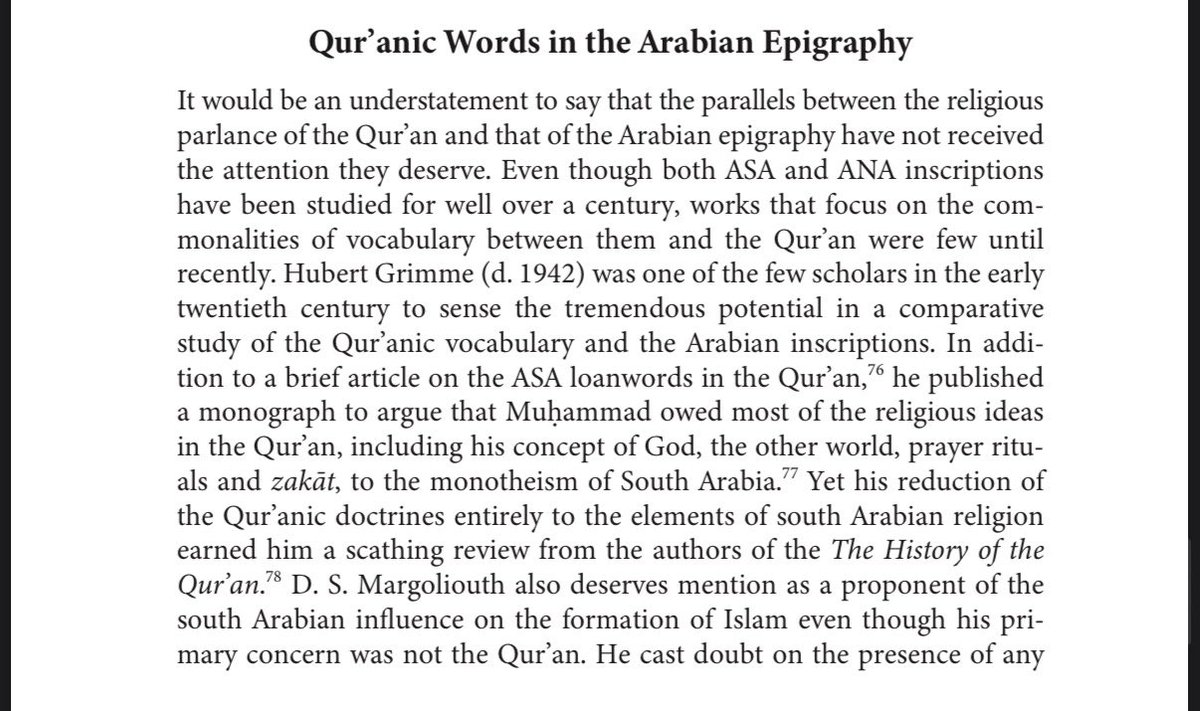
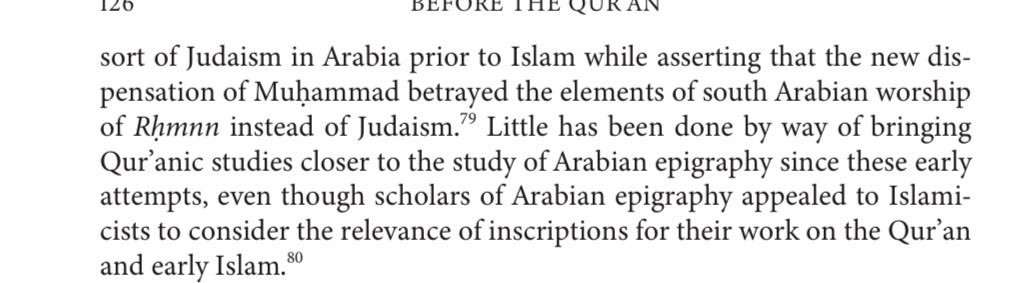
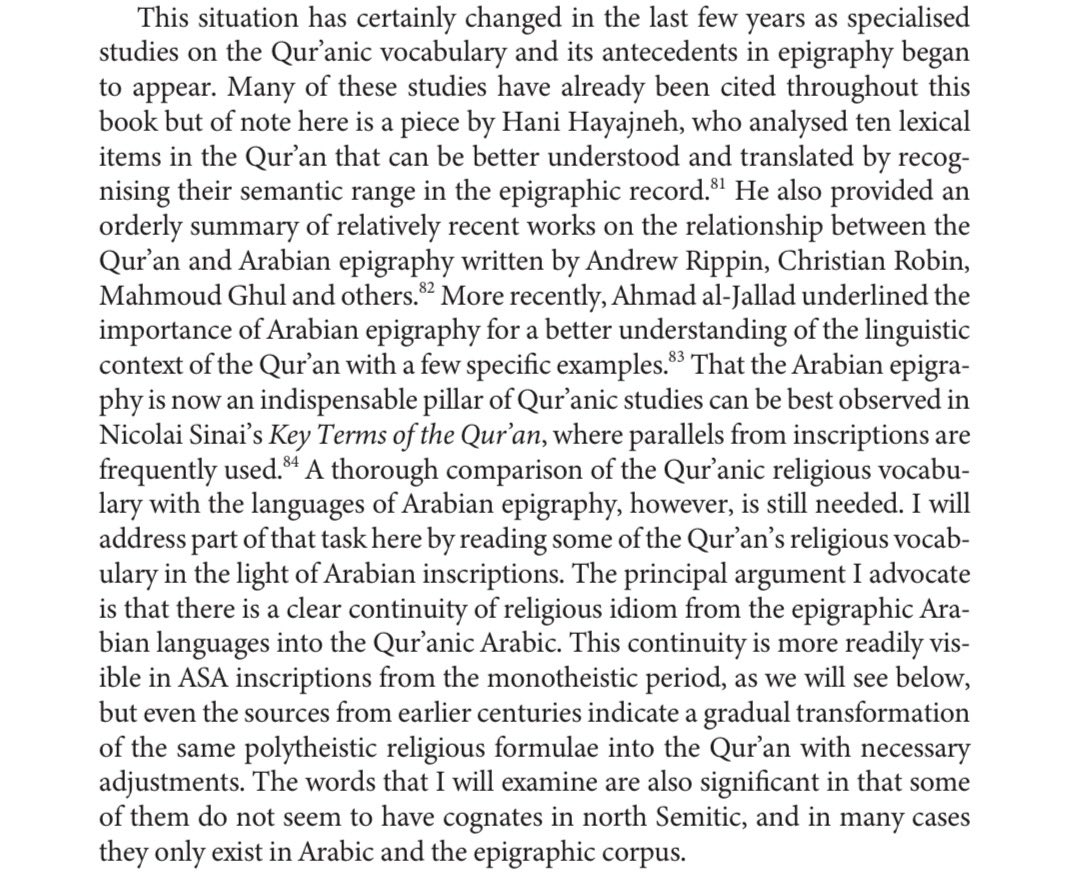
Recent work by Hayajneh, al-Jallad, and Sinai shows inscriptions clarify Qur’anic terms and context. Some terms exist only in Arabic and epigraphy, with no north Semitic cognates, showing Arabia as the immediate linguistic environment of the Qur’an. (20/25)
For example: The root ḥ-m-d, ‘praise,’ is central to the Qur’an. The codex opens with al-hamdu li-lilahi rabb al-‘alamin (Praise belongs to God, Lord of the worlds) and the believers are repeatedly commanded to utter it. (21/25)


God’s title al-Hamid(the Praiseworthy) appears 17x in the Qur’an, often paired with other divine attributes. The Prophet’s name, Muhammad (4x) and Ahmad (foretold by Jesus, Q 61:6), also derives from this root. (22/25)

Inscriptions show ḥ-m-d was widely used in pre-Islamic South Arabia. Perfect forms ḥmd (‘he praised’) and ḥmdw (‘they praised’) appear in 100+ inscriptions, often directed to the Sabaean god ʾlmqh for favors or blessings. Names derived from h-m-d, like Yhmd and Mhmdm (23/25)

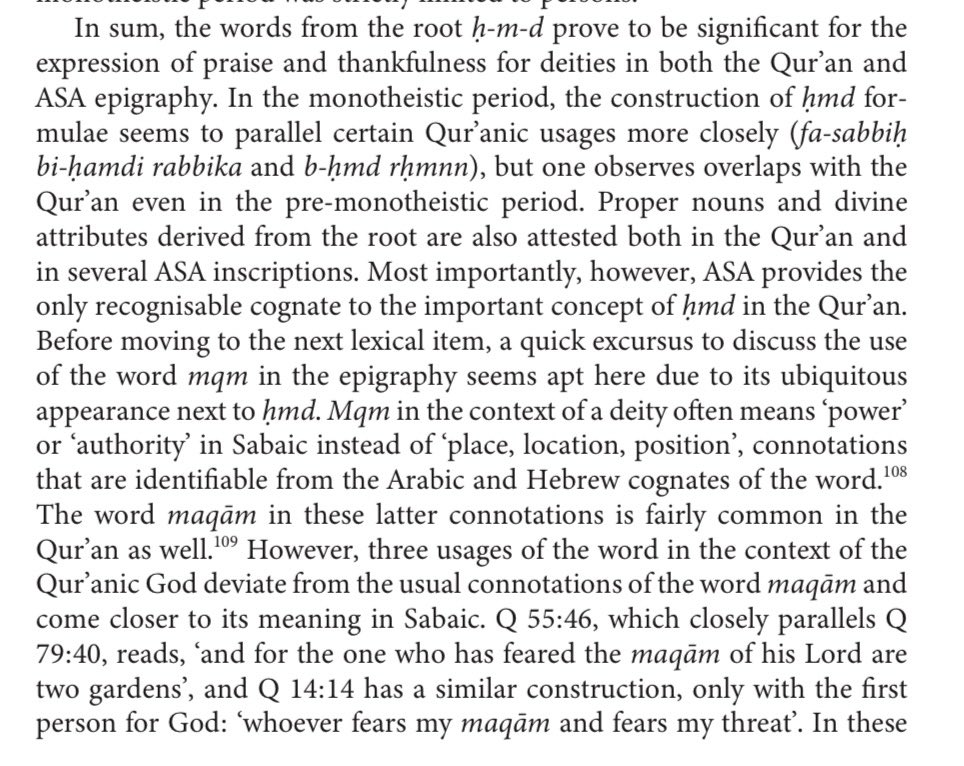
In the monotheistic period of SA, hmd shifted to address the single deity Rhmnn. Formulas like b-ḥmd Rḥmnn (in praise of Rḥmnn) mirror Qur’anic patterns (fa-sabbih bi-hamdi rabbika), showing continuity in the semantic and ritual use of praise from ASA to Qur’an. (24/25)


Interestingly, maqam in the Qur’an sometimes reflects the Sabaic sense of ‘authority/power’ rather than ‘place/position’ (Q 55:46; 14:14; 79:40). This shows how the Qur’an occasionally preserves semantic nuances from South Arabian inscriptions. (25/25)

Separate from the thread, I feel like I should explain the three current views on Syriac in scholarship as of 2026.
First approach: direct engagement. Scholars like Emran El-Badawi and Gabriel Said Reynolds argue the Qur’an reflects proximity to Syriac Christian texts, possibly in bilingual settings, implying literary interaction rather than vague cultural influence.
Second approach: oral diffusion. Sidney H. Griffith suggests Syriac Christian narratives circulated orally among Arabic speakers. The Qur’an engages a shared religious environment shaped by Syriac discourse without requiring direct textual borrowing.
Third approach (my view): comparative restraint. Holger Zellentin and Joseph Witztum use Syriac literature as a parallel witness to Late Antique debates. Syriac texts illuminate the broader conversation without being treated as the Qur’an’s direct source.
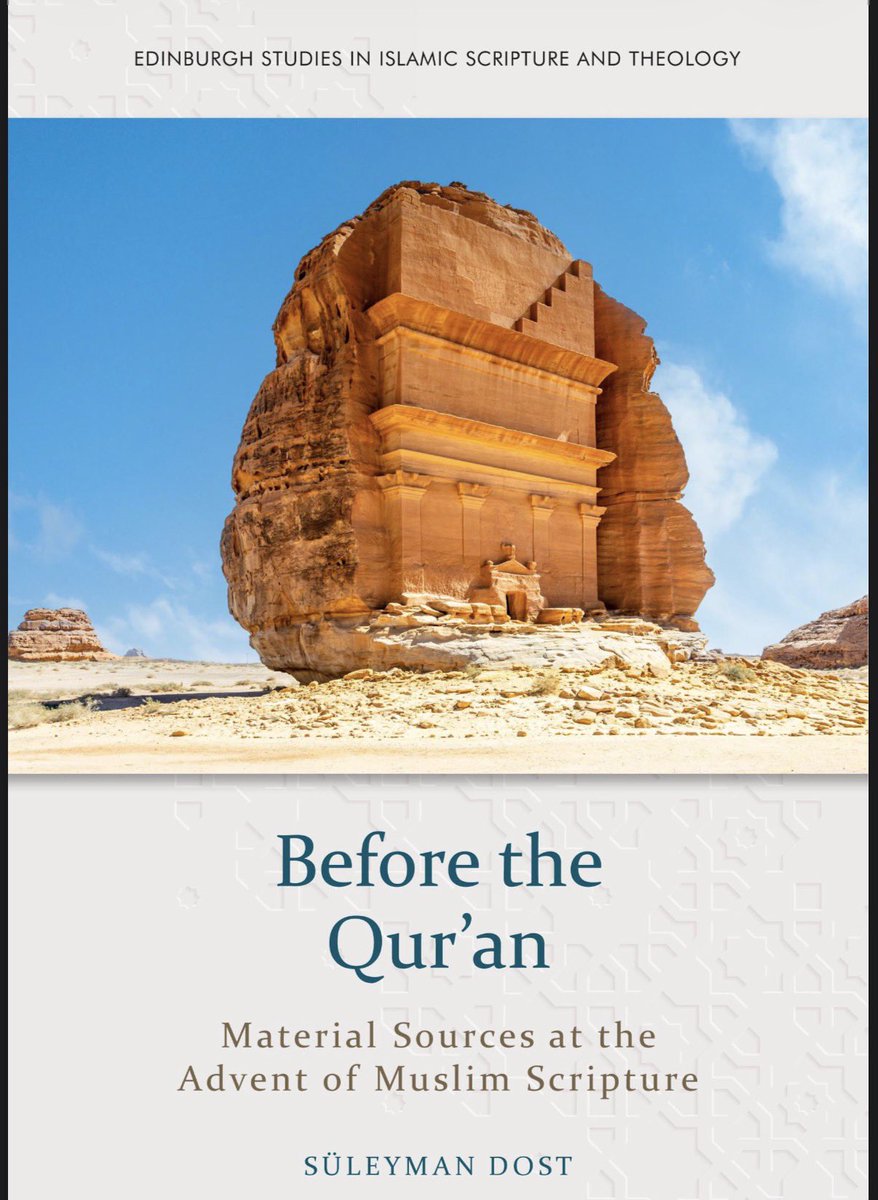
Also this is from Chapter 5 of his book which I highly recommend reading!

Missing some tweets in this thread? Or failed to load images or videos? You can try to .