
Richard Hanania@RichardHanania
Mar 16
24 tweets
Paul Ehrlich has passed away, and I wanted to see whether he was as bad as his quotes and short clips suggest. Surely, there might be some nuance or careful thought in his worldview. Nobody is that purely evil.
So I picked up The Population Bomb and started reading.
It turns out, he's even worse than you think!
I’m putting together a thread below.
Quotes taken out of context don't get at the degree to which he is consistently evil and misanthropic. He had an entire system that he pursued in which human life was constantly denigrated and devalued, with an eye toward elimination. You’re left wondering what you’re even reducing human population for, since every form of life seems to be not worth living.
Some people are racist and just hate poor and brown people. Some hate the rich. Paul Ehrlich doesn't discriminate. He wants you not to exist if he can get away with it. But if he can't stop you from living, he wants you to have a much worse quality of life.
Ehrlich has a plan for both advanced and poor countries. He has blueprints for entire regions of the globe.
Humans do not have agency in Ehrlich’s world. They’re simple consumers of resources, with no ability to create, better their circumstances, or exert individual agency to make the world a better place, except to the extent that they ensure fellow humans no longer exist.
You might find all of this depressing. But I’ve found reading Ehrlich invigorating. It is a reminder of how much evil there is in the world. Recall that Ehrlich was not some guy in his room putting out diatribes. He was a professor at Stanford, a highly decorated scientist, and one of the most prominent public intellectuals of his generation. While reading Ehrlich today, know that he has intellectual descendants in the form of degrowthers and other environmental extremists, along with anti-capitalists who don’t understand the basis of prosperity and prioritize redistributing wealth over all else.
First of all, the cover. Children are starving as you're reading this. Even worse, more are being born! The existence of more humans is supposed to hit you harder than starvation. I like the title of the earlier book. "The End of Affluence." Another brilliant prediction.

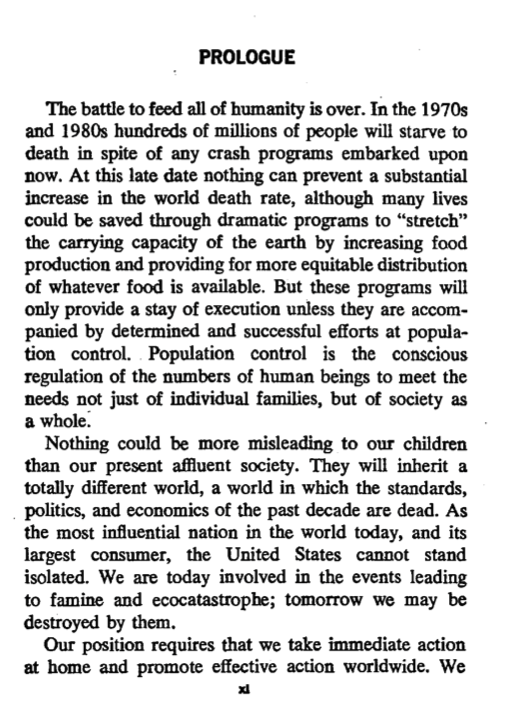
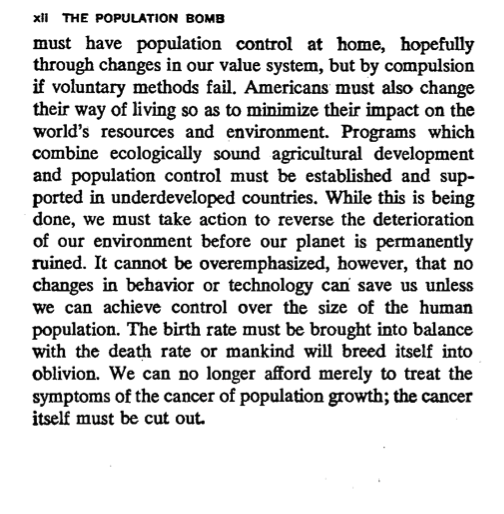
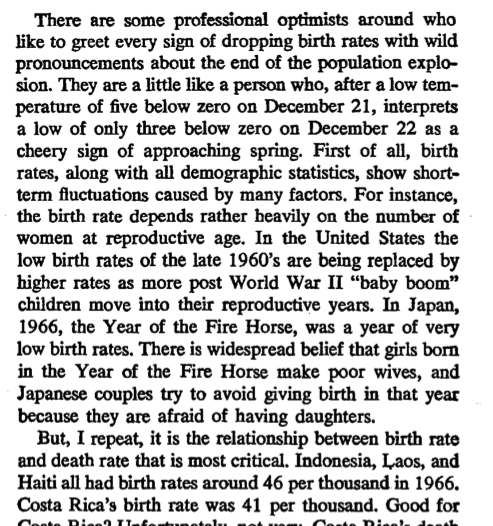
Here's the entire prologue where his famous predictions are made about mass starvation. It's only two pages, you can read the whole thing. He uses the prologue to make predictions that would soon be discredited and call for coercion, and denounces treating "the symptoms of the cancer of population growth." Ehrlich doesn't want to hear about how you might have a plan to improve people's lives. You're just treating symptoms! He starts with a demand that fewer humans is the only option worth considering.
Ehrlich compares Costa Rica to other poor countries. He says you may think it's good Costa Rica has a lower death rate than Haiti and Laos. But the other countries where people die are the lucky ones! Because any good news means you'll just suffer more later.

Ehrlich lists the ways in which humans have cured or prevented disease. To most people this is good news. He calls it only "social very acceptable." He can't even bring himself to say that it's actually good to save lives.

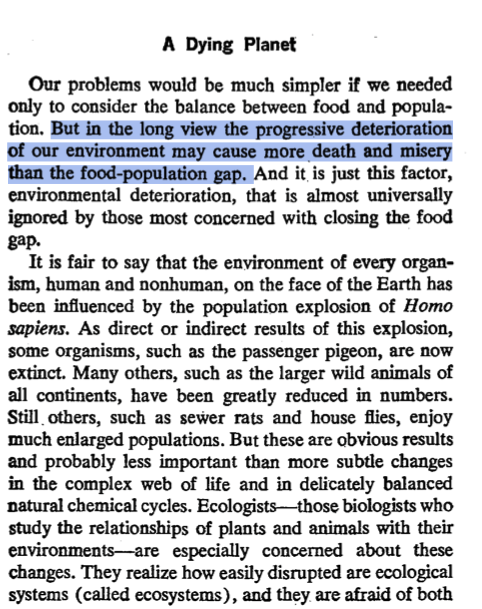
What if we solve our food production issues? Ehrlich has thought of that. In that case, the planet will still kill us all. There's no escaping his conclusion that humans need to stop existing. If you defeat one argument for totalitarian birth control, he has another ready.
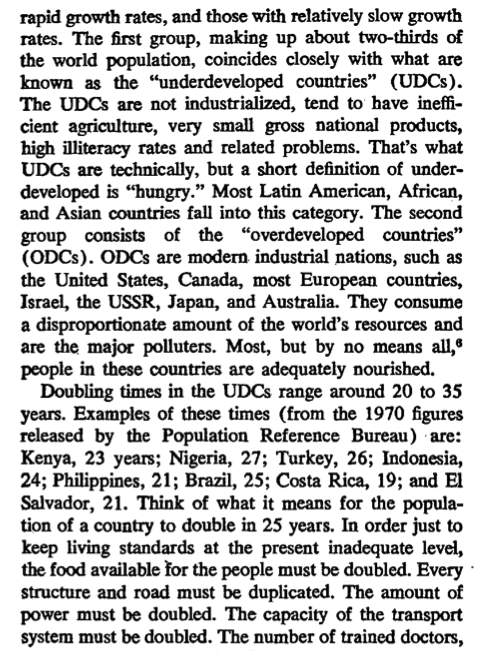
Ehrlich spends a lot of time on the need to coerce poor countries. But he refers to rich countries as "overdeveloped." Even they have too many kids for this taste. Poor people problems must be solved by non-existence. Rich countries need to be humbled. All must suffer or die.
What about people who say that birth rates might fall anyway? Ehrlich says they're fools. That still leaves the problem of not enough death.
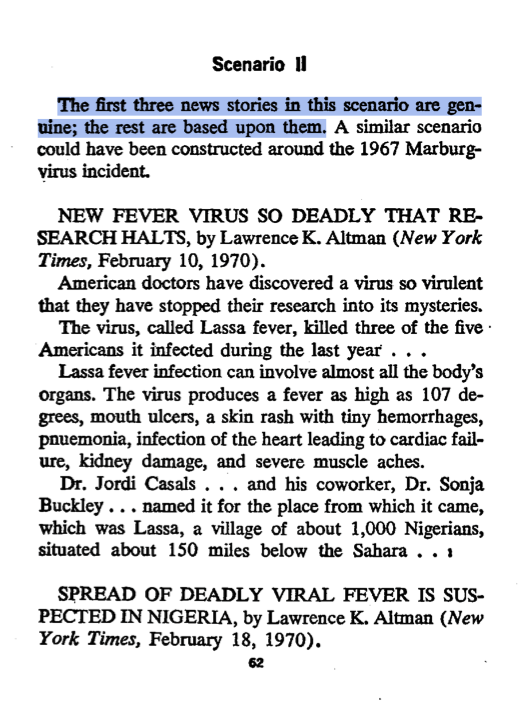
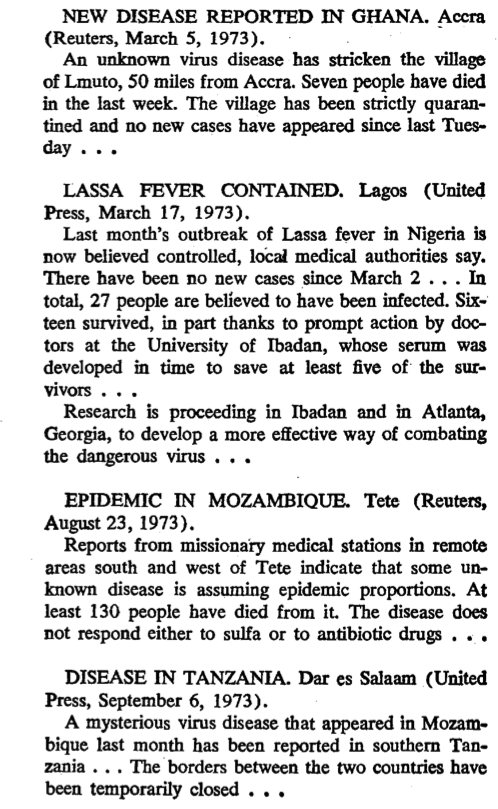
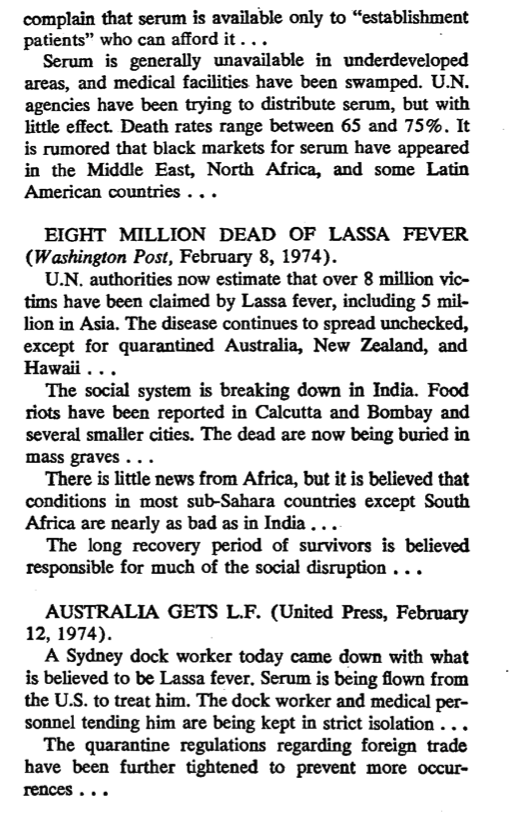
Ehrlich is so in love with his visions of mass death that he has an entire chapter of fanfic imagining millions of people dying of diseases in made up news stories. Apparently so satisfied that he has made his case conclusively, he can move on to fiction.
Even rich countries are overpopulated. "It is true that they have the money to buy food, but when food is no longer available for sale they will find the money rather indigestible." They use more than their "fair share" of the world's resources. The man simply refused to learn anything about the way the world works.
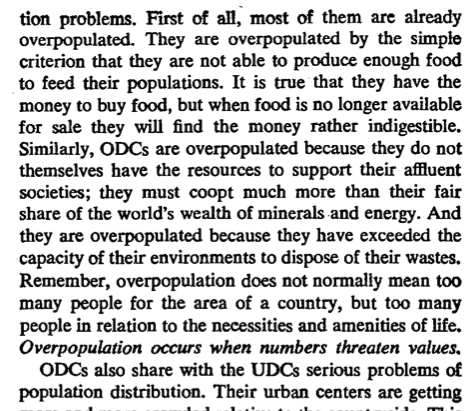
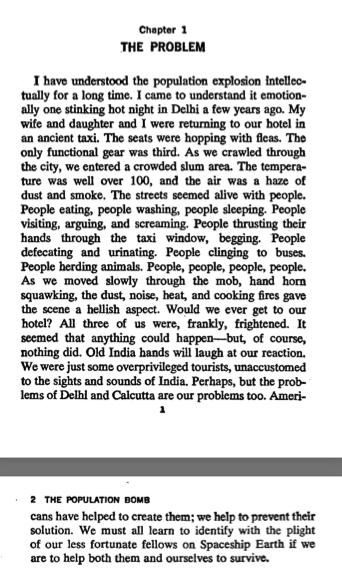
While he seems to hate all humans, Ehrlich seems to have special hatred in his heart for India. Chapter 1 is titled "the problem." Only two pages long, the only problem he lists is "people, people, people, people," with a focus on his trip to India.
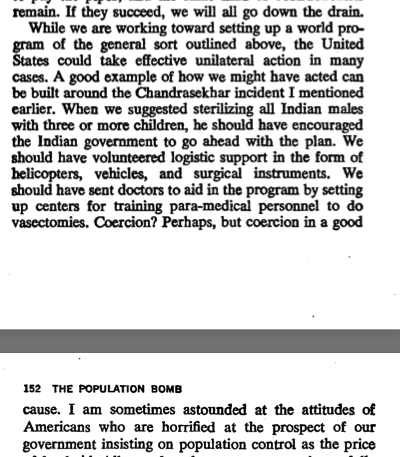
He says the US should have encouraged India to sterilize men with three or more children. To do this, we needed to supply "helicopters, vehicles, and surgical instruments."
Ehrlich writes "Coercion? Perhaps, but coercion in a good cause."
Well that settles it.
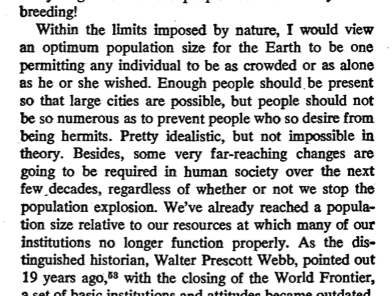
Once Ehrlich has imposed his program of global population control, what population should we aim for? He says more research should be done, but there should at least be enough room so you can go live life as a hermit (you can obviously do this now).
Ehrlich says it looks bad, but encourages his readers not to be discouraged. Suppose a billion people die. If that happens, then Ehrlich calling attention to overpopulation can at least prevent it from happening again.
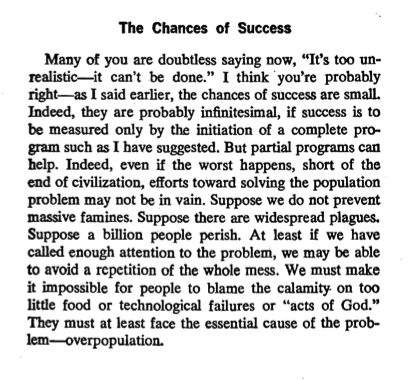
Ehrlich has some advice for how to spread the population control message among friends. If someone has eight kids, tell them that if their children each have 8 kids too, they will go broke buying presents for 64 grandchildren.
Unsure if this is supposed to be a joke.
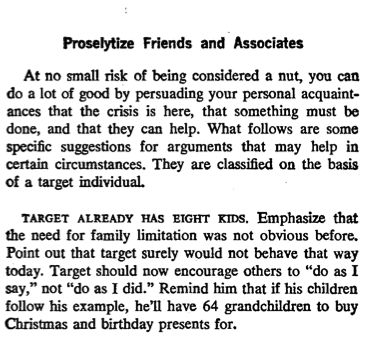
What if a person is childless? In that case, you should praise them and encourage them to get mad at other people having kids because they have to pay for them. The point is to get the childless angry at parents and mobilize against them.
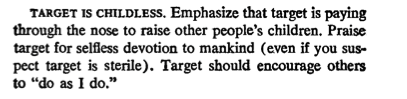
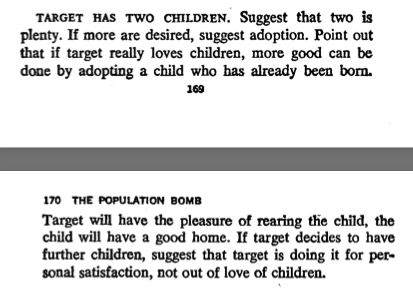
If someone has two kids already, tell them they're selfish if they have more, and if they really loved children they would adopt.
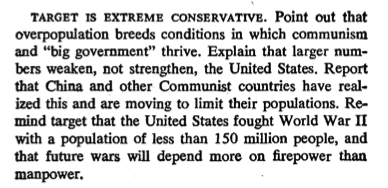
If you are talking to a conservative, tell them that they must support population control because population control leads to communism, and the US will be stronger with fewer people anyway, since we won World War II with only 150 million.
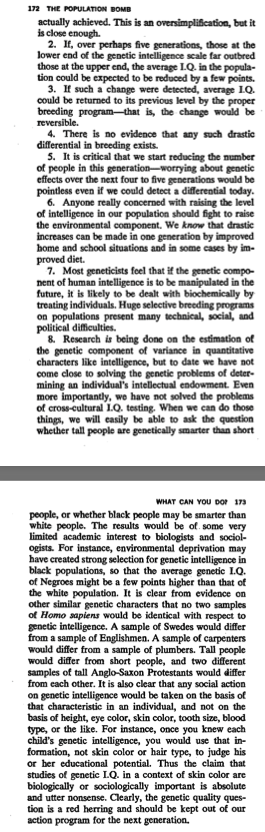
What if the person you are talking to supports eugenics? While for every other target, Ehrlich mostly keeps it short, here he requires an eight-point catheticism to explain, which I'm not going to bother reading.

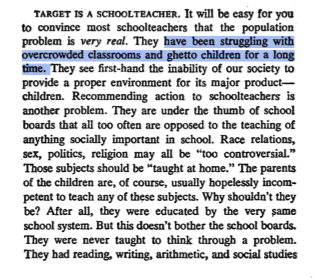
Ehrlich says schoolteachers should be the easiest people to convince of the dangers of overpopulation, because they "have been struggling with overcrowded classrooms and ghetto children for a long time."
Ok.
Ehrlich's final chapter: "What if I'm wrong?"
He propose a Pascal's wager. If he's right, he saves the world. If he's wrong, humanity will be much better off when there's fewer of us. So global totalitarian population control is really the only option that makes sense!

Here's his postscript from 1978. He celebrates that the American birth rate has fallen. But he then complains that Americans use too much energy, so each of our babies is 57 times a greater disaster than in Indian baby.
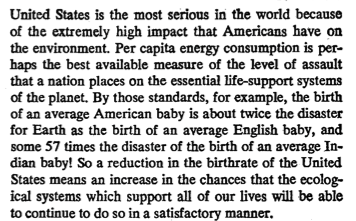
Unfortunately, the decline in fertility convinced some people we were already at zero growth. But it's still too high, because population will still grow for another half century. And you can't be too complacent because even the people already born will cause more problems.

That's it. It's a very short read, I was able to skim the whole thing in less than an hour. I'm kind of in awe America has succeeded and life has been improving globally while we've been infected by prominent intellectuals this evil. Let Ehrlich's memory serve as a reminder of what we're up against.

Richard Hanania
@RichardHanania
I write a newsletter you should subscribe to. https://t.co/fTgbdbgWYE. Monthly columns @unherd @BostonGlobe
Missing some tweets in this thread? Or failed to load images or videos? You can try to .