
The Collective Sensemaking Project@csmproject
Apr 16
1 tweets

Paul Moore - Security Consultant @Paul_Reviews
Apr 16
View on Twitter
Hacking the #EU #AgeVerification app in under 2 minutes.
During setup, the app asks you to create a PIN. After entry, the app *encrypts* it and saves it in the shared_prefs directory.
1. It shouldn't be encrypted at all - that's a really poor design.
2. It's not cryptographically tied to the vault which contains the identity data.
So, an attacker can simply remove the PinEnc/PinIV values from the shared_prefs file and restart the app.
After choosing a different PIN, the app presents credentials created under the old profile and let's the attacker present them as valid.
Other issues:
1. Rate limiting is an incrementing number in the same config file. Just reset it to 0 and keep trying.
2. "UseBiometricAuth" is a boolean, also in the same file. Set it to false and it just skips that step.
Seriously @Ursula von der Leyen - this product will be the catalyst for an enormous breach at some point. It's just a matter of time.
Paul Moore - Security Consultant @Paul_Reviews
Apr 15
View on Twitter
.@Ursula von der Leyen "The European #AgeVerification app is technically ready. It respects the highest privacy standards in the world. It's open-source, so anyone can check the code..."
I did. It didn't take long to find what looks like a serious #privacy issue.
The app goes to great lengths to protect the AV data AFTER collection (is_over_18: true is AES-GCM'd); it does so pretty well.
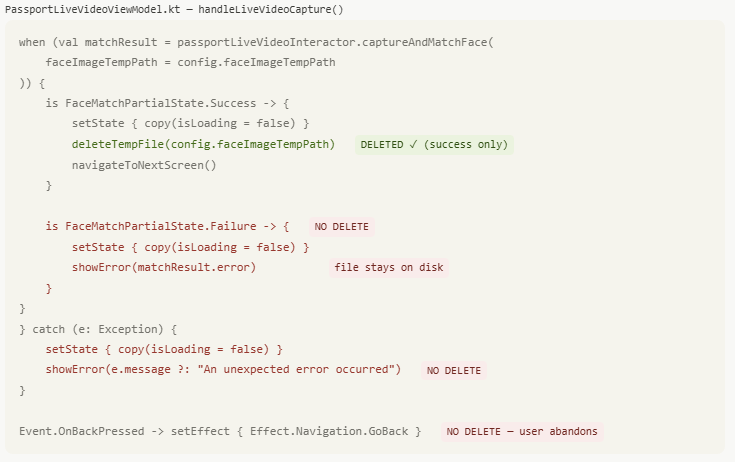
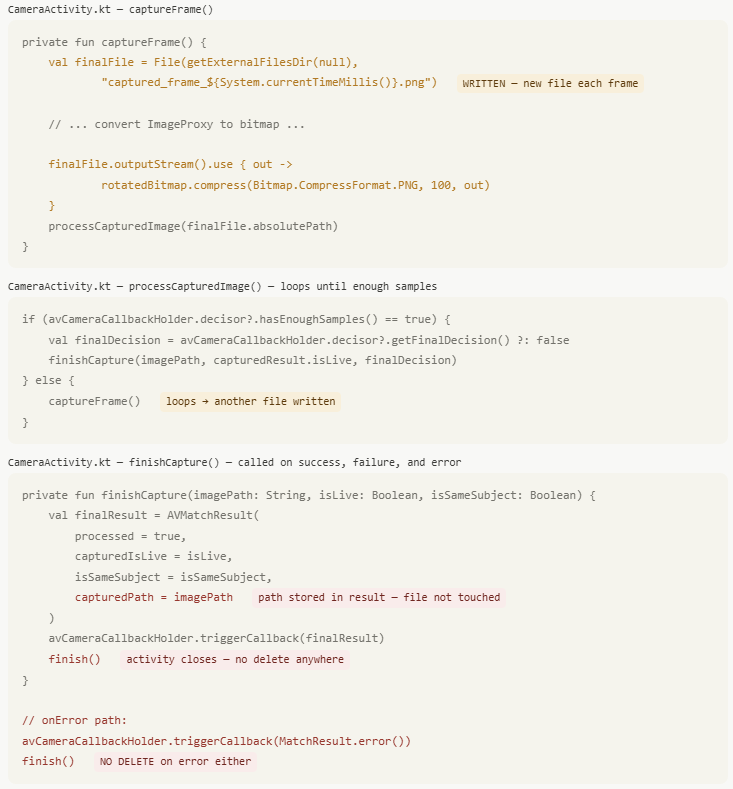
But, the source image used to collect that data is written to disk without encryption and not deleted correctly.
For NFC biometric data:
It pulls DG2 and writes a lossless PNG to the filesystem. It's only deleted on success. If it fails for any reason (user clicks back, scan fails & retries, app crashes etc), the full biometric image remains on the device in cache. This is protected with CE keys at the Android level, but the app makes no attempt to encrypt/protect them.
For selfie pictures:
Different scenario. These images are written to external storage in lossless PNG format, but they're never deleted. Not a cache... long-term storage. These are protected with DE keys at the Android level, but again, the app makes no attempt to encrypt/protect them.
This is akin to taking a picture of your passport/government ID using the camera app and keeping it just in case. You can encrypt data taken from it until you're blue in the face... leaving the original image on disk is crazy & unnecessary.
From a #GDPR standpoint:
Biometric data collected is special category data. If there's no lawful basis to retain it after processing, that's potentially a material breach.
youtube.com/watch?v=4VRRri
Apart from the things you highlighted, why do users only have a certain number of age verifications available? Why does proof of age have an expiration date?
Once I'm over 18, I will always be over 18. I'm not turning any younger!


The Collective Sensemaking Project
@csmproject
Firm believer that society needs better solutions to process the ever increasing flood of information. YouTube: https://t.co/U0O3Wmnwnq
Missing some tweets in this thread? Or failed to load images or videos? You can try to .