
Raphael Traviss@raphaeltraviss
Apr 20
8 tweets
Almost a year ago, I posted my "AI learning system for art", where I used Deep Research pointed at The Math Academy Way by @Justin Skycak to generate a learning system for a skill domain that didn't already have the skill chart figured out.
The question is "Did it work??" -- Yes it has, obviously, but the journey to get to this point has been so strange, I can't quite put it into words yet, and so I'll start with this general outline of some of the main points:
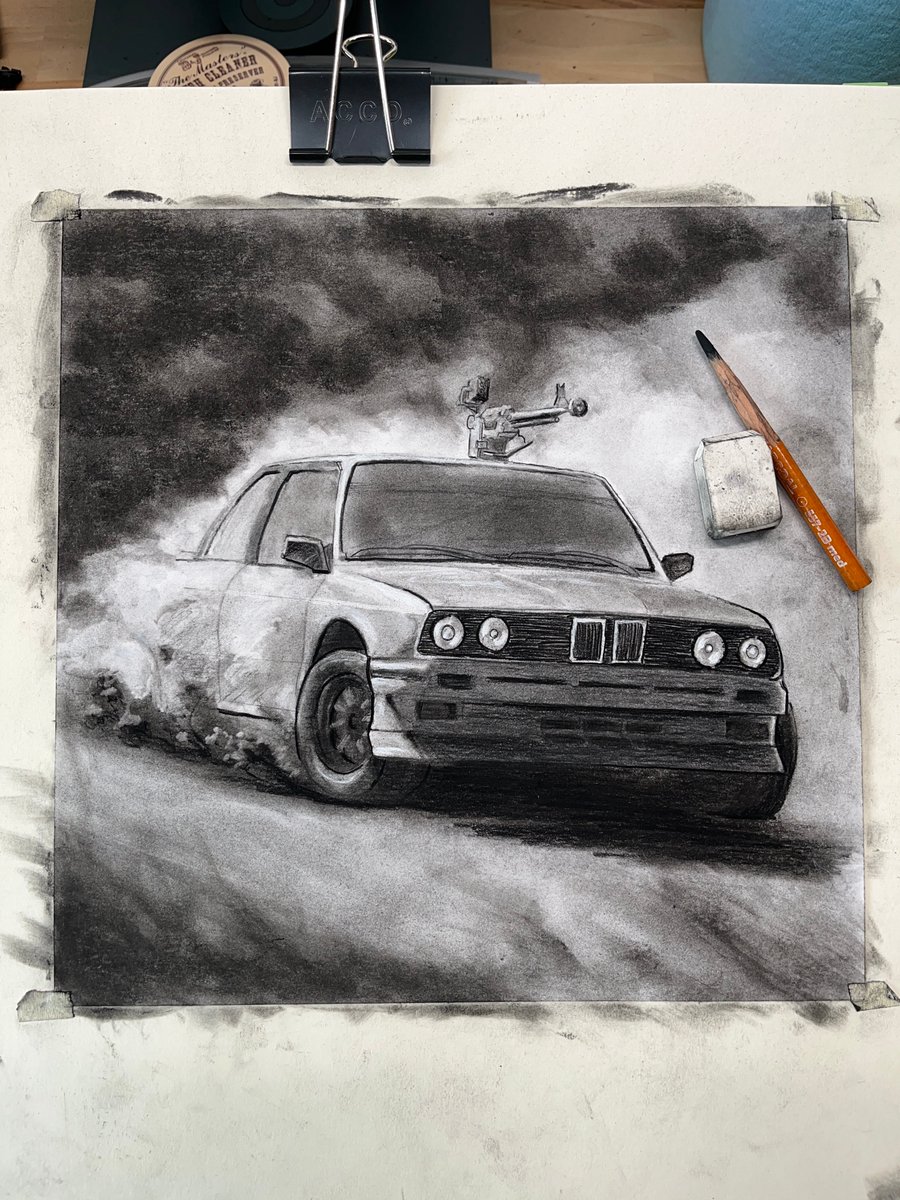
I'll start with this bald gentleman--this is the result I achieved after doing the learning system for about 6 months-ish:

The road to get here was absolutely filled with frustration--and in hindsight, these frustrations were caused by my insistence on finding "clever shortcuts" to achieve the outward appearance of mastery, while skipping the prerequisites.
Out of pure desperation, I tried doing some of the classical drawing exercises that they used to train artists in the late 1800s, and lo and behold, I shattered my plateau within two weeks, and was on-track learning art again:

The great difficulty I find in this domain, is that a lot of the skill hierarchy is hidden--and some of those prereqs are very profound and not well understood, even to this day.
For example, people I spoke with kept mentioning "gut feelings" and whatnot--so I called this the "GPU" (gut processing unit), and came up with some exercises to fire it up at the start of every painting session.

I just want to note here: the "art tutorial" economy--which I was banking on as a big time-saver and my biggest ally--ended up being actively harmful in my study of art, and emotional+mental wellness in general.
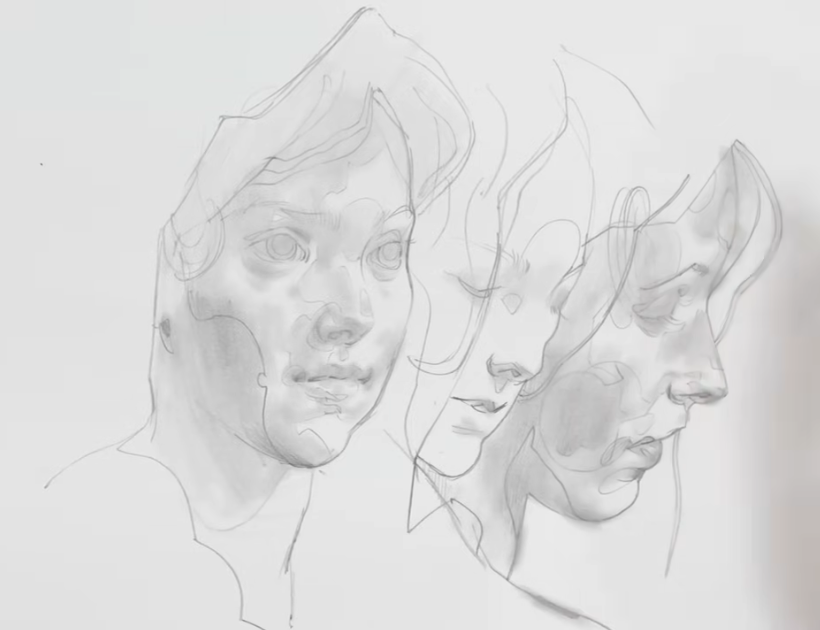
For example, this nice-looking image is from a YouTube "tutorial video" about drawing portraits using construction techniques, but not a single construction line was drawn during the entire video.
For a long time I was convinced I was just "missing something", or was "bad at art", since my drawings didn't look like the ones from these videos, and meanwhile I was not actually improving from watching content like this.
Keep in mind that 99% of people just want the dopamine hit of seeing a magic trick, without actually expending the effort to do it, and the "tutorial economy" is heavily tilted towards them.
I ended up finding all these hardcore (and insane-looking) exercises. At one point my desk was covered in hundreds of these box drawings.
I started obsessively mixing color charts, to train certain skills.
I collected statue pieces, and started grinding the "boring" exercises of the academic drawing tradition.
Although there's nothing boring about it, when you see your skills improve in concrete ways, within a few weeks of fully digesting this stuff:


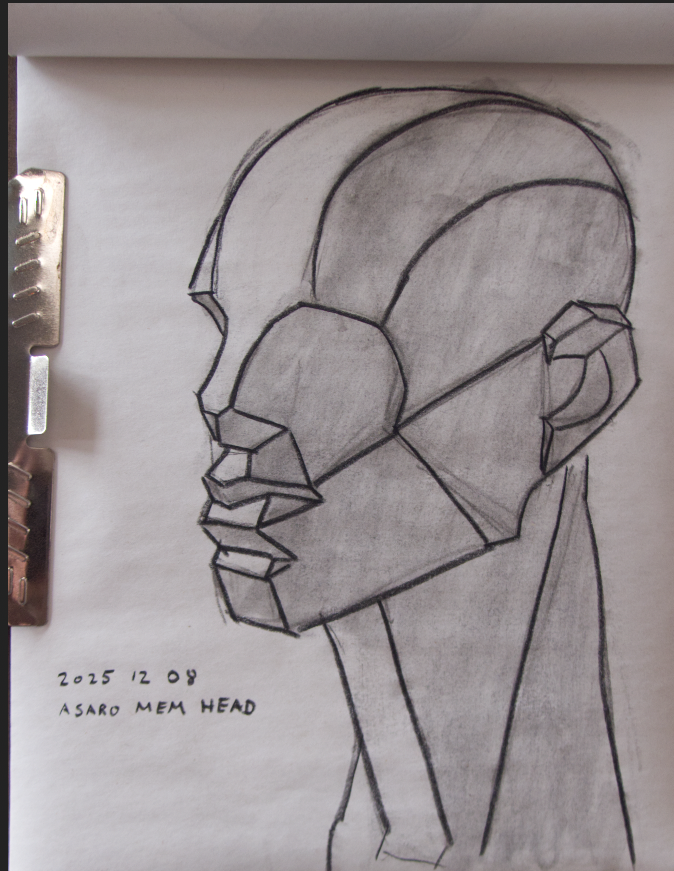
I found ways to isolate specific skills and study them one at a time, such as training simplification by using a sculpture, and then applying that simplification to my drawings.
It was exciting to spend the day doing exercises like this, and then get a decent painting at the group session, without straining too hard.


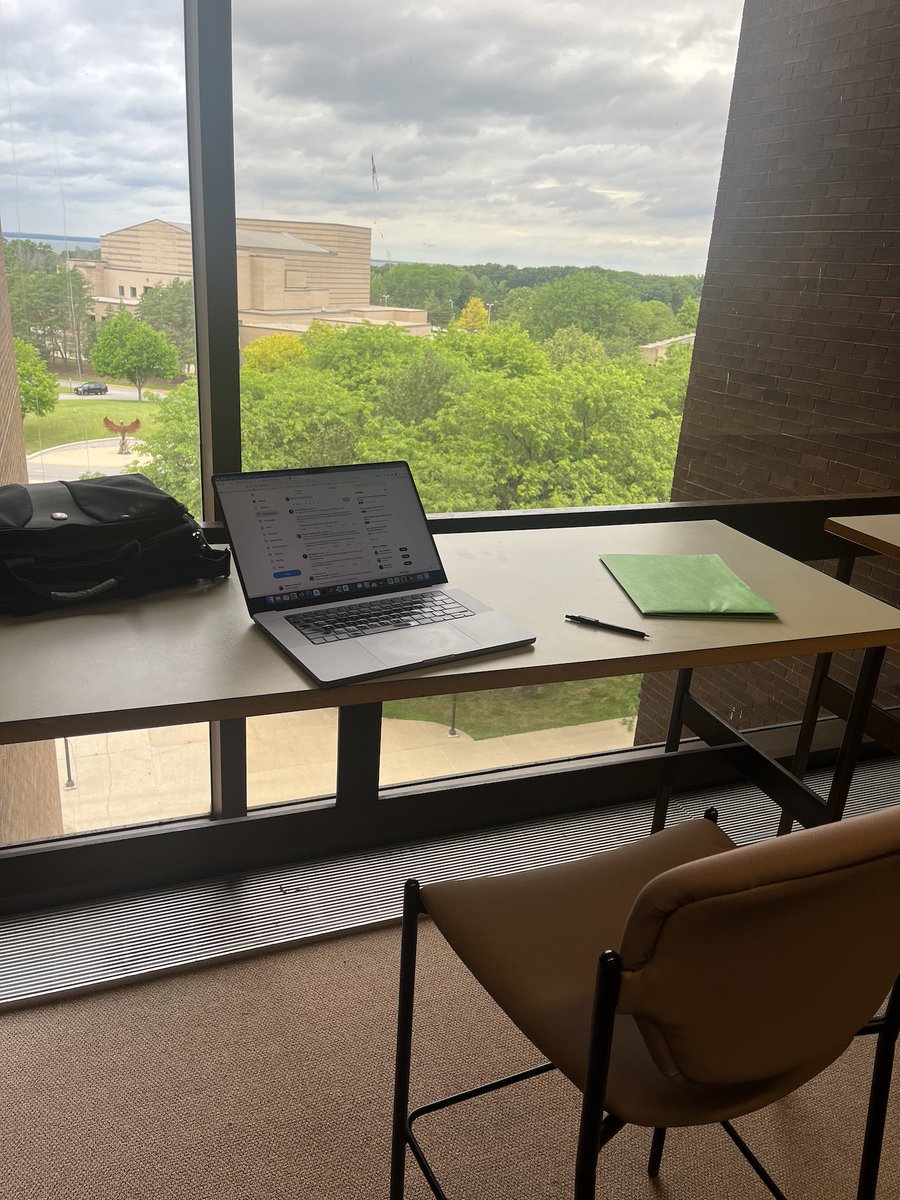
I had no idea all this would unfold, when I climbed the steps of my local college library to train with Math Academy two summers ago.
All I can say is that the lessons from Math Academy can be applied to other domains, and "education" in general is far from solved--there is huge room to improve and grow from here.

Missing some tweets in this thread? Or failed to load images or videos? You can try to .