
the new jev model is insane..
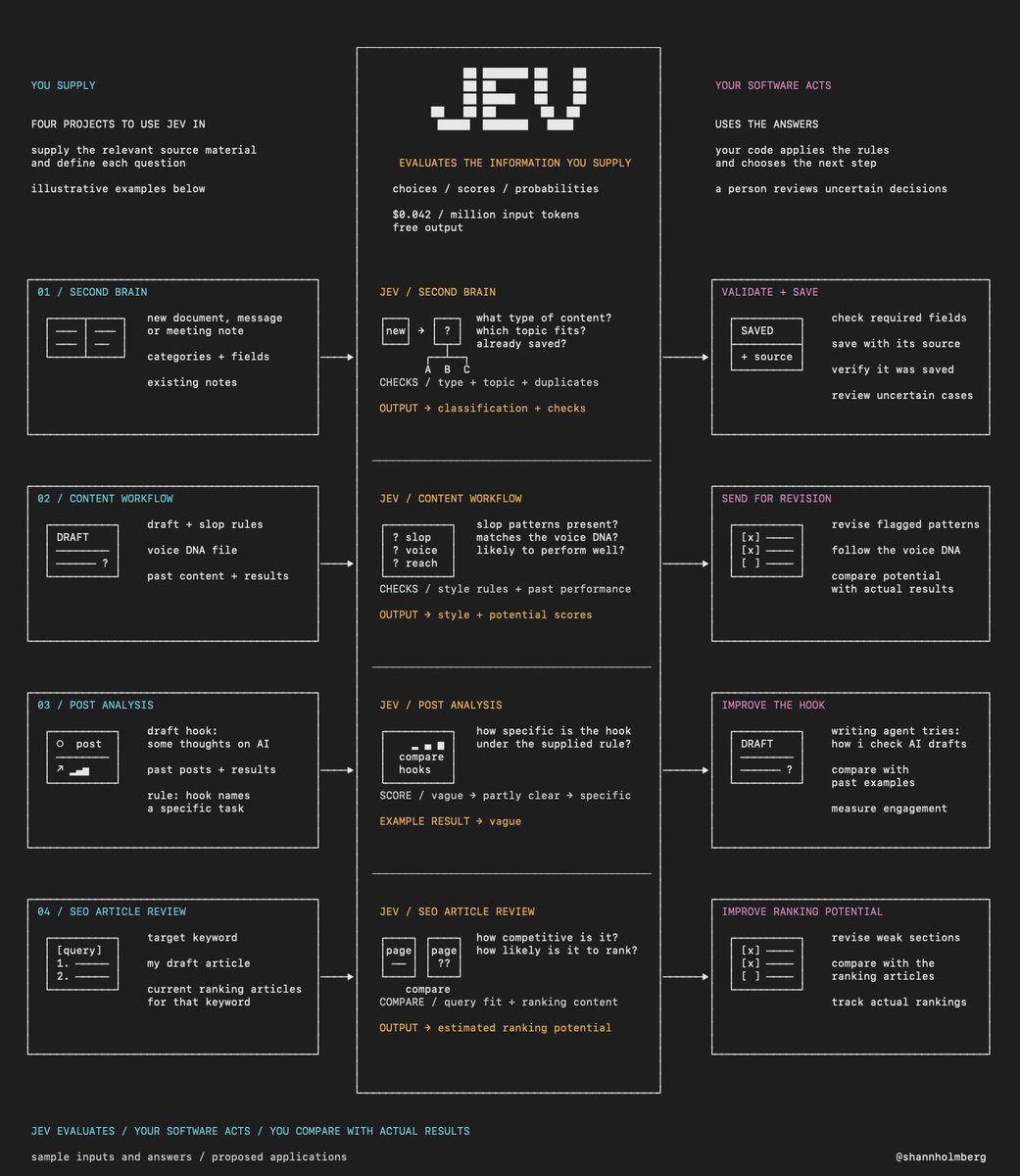
it can check your AI's work and make decisions inside software for $0.042 per million input tokens, with free output
here are the first things you should use jev for:
1. second brain
2. content workflow
3. post analysis
4. SEO article review
typesafe reports up to 193.6× faster results and 444.6× lower costs than the LLMs in its workflow tests
you give jev information and specific questions. it returns choices, scores or probabilities that your software uses to decide what happens next
1. second brain
when a document, message or meeting note enters your second brain, give jev the content and your categories
identify what it is, classify the topic and check for duplicates against existing notes
your software checks required fields, saves the content with its source and verifies that it was saved correctly
works well with the karpathy LLM wiki framework
2. content workflow
give jev your draft, and then reference your anti slop rules and voice DNA file (which defines how you write)
it will check for generic phrasing, repeated points and differences from your voice. use previous content and its results to estimate performance potential
then send results to the writing agent for revision, compare the performance estimates with results after publishing
3. post analysis
jev can compare a draft with previous posts and their results to estimate how well it could perform with your audience
evaluate the hook, topic and format against defined criterias. and compare those scores with the performance after it goes live
4. SEO article review
give jev your article / page draft, a target keyword and the articles currently ranking for that keyword (in the top 10 SERP)
compare how well they answer the query, cover the topic and provide useful information. use that comparison to estimate your article's ranking potential
then your LLMs can revise weak sections before publishing, and compare the estimate with actual rankings
so many more usecases, we will see many new upgrades to previous concepts and workflows we´ve read about now

Shann³
@shannholmberg
I cover AI marketing & growth. Sharing every framework as I build it.
Founder @espressioai, @lunarstrategy
Missing some tweets in this thread? Or failed to load images or videos? You can try to .