
Gabriel Epstein@GabrielEpsteinX
Sep 30
12 tweets
With new all-cause Gaza mortality data (meaning both violent and non-violent deaths) published by the MOH for 2025 (credit to @Eirik Schrøder-Bråtane for catching, analyzing, and visualizing it in the post below), it’s worth revisiting a number of open questions about the Gaza death toll which rely in part on that data: claims and projections about overall indirect deaths; whether or not non-violent deaths are included in the Hamas-run Gaza Health Ministry (MOH) death toll, and the IPC’s justification for its 2025 famine declaration in Gaza Governorate. 

Eirik Schrøder-Bråtane@EirikSchr
Sep 30
View on Twitter
Gaza Ministry of Health has now released mortality numbers for 2025. For the first time since the war, they give numbers for all deaths, including natural deaths.
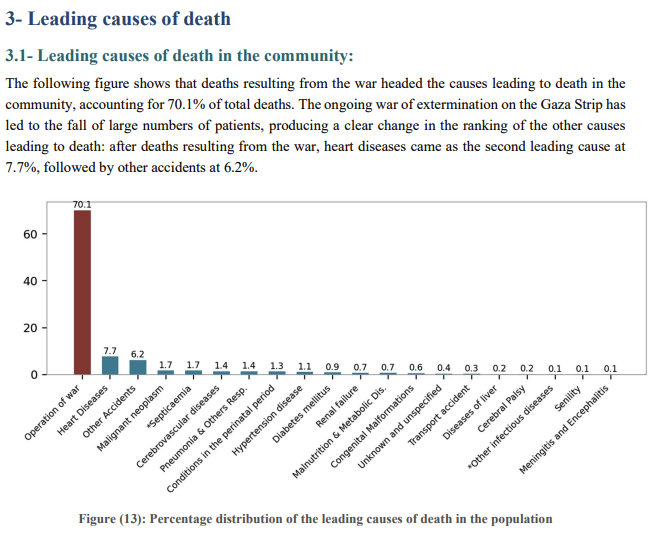
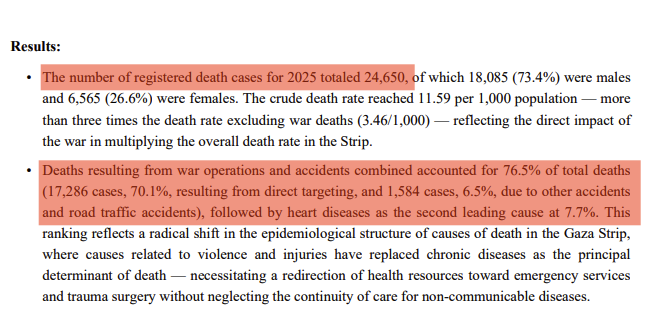
In 2025 there were a total of 24,650 deaths in Gaza. 18,870 (76.6%) of these were violent, of which 17,286 (70.1%) were due to "war operations" and 1,584 (6.4%) were classified as accidents. There were a total of 5,780 (23.4%) non-violent deaths, including disease, old age, and all other causes.
5,780 deaths is about the same as the annual non-violent mortality in Gaza before the war, and the age distribution is similar to 2022. There is no significant excess of non-violent deaths.
In other words, despite frequent and loud claims to the contrary, there seems to be very few indirect deaths due to the war in Gaza in 2025.
As there were 50,227 births in 2025, this gives a natural population growth of 25,577 or 1.2% in Gaza in 2025, which is higher population growth than most countries in the world and more than the world average.
There are currently ~6,000 births/month in Gaza, per GMH. Assuming a similar number of non-violent deaths in Gaza in 2026 as in 2025, that means there are currently 12x more births than deaths in Gaza, and that Gaza is now experiencing one of the highest population growths in the world.
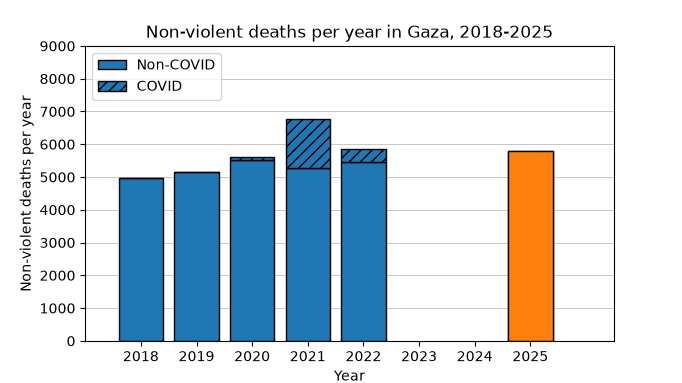
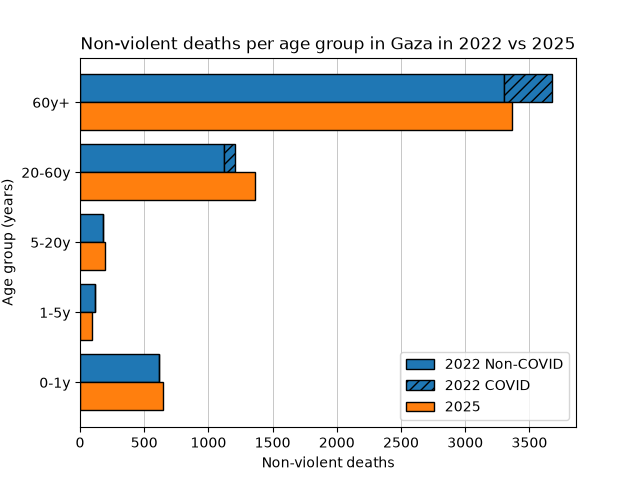
Before any analysis, it’s worth understanding a few points. First, this is not final data on either violent or nonviolent deaths for 2025, though a massive further revision is at this point unlikely.
Second, backwards extrapolation from 2025 to 2023-2024 or forward to 2026 has limitations and depends on one’s assessment of whether the humanitarian situation in Gaza was more likely to cause non-trauma deaths in each time period, as well as the MOH’s ability to track casualties over time (which may differ for trauma and non-trauma deaths).
Third, as the MOH report notes clearly, non-trauma cause-of-death data is distorted by the wartime situation: they state that heart failure is overstated as a terminal cause of death and cancer understated due to inability to diagnose and monitor. Malnutrition-related deaths will also extend beyond those where malnutrition was the primary or terminal cause.
A few definitions are also in order: direct vs. indirect vs. natural deaths and trauma vs. non-trauma deaths.
Direct conflict deaths are typically defined as violent (or trauma) deaths directly related to hostilities. In Gaza, these would be caused by the IDF, Hamas, or one of the other Gazan militant groups. Indirect deaths are also conflict-related, but stem from secondary factors like lack of healthcare services, food, water, or shelter, as well as those from accidents like building collapses or disease outbreaks. Natural deaths are generally defined as those which would have occurred regardless of the conflict. However, the line between this and indirect deaths is very difficult to establish in many cases (for example, renal failure will kill a patient eventually but does so very quickly when they do not have access to dialysis due to conflict), and they are often grouped together in analysis.
Trauma and non-trauma deaths are slightly different. Trauma deaths are those caused by acute physical injury from an external source, while non-trauma deaths come from diseases or internal conditions. These often but not always line up with the direct vs. indirect distinction. Something like a car accident or fall unrelated to an ongoing conflict, for example, might be a traumatic death but not a direct one.
The MOH 2025 annual mortality report uses the categories of war-related trauma deaths, accidental trauma deaths, and non-trauma deaths (combining communicable and non-communicable diseases and conditions, malnutrition, and other categories), rather than talking about direct vs. indirect deaths. That raises some questions about how they treated accident deaths, which are trauma deaths but would not fit the criteria of the MOH death toll list (which is supposed to be violent deaths caused by Israel).
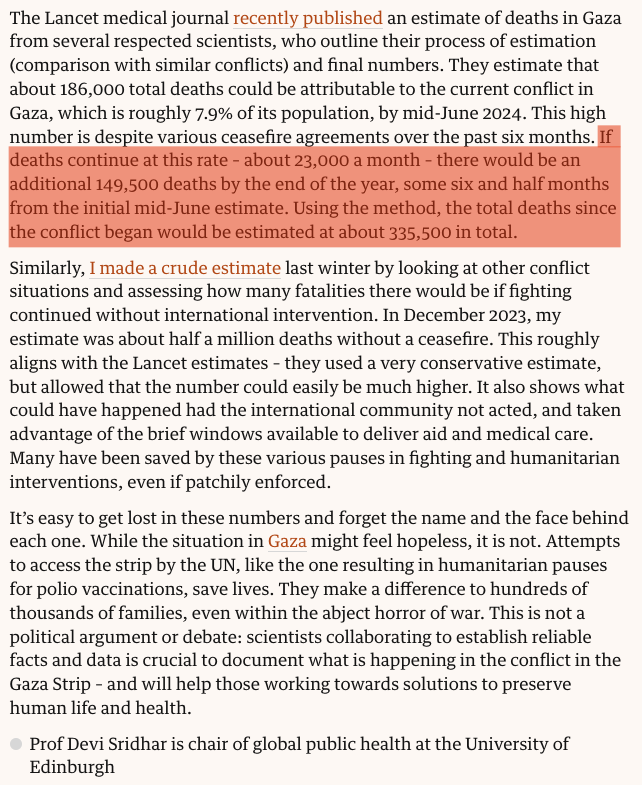
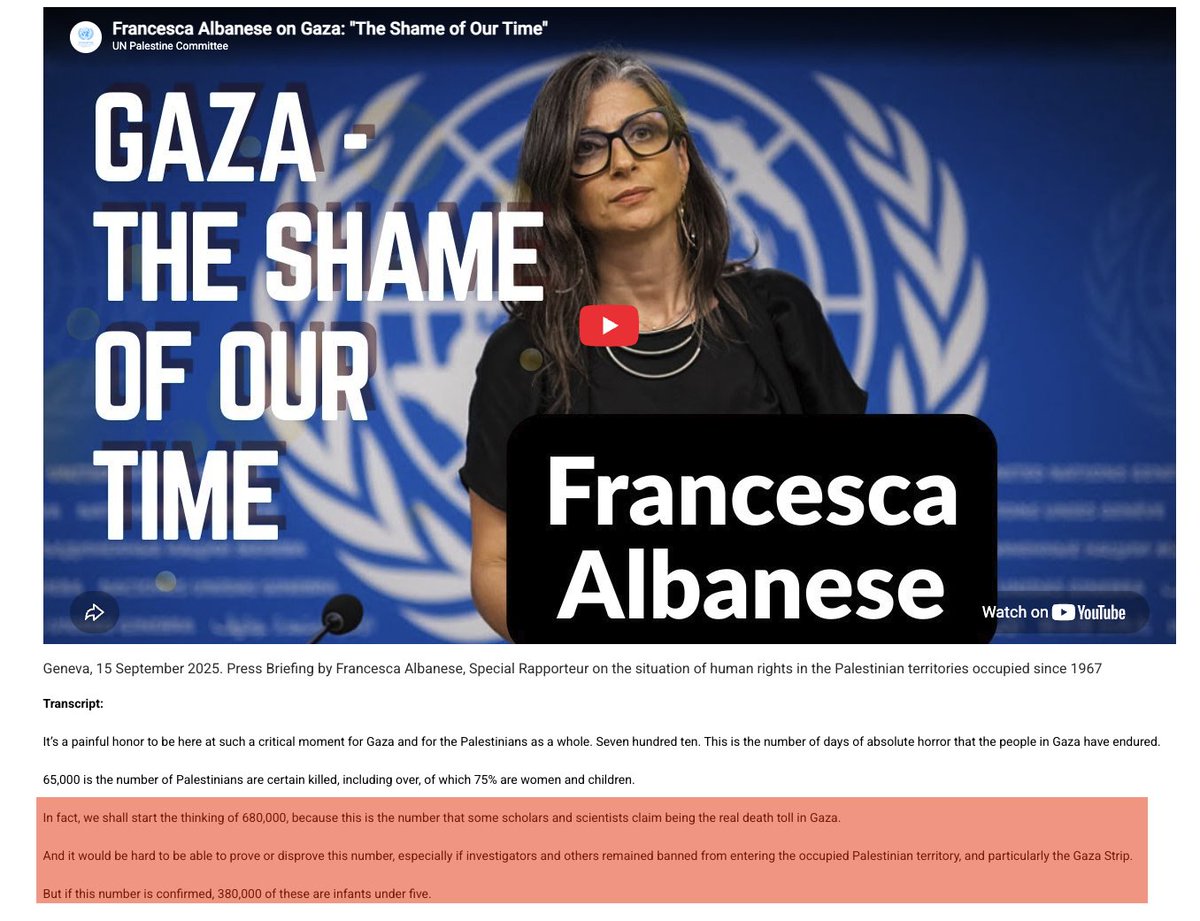
The first area this data casts fresh light on is the overall question about the ratio of direct and indirect deaths in the war in Gaza. In July 2024, a much-discussed correspondence in the Lancet estimated indirect deaths at four times the then-known total of violent deaths, leading to an overall estimate of 186,000 deaths. In September 2024, a professor at the University of Edinborough expanded that estimate drastically to argue that the death toll could be nearly 336,000 by the end of 2024. An even more extreme claim, endorsed by U.N. Special Rapporteur Francesca Albanese in September 2025, argued that there were 680,000 deaths in Gaza.
Each of these speculative estimates relied on there being far more indirect or non-trauma than direct or trauma deaths. At the time, other pushed back on the notion that there were vast numbers of uncounted non-trauma deaths, pointing to Gaza’s small size and high media coverage, a relatively robust casualty-counting system and hospital network given the Strip’s overall level of development, and high NGO presence as factors that would both drive down indirect deaths and reduce an undercount.
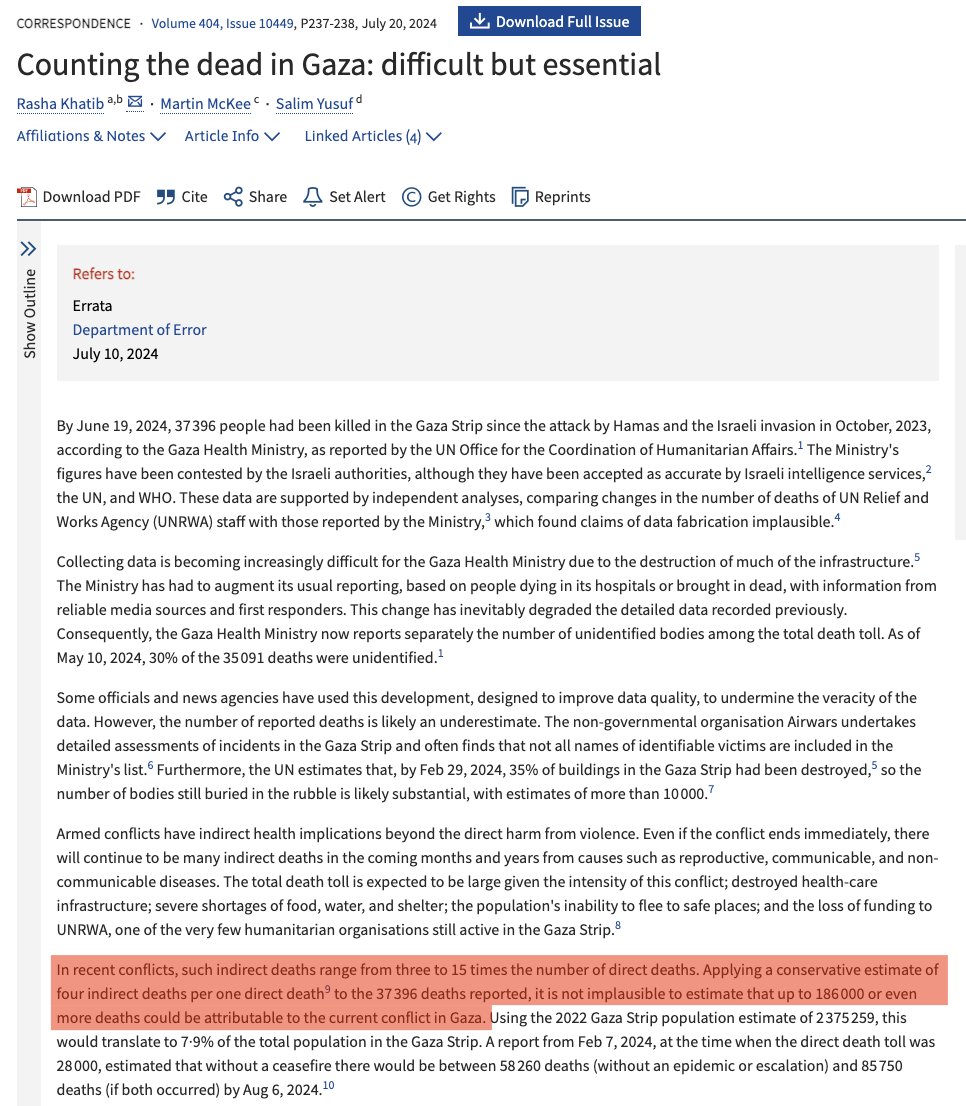
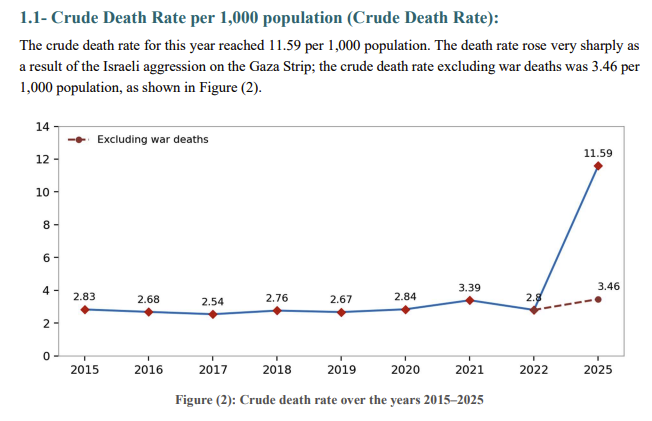
For 2025, at least, the current MOH-provided data gives a clear answer. With 70.1% of deaths being classified as directly war-related and 29.9% classified as accidental or non-trauma, the ratio of direct to indirect/natural deaths in 2025 can be calculated at 0.43 indirect/natural deaths for every direct death. If using the MOH categorization of trauma vs. non-trauma (thereby including accidents with violent war-related deaths), the figures are 76.6% trauma deaths and 23.4% non-trauma deaths: 0.31 non-trauma deaths for each trauma death. This is an order of magnitude below the 4:1 ratio argued for in the 2024 Lancet correspondence, and much further below the even higher estimates. It supports the assessment that indirect deaths were substantially lower than direct deaths during the war. This is also reflected in that the crude death rate for 2025, after removing war-related deaths, is only moderately higher than in previous years.
It is possible that this ratio was lower or higher in 2023 and 2024. The health system was in much worse shape in 2023 and much of 2024, and the very high death rate in the first months of the war led to substantial initial undercounting of violent deaths (and therefore perhaps non-violent deaths). But the most severe humanitarian crisis came in 2025 with significant food shortages. 2025 cannot therefore be used as a direct analogue to 2023 and 2024, but it helps outline a reasonable range of estimates for the ratio of direct to indirect deaths which does not support claims of a much higher death toll.
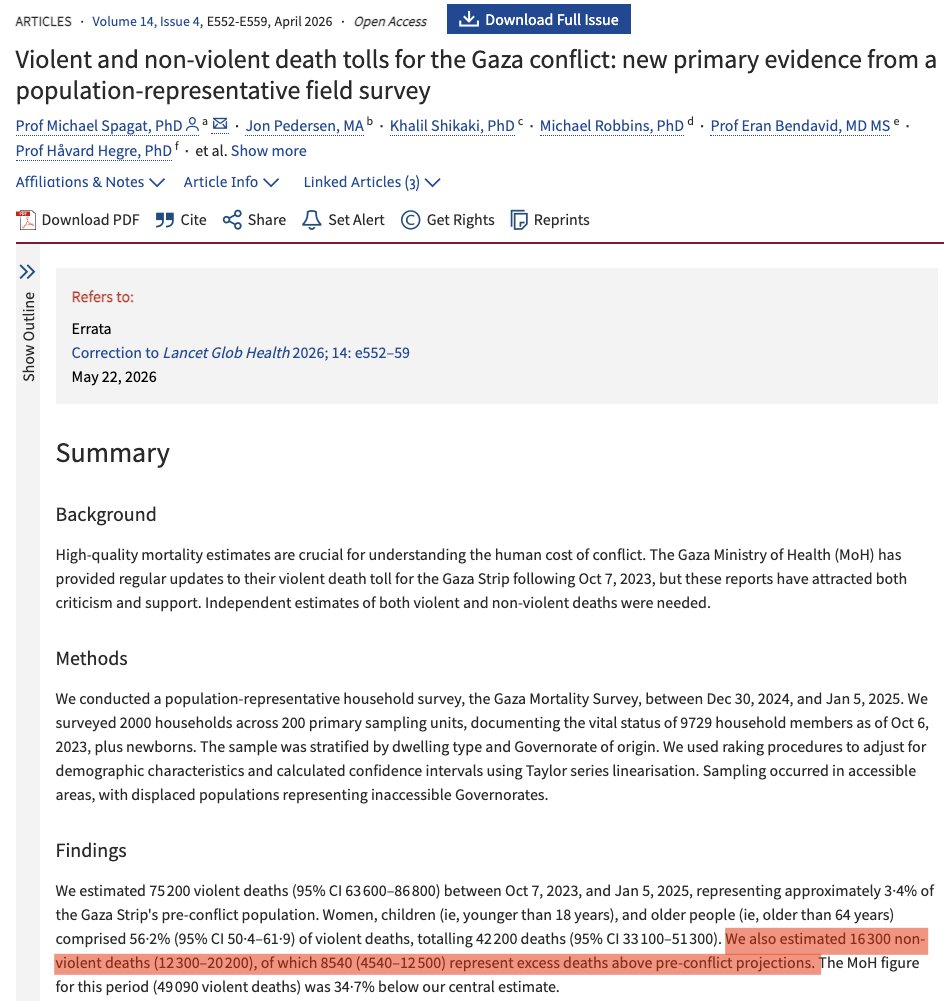
The new all-cause mortality data can also be used to check on more sober estimates of indirect or non-trauma deaths, like that contained in Spagat et al’s 2025 Lancet paper based on their Gaza Mortality Survey. The authors estimated that there were 16,300 non-violent deaths in the period between October 7, 2023 and January 5, 2025, a roughly 15-month period. That yields a non-violent death estimate of 1,087/month.
The MOH data for 2025, meanwhile, shows 5,780 non-trauma deaths over a 12-month period, or ~482 per month. If including accidents, this rises to ~614 deaths per month. That is a substantial gap worthy of further scrutiny. It is, again, possible that non-trauma death rates were much higher in 2023-2024, but that would need to be substantiated by yet-unpublished MOH data.
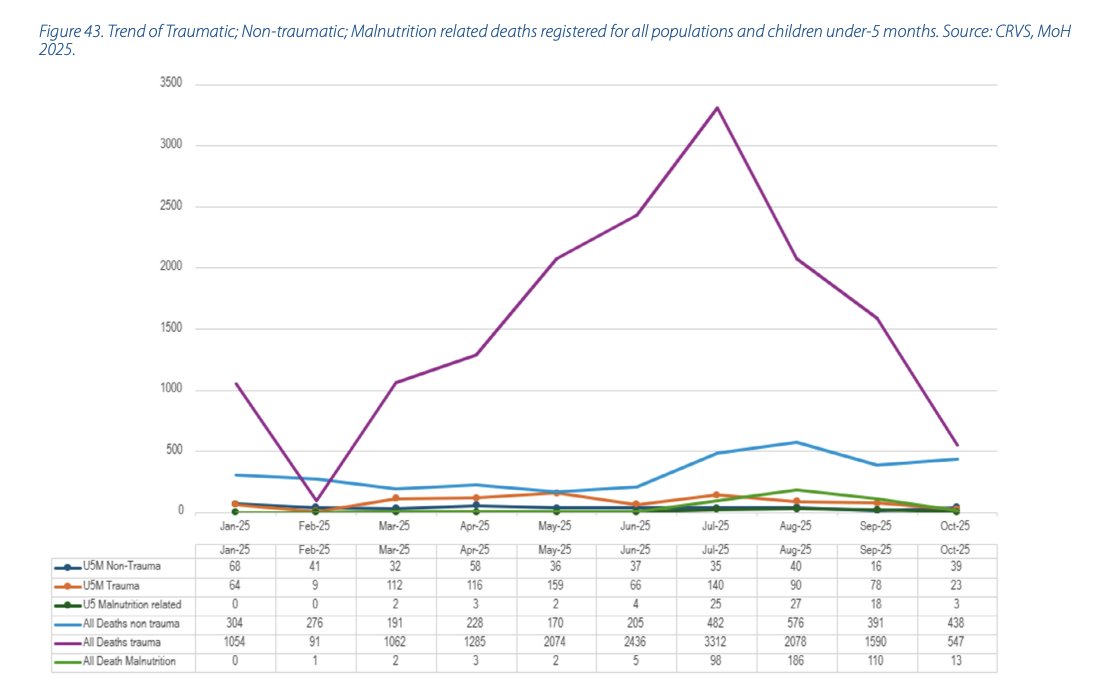
Another useful approach is to compare the annual mortality report data to what the MOH reported to the IPC in October 2025 which the IPC then used as part of its famine determination in Gaza governorate. That can give a rough sense of how much indirect deaths were undercounted by in the moment.
The IPC report, which went up to October 2025, gave an MOH-provided figure of 3,281 non-trauma deaths. Scaled to 12 months from 10, that yields a projected 3,937 non-trauma deaths for 2025. Compared to the figure given now of 5,780 non-trauma deaths, the contemporaneous figure appears to have missed roughly 1/3 of non-trauma deaths in 2025.
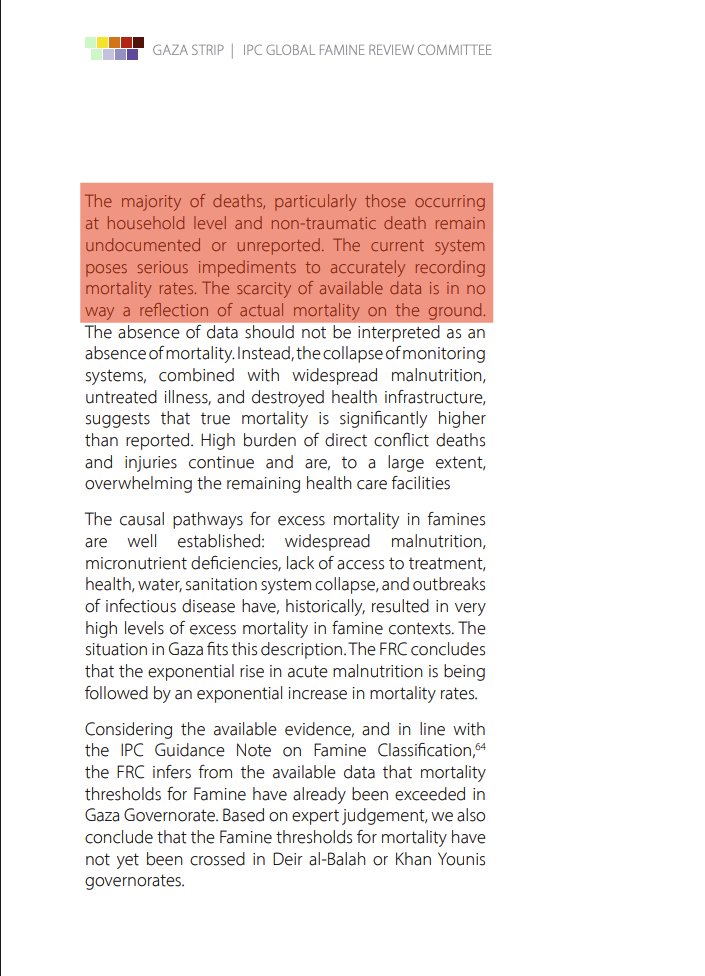
That cuts against the IPC’s case for the famine mortality threshold being met, which argued that the majority (and, to meet the threshold, it would have to have been the vast majority) of non-trauma deaths were not being recorded. For 2025, at least, this does not appear to be true. This is one of several problems detailed in the thread below.
x.com/GabrielEpstein
Gabriel Epstein@GabrielEpsteinX
Aug 29
View on Twitter
Present malnutrition and food security data indeed have nothing to do with the IPC's famine declaration last year, and it is misguided to use an improved situation to argue against a previously dismal one. But the famine declaration itself remains questionable at best.
A more complex question is what this new data might mean for assessments of the MOH’s death toll list, which is presented as only cataloguing violent deaths caused by Israel. I and others have documented the presence of violent deaths not related to Israel (cases of murder or internal clashes) as well as cases of indirect traumatic deaths (car accidents, reckless discharge, and building collapses) on the MOH list. At the same time, however, malnutrition-related deaths reported by the MOH appear to be excluded from the main death toll list.
x.com/GabrielEpstein
x.com/GabrielEpstein
Gabriel Epstein@GabrielEpsteinX
Feb 19
View on Twitter
Thanks to @Eirik Schrøder-Bråtane for the tip that malnutrition deaths are broken out in detail in the MOH's dashboard. After checking 445 entries for an ID match with the November 2025 list (the remaining 30 were either missing an ID or had an invalid one), there are 15 entries also present on the MOH list, or ~3.4% overlap -- definitely not indicative of a policy of inclusion. Can share that data on request.
Unless the proportion of overlap rises drastically in future iterations of the list, it seems clear that malnutrition deaths are only seldomly included, and case-by-case investigation would be needed for those.
To my knowledge, there's no comparable public dataset of general non-trauma deaths, which made up 87% of the non-violent deaths (2,823/3,230) that the MOH reported to the IPC for January-September 2025. That makes it currently impossible to assess what level of overlap there is between this more significant category with the list.
Deaths from all periods of the war are being added to the MOH list over time, so simply looking at changes in the overall claimed death toll during 2025 is not useful. @Eirik Schrøder-Bråtane has extracted data (current to September 8) which includes dates of death from an MOH dashboard, which shows that the MOH recorded 19,420 violent deaths in 2025 — 2,134 higher than the war-related death total and 550 higher than the trauma (including accidents) death total in the new MOH mortality report.
That means there are top-down (overall mismatch) and bottom-up (individual case) indications that some deaths that are not war-related or attributable to Israel are likely included in the death toll. My current guess is that most trauma deaths, regardless of perpetrator/source and relation to the conflict—including those caused by Israel, Hamas or another militant group, internal unrest, building collapses, accidents, etc.—are included in the list, while the majority of non-trauma deaths are not.
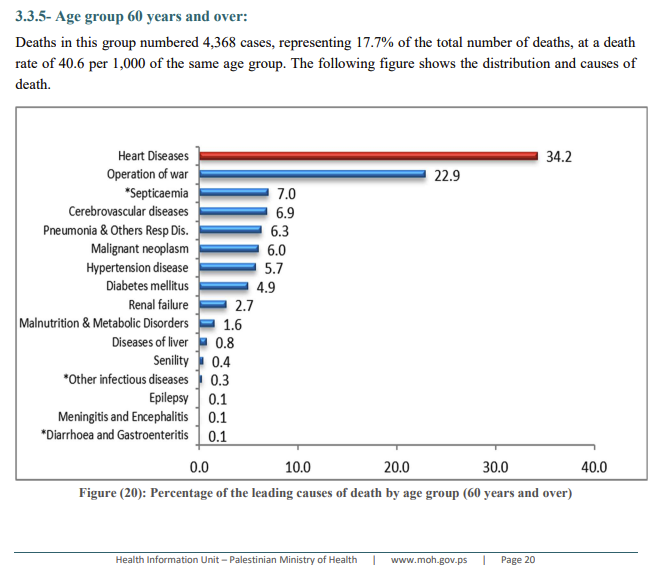
The demographics back up the idea that non-trauma deaths are not included wholesale. While exact figures are not given by age group, 77.1% of 4,368 deaths in 2025 among those 60 and up were classed as non-war related — roughly 3,368 elderly non-war-related deaths (there is no listing for accidental deaths in the elderly breakdown).
Working from the other direction and using the MOH dashboard data for 2025 yields 969 deaths of those aged 60 and over. These figures don’t line up exactly (nor do the dates of each dataset -- September 8 for the MOH dashboard and July 11 for the annual report) but do make clear that the vast majority of reported deaths among the elderly in 2025 were not included in the main MOH death toll. That doesn’t tell us about other age ranges, however, nor about any specific cases.
So what is the still-blurred picture that forms from all of this? At least for 2025 (and likely for the rest of the war), non-trauma deaths appear to have been much smaller than trauma deaths and undercounted by a smaller proportion than many claimed.
That lowers the credibility of claims of a much higher death toll fueled by a very large number of largely uncounted non-trauma deaths. It also further strains the case made by the IPC in 2025 about non-trauma mortality to claim that the famine mortality threshold criteria had been met. Finally, it strengthens the idea that non-trauma deaths are not included wholesale in the main MOH death toll list, but increases the likelihood that non-war-related trauma deaths and violent deaths not attributable to the IDF, as well as some share of non-trauma deaths, are included in the toll.
Links:
2025 Gaza MOH Annual Mortality Report: moh.gov.ps/portal/%d8%a7% (PDF: moh.gov.ps/portal/wp-cont)
August 2025 IPC Report: ipcinfo.org/fileadmin/user
December 2025 IPC Report: ipcinfo.org/fileadmin/user
Lancet Correspondence (July 2024): thelancet.com/journals/lance
Guardian article (September 2024): theguardian.com/commentisfree/
Albanese briefing (September 2025): un.org/unispal/docume
Spagat et al. Lancet study (2025): thelancet.com/journals/langl

Gabriel Epstein
@GabrielEpsteinX
Senior Policy Associate @IsraelPolicy4m. Former Research Assistant @WashInstitute. Graduate @SAISHopkins.
Missing some tweets in this thread? Or failed to load images or videos? You can try to .